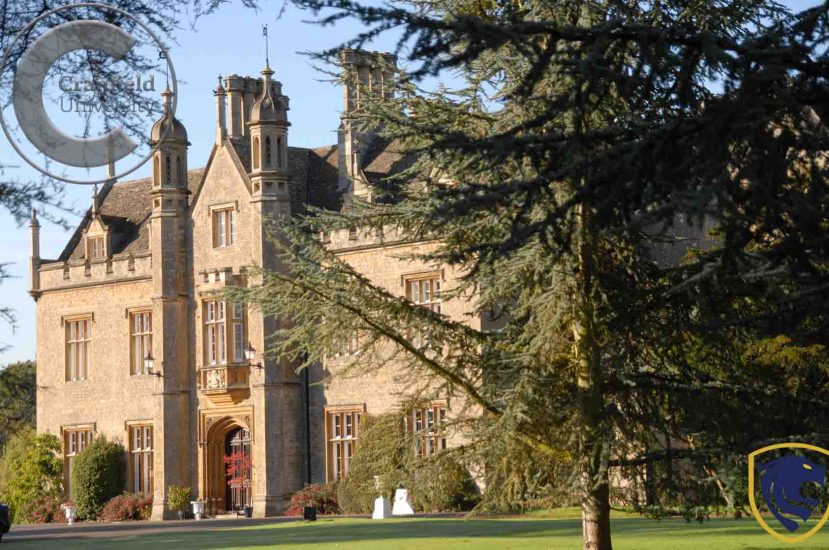
Just like the main campus of the University of Cranfield, this sub campus is also specialised in Defence, Security, Leadership, and Technology education. Their educational sessions are delivered through a partnership with the Defence Academy of the United Kingdom. They primarily offer postgraduate-level education, such as MSc, executive programs, and short courses.
In the Shrivenham Campus, there is a mix of military personnel, civilian professionals and international students from over 50 different countries around the globe. The courses offered by Shrivenham Campus are aligned with real-world defence, security, and government needs. Moreover, this university holds strong collaboration with MOD, NATO partners, and defence industries.
4.2.1 Faculties and Programs – Shrivenham Campus
Defence & Security Studies
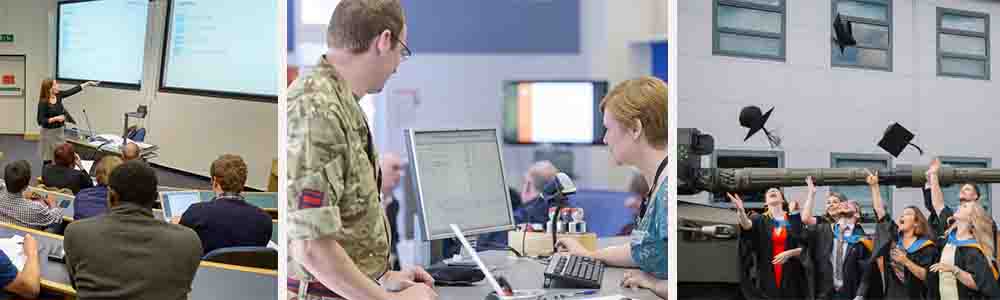
This faculty focuses on strategy and international security, defence policy and global conflict analysis. The courses offered here cover intelligence and security risk assessment, counter-terrorism and cyber warfare and crisis management and resilience planning.
Faculties and Programs – Shrivenham Campus
Engineering & Technology (Defence-related)
At Shrivenham Campus, engineering and technology play a very important role because the focus is on defence-related studies. Students learn about military engineering systems, so they understand how defence structures and equipment are designed and used in real situations. Moreover, they study weapons systems and defence technology, which helps them understand modern military tools and how they function in different environments.
In addition, cybersecurity and information warfare are important parts of the curriculum because modern conflicts also happen in digital spaces. Students also explore aerospace and defence systems integration, for example, how aircraft, defence vehicles, and communication systems work together. Furthermore, they study nuclear science and defence applications, which are important for national security and strategic planning. So, the overall goal is to combine technical knowledge with real defence applications.
Leadership, Management & Business (Defence Context)
Leadership and management training is also a key part of the campus because defence organisations need strong decision-makers. Students learn strategic leadership, especially in military and government contexts, so they can handle complex situations effectively. Moreover, defence management and procurement are studied to understand how military resources are planned and purchased.
In addition, logistics and supply chain management in military operations is included because moving equipment and supplies during missions is very important. Students also develop business skills for public sector leadership, which helps them work in government roles. Furthermore, decision-making under uncertainty is trained through case studies and simulations. For example, students may be given crisis scenarios where they must make quick and correct decisions.
Specialist Training Units / Schools
Shrivenham Campus includes several specialist training units that support advanced defence education. For example, the Joint Services Command and Staff College (JSCSC) trains senior military officers, so they can take leadership roles in defence organisations. Moreover, the Defence College for Military Capability Integration focuses on future warfare and innovation, which is important because modern defence is always changing.
Faculties and Programs – Shrivenham Campus
Also, the Defence Leadership and Business Group helps students develop management and leadership skills. In addition, the Defence Centre for Languages and Culture provides training in languages and cultural awareness, because international cooperation is very important in defence. Furthermore, the Centre of Air Safety Training focuses on aviation safety, so students understand how to manage risks in air operations.
Teaching Approach
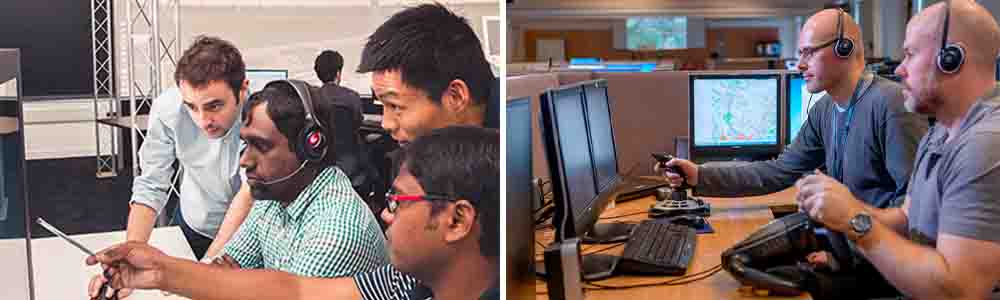
The teaching style at Shrivenham Campus is very practical and experience-based. For example, students learn through case studies that are based on real military operations. Moreover, simulation exercises such as war games and crisis scenarios are used so students can practice decision-making in realistic situations.
In addition, research-led teaching is used because policies and defence strategies are constantly evolving. Students also work closely with the armed forces and government agencies, so they gain real-world exposure. Furthermore, the main focus is on decision-making, leadership, and strategic thinking. So, students are not only learning theory but also applying it in practical defence situations.
4.2.2 History & Functions of Shrivenham Campus
Historical Development
The Shrivenham site has a long military history because it was first used for military education in 1936 after being taken over by the War Office. During World War II, it was used as an Officer Cadet Training Unit to train military leaders. Moreover, between 1945 and 1946, it hosted the Shrivenham American University for US soldiers returning from war.
Then in 1946, it became the home of the Royal Military College of Science, which focused on technical and scientific military training. Furthermore, its origins can even be traced back to earlier military training traditions in the 18th century. In 2002, the Defence Academy of the United Kingdom was officially established, and later, Cranfield University became the academic partner for higher education delivery.

History & Functions of Shrivenham Campus
Core Functions
The main function of the campus is to provide higher education for armed forces officers, civil servants, and international military students. Moreover, it helps develop strategic leadership and operational thinking, which is essential for defence roles. It also supports the UK’s national defence and security strategy by training skilled professionals.
In addition, the campus conducts research in defence technology, security, and policy. It also acts as a training hub for international military collaboration, so officers from different countries can learn together. Furthermore, it bridges academic knowledge with real military application. So, its main goal is to build what is called an “intellectual edge” in defence leadership.
4.2.3 History of the City – Shrivenham (Oxfordshire)
Shrivenham is a small historic village located in Oxfordshire. It lies in the Vale of the White Horse, which is a rural area known for its farmland and peaceful environment. Moreover, the village has traditional English features such as thatched cottages, a parish church, and small local shops.
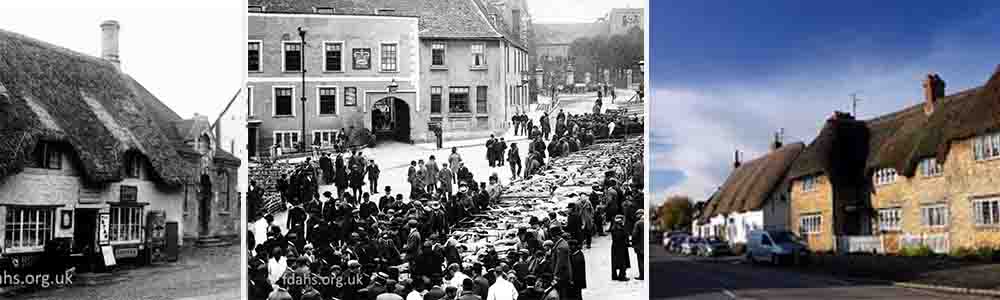
History of the City – Shrivenham (Oxfordshire)
In addition, Shrivenham has a strong military connection because of the Defence Academy and earlier military institutions. The nearby town of Swindon has an industrial and railway history, so it provides economic and transport support to the area. Furthermore, larger cities like Oxford, Bristol, and Bath are not too far away, so students and staff can access cultural and educational centres easily. The area is generally quiet, secure, and low in population.
4.2.4 Infrastructure Facilities at Shrivenham Campus
General Campus Infrastructure
Shrivenham Campus is a large and secure military site, so access is controlled, and ID checks are required. Moreover, it is located in a rural area with wide training grounds and open spaces. The campus is shared between Cranfield University and the Defence Academy, so it combines academic and military functions. In addition, it has a high-security environment with controlled entry and monitoring systems.
Academic & Research Facilities
The campus has advanced lecture theatres that are designed for defence-focused teaching. Moreover, there are simulation labs where students take part in war games and strategic exercises. In addition, defence research centres are available for studying technology and policy. Specialist laboratories support engineering, nuclear science, and cybersecurity studies. Furthermore, libraries provide access to military and defence research materials.
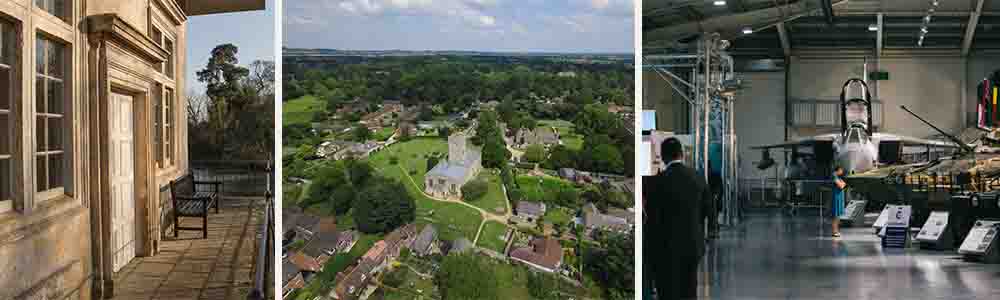
Infrastructure Facilities at Shrivenham Campus
Prominent Buildings & Facilities
Beckett Hall is one of the historic buildings on campus. It was originally part of an aristocratic estate, but later it was used for military training. Moreover, it now serves academic and administrative purposes, so it represents the transition from historic estate to modern defence education centre.
The Joint Services Command and Staff College (JSCSC) is another important building. It is used to train senior military officers in leadership, strategy, and defence planning. Furthermore, it is one of the most important centres for military education in the UK.
The Defence College of Management and Technology focuses on engineering, logistics, and defence science. In addition, training grounds are used for outdoor military exercises and equipment demonstrations. For example, aircraft and defence systems are displayed for practical learning.
Student and Community Facilities
The campus also has cafés, dining halls, and social spaces for students and staff. Moreover, there are sports facilities such as gyms, courts, a golf course, and even a riding school. In addition, accommodation blocks are available for students, so they can live on campus comfortably. Green open spaces are also available for relaxation.
4.2.5 Weather in Shrivenham
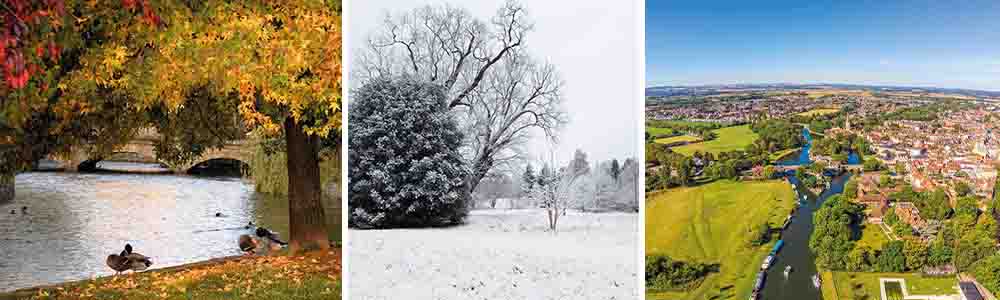
Weather in Shrivenham
Shrivenham has a typical UK temperate climate. Summers are mild, so temperatures usually range between 18°C and 25°C. Moreover, winters are cool and sometimes drop close to freezing. Snowfall can occur occasionally. Rain is spread throughout the year, so the weather is fairly balanced.
In addition, the area has moderate humidity and sometimes windy conditions because of its open rural setting. Seasonal changes are noticeable, but not extreme. Furthermore, the air quality is generally good because the area is not heavily industrialised.
4.2.6 Transportation & Airports
Shrivenham Campus is located in a rural part of Oxfordshire, so transport mainly depends on road and rail connections. However, access is still good because nearby towns and cities are well-connected.
The closest railway station is Swindon Railway Station, which is about 10–15 minutes by car. From here, students can travel to major cities like London, Bristol, and Cardiff. Moreover, trains are frequent, so travel is flexible for students and staff.

Transportation & Airports
In addition, local bus services connect Shrivenham with Swindon and nearby villages. However, most people prefer private transport because the area is semi-rural. Taxi services are also commonly used for daily commuting.
For air travel, the nearest major airport is Heathrow Airport, which is about 1.5 to 2 hours away by road. This airport provides global connectivity, so international students and staff can travel easily. Furthermore, Bristol Airport is another option, which is slightly closer and offers European routes.
So, even though the campus is in a quiet rural area, it is still well connected to national and international transport networks.
4.2.7 Student Life at Shrivenham Campus
Student life at Shrivenham is very different from a typical university because it is part of a defence and military training environment. The atmosphere is structured, professional, and focused on discipline. Moreover, students include military officers, government professionals, and international trainees.
Entertainment options on campus are limited but well organised. There are common social spaces where students meet and interact. In addition, nearby towns like Swindon provide cinemas, restaurants, and shopping centres. For example, students often visit Swindon for leisure activities during free time.

Student Life at Shrivenham Campus
Sports facilities are an important part of campus life. The campus includes a gym, sports fields, tennis courts, and a golf course. Moreover, there is even a riding school for equestrian training. These facilities support both physical fitness and recreation.
Extra-curricular activities are mostly related to leadership, defence discussions, and professional development. For instance, students take part in seminars, workshops, and leadership exercises. Furthermore, there are clubs and associations focused on defence studies, engineering, and international security topics.
So, student life is not purely social; instead, it is strongly linked to professional growth and military development.
4.2.8 Night Life (Shrivenham and Nearby Areas)
Nightlife around Shrivenham Campus is quiet because the campus is located in a rural village. However, students can access a more active nightlife in nearby towns like Swindon.
One popular place is The Goddard Arms. This is a traditional pub offering food, drinks, and a relaxed environment. Moreover, it is popular among students and locals because of its friendly atmosphere.

Night Life
Another option is Revolution Swindon. This venue is more modern and lively. It offers cocktails, music nights, and a social environment for young adults. For example, it becomes busy during weekends and student gatherings.
In addition, The Victoria Swindon is another well-known place. It offers a mix of drinks, live music, and casual dining. Therefore, students often visit it for relaxed evenings.
Furthermore, Oxford city is also accessible for nightlife, but it requires a longer travel. So, most students prefer Swindon for convenience.
Overall, nightlife is not part of the campus itself, but nearby towns provide enough options for social life.
4.2.9 Accommodation
Accommodation at Shrivenham Campus is mainly designed for postgraduate students, military officers, and visiting professionals. On-campus housing is available in the form of Single Living Accommodation (SLA). These rooms are simple, secure, and located close to teaching facilities. Moreover, they are designed to support short-term and long-term stays.
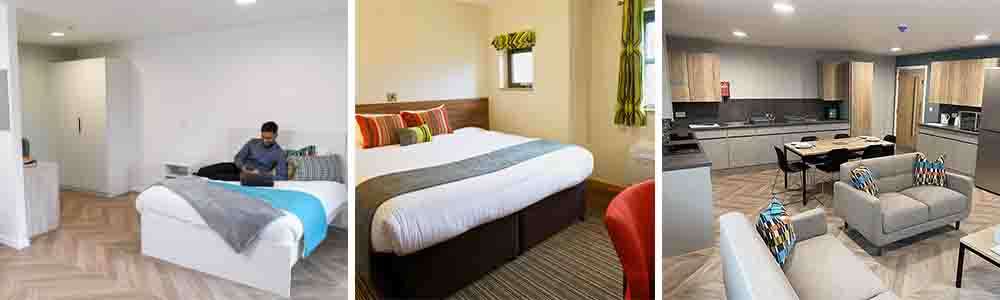
Accommodation
In addition, the campus provides shared facilities such as kitchens, study areas, and social lounges. This helps students interact and build a professional community. Furthermore, security is high because of the military environment.
Off-campus accommodation is also available in nearby villages like Shrivenham and towns like Swindon. Students can rent private apartments or shared houses. Moreover, off-campus living offers more independence and flexibility.
However, most students prefer on-campus housing because it is closer to classes and training facilities. So, accommodation choice depends on personal preference and duration of study.
4.2.10 Medical Services & Nearest Hospitals
Medical support at Shrivenham Campus is well organised because of its connection to the Defence Academy system. On campus, basic medical and first aid services are available for students and staff. Moreover, health support is provided for emergencies and routine care.
For more advanced treatment, the nearest hospital is Great Western Hospital, located in Swindon. This hospital provides emergency care, specialist treatment, and surgical services. Therefore, it is the main healthcare facility for the campus community.
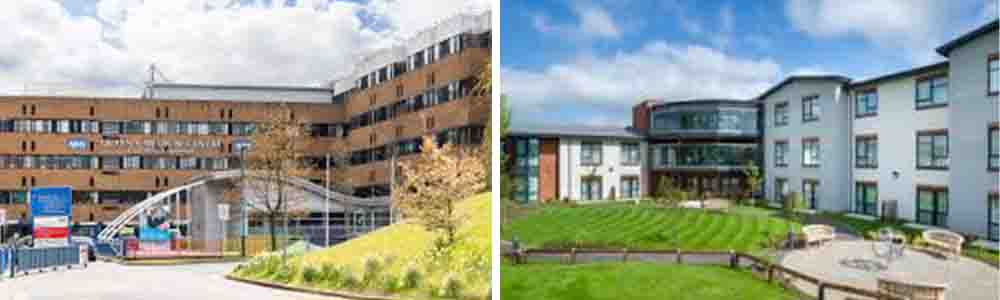
Medical Services & Nearest Hospitals
In addition, there are several GP clinics and pharmacies in Swindon and nearby villages. Students can register with local doctors for regular health services. Furthermore, dental clinics and private healthcare centres are also available.
So, even though the campus is in a rural location, medical access is reliable and well supported through nearby urban healthcare systems.
Read More:
Cranfield University, UK (Part 1)
Main Campuses of Cranfield University – Cranfield Campus (Part 2)

Study Overseas details for University Articles