Lancaster University Leipzig is the first branch campus in the Lancaster University series located outside the UK. It is located right in the historic centre of Leipzig, Saxony, Germany, inside the Strohsackpassage building on Nikolaistraße. Also, this is the first public UK university to establish a campus in Germany, offering full Lancaster University degrees taught entirely in English on European soil.
Unlike the UK’s Bailrigg campus, Leipzig represents Lancaster’s international growth strategy. Also, it is a small, modern, city-centre campus embedded in a striking piece of 1990s German architecture, in a city with nearly a thousand years of trading history.
4.2.1 Faculties and Programs Available at Lancaster University Leipzig
All programmes offered by Lancaster University Leipzig are taught in English and lead to a genuine Lancaster University (UK) degree certificate. So, they don’t offer a separate German qualification. Also, the campus has been approved by the Saxon State Ministry for Higher Education, Research, and the Arts.
There are two entry points to this university. One is degree entry (direct into Year 1). The second method is the Foundation Year. This is mostly for students who don’t yet meet direct-entry requirements. The foundation year builds subject-specific and academic skills, as well as confidence, before starting the full degree.
Faculties and Programs Available at Lancaster University Leipzig
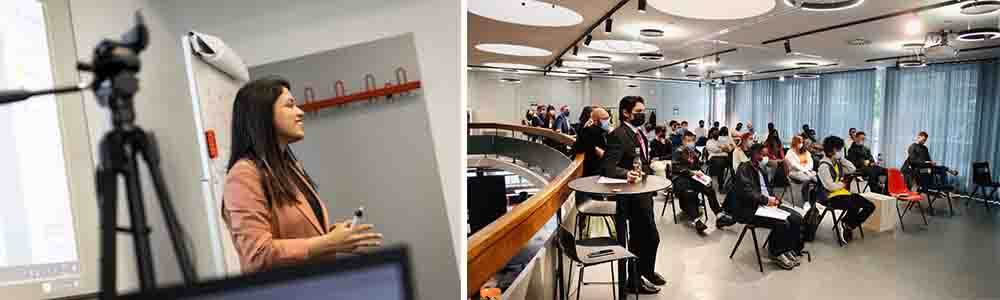
Small class sizes are emphasised as a defining feature, giving students more individual attention than in a typical large lecture-hall environment. Moreover, bachelor’s degree students can choose to spend their second year at the main Lancaster campus in the UK. This lets students broaden their experience with a different teaching and learning context.
Today, there are over 70 nationalities represented on campus, despite its relatively small overall size.
Undergraduate degrees (BSc Hons)
- Accounting and Finance
- Business Management
- Business Management with Accounting and Finance
- Business Management with Business Analytics
- Business Management and Media
- Computer Science
- Software Engineering (seven core undergraduate degree titles currently listed)
Foundation programmes
- Foundation in Business
- Foundation in Computer Science (designed specifically for students who don’t meet direct-entry requirements)
Postgraduate degrees (MSc)
- Logistics and Supply Chain Management
- Management
- Data Science
- Cyber Security
Pre-Master’s programmes
- Pre-Master’s in Business
- Pre-Master’s in Computer Science
Language support
In addition, German language courses are offered free of charge in the first year of study for non-German-speaking students. It is a practical, integrated feature that helps international students settle into daily life in the city, even though degree teaching itself is entirely in English.
Career outcomes
Furthermore, Computer Science graduates from the wider Lancaster network have gone on to major technology employers including IBM, Google, the BBC, and BAE Systems. This reflects the strength of the Lancaster brand behind the Leipzig degree, even though these are UK-wide, not Leipzig-specific, figures.
4.2.2 History & Functions of Lancaster University Leipzig
Lancaster University Leipzig was established in January 2020 through a partnership between Lancaster University and Navitas. The first student intake for the foundation programme was expected in September 2019. Moreover, the initial partnership agreement runs for 10 years, until September 2029.
Division of responsibilities:
Lancaster University retains full control over academic matters, including hiring Lancaster staff to teach the degree programmes. Navitas is responsible for the leased premises, facilities, student recruitment, support services, and administrative staff. This is a “transnational education” model. Here, the academic authority stays with Lancaster while operations are run by a specialist partner.
Why Leipzig was chosen
History & Functions of Lancaster University Leipzig
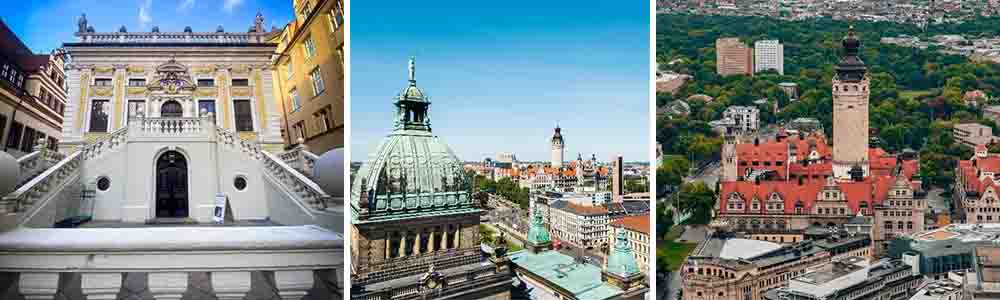
Leipzig was described by Lancaster and Navitas as a centre of technological competence, innovation, and global industry, with high graduate employability prospects. Also, there is a comparatively low cost of living, making it a practical, economically driven rationale for the location choice
Germany offers international graduates post-study work rights and a relatively easy transition to permanent residence, making it an attractive destination beyond just the degree itself. Also, this is a genuine draw for international students weighing where to study.
Current function
Today, Lancaster University Leipzig functions as a compact campus, delivering business, computing, and related degrees to an international student body
4.2.3 History of Leipzig
Early origins
The first Slavic settlements appeared in the area around 900 AD, which is the very earliest known human settlement on the site. Also, the first written mention of the city is in 1015, in the chronicle of Thietmar of Merseburg. This officially marks the recorded beginning of Leipzig’s history.
City rights and market privileges were granted to Leipzig in 1165 by Margrave Otto the Rich. This is the true foundation of Leipzig’s long trading identity. There was a geographic advantage to Leipzig as it sat at the crossing point of two major medieval European trade routes, the Via Regia and the Via Imperii. This strategic position is the main reason the city grew into a major trading hub.
Rise as a trade and fair city
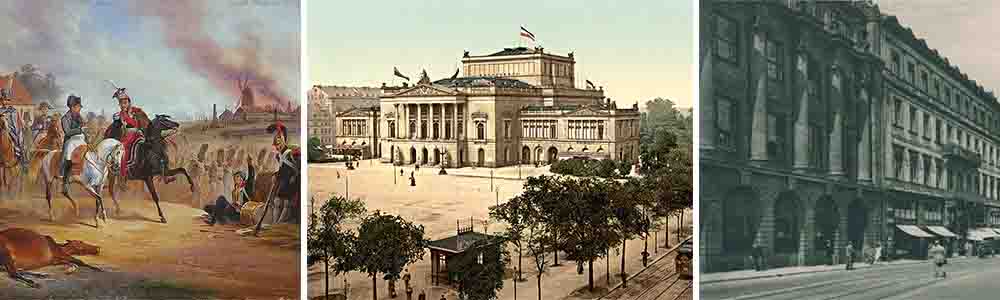
The first fair of the city was recorded in 1165, with the Imperial Fair status granted by Emperor Maximilian I in 1497. Moreover, further privileges were confirmed in 1507. This “Stapelrecht” was forced upon traders to offer goods for sale in Leipzig itself, cementing its trading dominance. In 1650, the world’s first daily newspaper was published in Leipzig, which is a notable claim in global media history. Then, in 1895, Leipzig hosted the world’s first model/sample trade fair, giving it a leading position in the international trade fair industry until the Second World War.
History of Leipzig
Academic and cultural heritage
Leipzig University was founded in 1409, marking the beginning of the city’s development into a major publishing centre. It is one of the oldest universities in Europe.
Napoleonic and modern history
Battle of Leipzig (“Battle of the Nations”) took place in 1813. Napoleon’s army was decisively defeated by the combined forces of Prussia, Austria, and Russia. Also, a monument to the Battle of the Nations opened in 1913, marking the battle’s centenary.
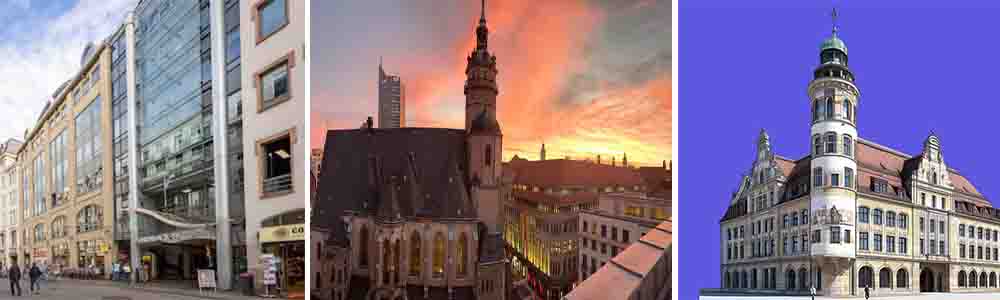
Then, in 1989, a peaceful “Monday Demonstration” beginning at St Nicholas Church became a key catalyst in the fall of the Berlin Wall and German reunification.
Following reunification, Leipzig became part of the German state of Saxony and has since redeveloped into a modern service and technology hub.
History of Leipzig
4.2.4 Infrastructure & Facilities at Lancaster University Leipzig
The Lancaster University Leipzig is an urban university embedded within a modern shopping and office passage rather than a standalone university building.
The Strohsack passage
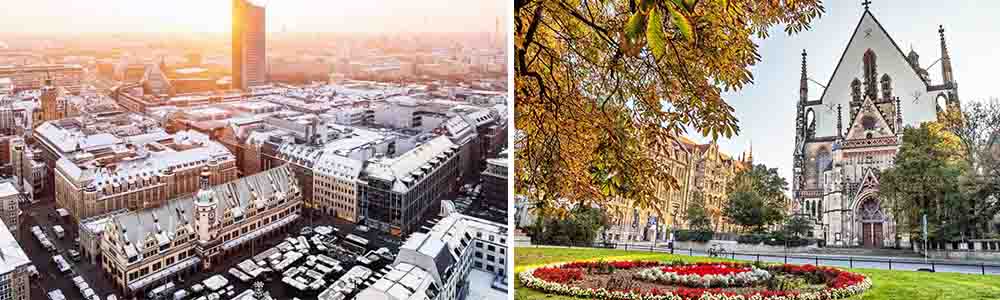
The groundwork for this building was laid on 30 November 1995, and it opened in 1997. It is designed by architects Appel, Behzadi, and Bohne. The structure of this building consists of a shopping and office passage connecting Nikolaistraße to Ritterstraße through three differently designed courtyards, covering roughly 10,000 m². So, it combines retail, dining, offices, and educational space under one roof.
Architectural features of this building include tall, slender “mushroom-shaped” metal columns supporting the largest, two-storey courtyard hall. Also, there is a glass entrance facade on the Nikolaistraße side. This is a distinctive, modern architectural style that stands out from the surrounding historic old-town buildings.
Infrastructure & Facilities at Lancaster University Leipzig
A significantly notable landmark inside is Europe’s largest floor-set clock, which is fully functional and walkable, with hands shaped like male and female figures. It is designed by Reinhard Minkewitz. This is a genuinely unique architectural curiosity found in the very building where students study.
The passage of this building takes its name “Strohsack” (meaning “straw sack”) from a community centre at Ritterstraße 7 that was incorporated into the wider commercial complex. So, the name is a small but interesting piece of local naming history.
Today, this building houses numerous restaurants and shops alongside Lancaster University Leipzig, making it a genuinely mixed-use city-centre building rather than a dedicated academic block. Moreover, Lancaster occupies an open balcony area on the first floor overlooking the main hall.
4.2.5 Weather in Leipzig
As Leipzig is located on the North Sea coast. So, it experiences an oceanic climate, with warm summers.
The warmest months are July and August, with average daytime highs of roughly 24–25°C (75–77°F. So, there is a noticeably warmer summer peak than in Lancaster or Cheltenham/Gloucester. The coldest month is January, with average highs of only around 2–5°C (36–41°F) and average lows dropping to around -1 to -2°C (28–30°F). Moreover, there are colder winters with an annual average temperature around 10°C (50°F).
Annual rainfall is approximately 700–723 mm, noticeably drier overall than at Lancaster’s UK campus. The wettest months are June and July, receiving around 70–80 mm of rain. The driest months are February and April, with rainfall dropping to around 40–45 mm. It shows a genuinely different seasonal rainfall pattern compared to the UK campuses in your series.
Weather in Leipzig
Snowfall is common in winter, though generally not heavy. Moreover, the highest humidity recorded in November was around 84% (the lowest humidity typically falls in July, around 66%.
Now let’s get nightlife, sports, and hospital info for Leipzig. Now let’s check hospitals and sports facilities in Leipzig. I now have everything needed. Here’s Part Two of the Lancaster University Leipzig article.
4.2.6 Transportation & Airports Closest to Lancaster University Leipzig
By public transport within the city
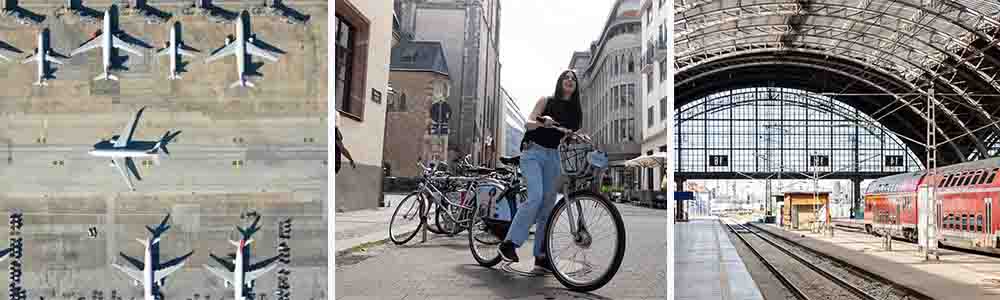
Lancaster University Leipzig sits right in the historic centre, inside the Strohsackpassage on Nikolaistraße — easily reachable on foot from Leipzig’s main tram and bus network (the building is directly next to St Nicholas Church, one of the most central landmarks in the city)
Also, Leipzig Hauptbahnhof (Central Station) is a short tram/walk from the campus, and is Europe’s largest railway station by floor area (a genuinely impressive piece of infrastructure, useful as an interesting detail for your article)
Nearest airport
Leipzig/Halle Airport (LEJ) — the city’s main airport, located between Leipzig and Halle, about 22 km (13.7 miles) from the city centre (roughly a 25-minute drive to central Leipzig)
The airport has its own dedicated train station directly beneath the terminal (a genuinely convenient setup — no shuttle bus needed to reach the trains)
S-Bahn services (S5 and S5X) run every 30 minutes between the airport and Leipzig Hauptbahnhof, taking about 15 minutes, with tickets priced around €5.80 for adults (operates between roughly 4am and 1am, covering most arrival/departure times)
Alternative: Leipzig-Altenburg Airport, used by some Ryanair flights, about a 70-minute journey from the city centre (a secondary, budget-airline-focused option worth a brief mention)
Transportation & Airports Closest to Lancaster University Leipzig
Longer-distance connections
Leipzig connects by direct ICE/IC train to Berlin (about 1 hour 15 minutes) and other major German cities (a genuinely fast and convenient rail network by European standards)
FlixBus long-distance coach services also connect Leipzig/Halle Airport and the city to destinations across Germany and wider Europe (a budget-friendly option students commonly use)
By road: Leipzig is accessible via the A9 (Berlin–Munich), A14 (Magdeburg–Dresden), and A38 (Göttingen–Leipzig) motorways (useful if students or visitors are driving in from elsewhere in Germany)
4.2.7 Student Life at Lancaster University Leipzig
Entertainment
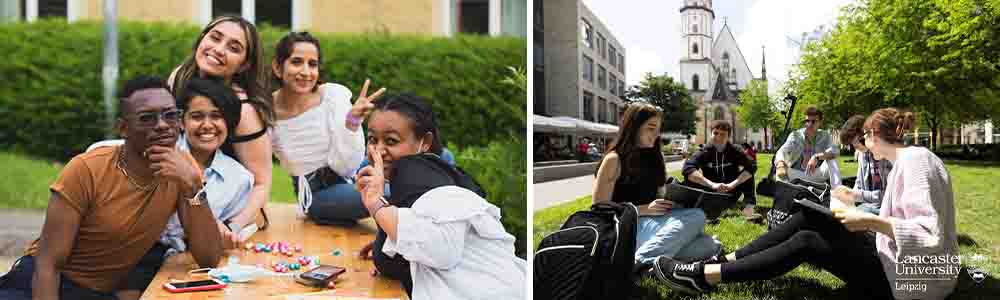
Being right in Leipzig’s old town, students have immediate access to the city’s shops, restaurants, cafés, museums, and cultural venues without needing transport. Leipzig’s Market Square is a lively backdrop for open-air events, especially in summer, with restaurants and bars surrounding it. So, it is a genuinely central, walkable social hub close to campus.
Karl-Liebknecht-Straße is situated within a short distance from the campus and offers over 30 restaurants and bars in one lively strip. Moreover, Leipzig’s strong classical music heritage (Bach, Mendelssohn) means regular access to affordable concerts at venues like the Gewandhaus and the Leipzig Opera. So, this is a genuinely distinctive cultural feature compared to Lancaster’s UK campus.
Sports facilities
There is no dedicated on-campus sports arena at Lancaster, Leipzig itself. However, students can access Leipzig’s public sports and leisure facilities, including municipal swimming pools and gyms. In addition, there are the Leipzig Zoo’s surrounding green spaces in the Auenwald forest floodplain park for outdoor activity and running. It is a large, well-known green belt running right through the city.
Student Life at Lancaster University Leipzig
Leipzig has a strong football culture, with RB Leipzig’s Red Bull Arena located in the city. This offers students the chance to attend Bundesliga matches.
Clubs & societies
Given the smaller scale of the Leipzig campus (around 400 students), student life leans more on the wider, genuinely international Leipzig student community rather than a large internal club/society system.
Students frequently form informal cultural and interest-based groups. For example, an Indian Society organising Bollywood nights and cricket matches has been noted specifically at this campus. This reflects the genuinely diverse international student mix, with over 70 nationalities.
Career services include CV workshops, job fairs connecting students with German and international companies, and LinkedIn optimisation support
4.2.8 Nightlife Near Lancaster University Leipzig
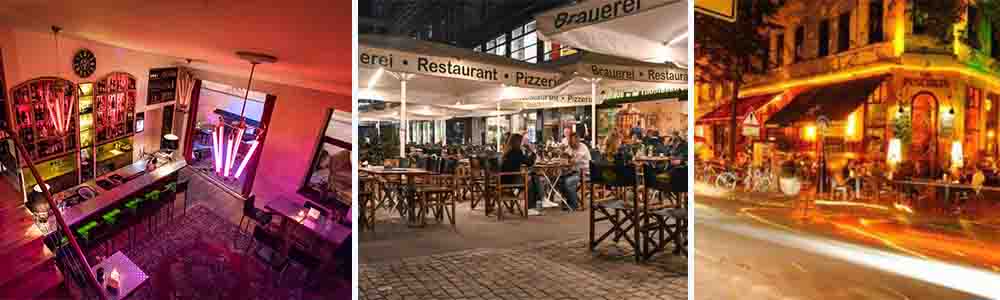
Moritzbastei is a historic student club and cultural centre, built into the old city fortifications, extending three storeys underground. Originally, it was excavated by University of Leipzig students themselves between 1974 and 1976. Then, it was turned into a club. It is located right next to the University of Leipzig’s lecture halls, close to the old town. Also, this offers concerts, exhibitions, theatre performances, film screenings, and dance parties, plus a café by day and a cocktail/wine bar in the evening.
Distillery is one of Leipzig’s oldest and most famous nightclubs, known for its industrial vibe and techno musicIt is located in which is a part of the city’s well-known electronic/techno music scene.
Night Life Near Lancaster University Leipzig
Karl-Liebknecht-Straße bars and clubs are a lively strip of bars and clubs, described as one of the city’s most popular nightlife neighbourhoods. Also, they consist of a broad mix of venues catering to different tastes, from casual bars to dance clubs.
Auerbachs Keller is a historic restaurant and cellar bar, famous for its role in Goethe’s Faust, located in the Market Square area, central Leipzig. Moreover, it is a genuinely unique cultural landmark combining traditional German food, atmosphere, and literary history.
4.2.9 Accommodation for Lancaster University Leipzig Students
University-arranged / partner accommodation
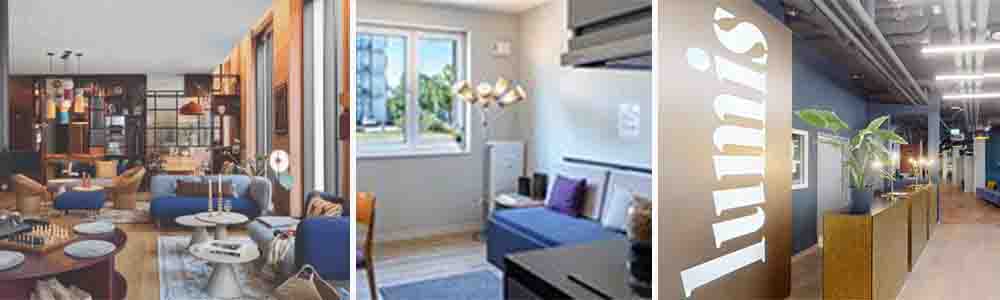
There are On-campus-style halls arranged through the university/Navitas network. Also, those are typically priced around €350–€500 per month, usually shared with a mix of international roommates.
This is notably different from Lancaster’s UK college system. Leipzig doesn’t have its own historic “college” residences, since the campus itself is embedded within a single city-centre building.
Off-campus / private housing
Accommodation for Lancaster University Leipzig Students
Popular student neighbourhoods include Plagwitz, a creative and residential district known for being safe and student-friendly. So, it is a well-regarded alternative to university-arranged housing for students who prefer more independence.
The cost of living in Leipzig is generally considered affordable by German and wider European standards. It is one of the reasons cited by Lancaster and Navitas for choosing this location in the first place.
4.2.10 Medical Services & Nearest Hospitals
Registering for healthcare
EU students are generally entitled to free emergency healthcare in Germany with a valid Global Health Insurance Card (GHIC) or European Health Insurance Card (EHIC). However, non-EU students are not automatically covered and should arrange comprehensive medical insurance before arriving. Students are advised to always carry ID, health insurance details, and emergency contact information.
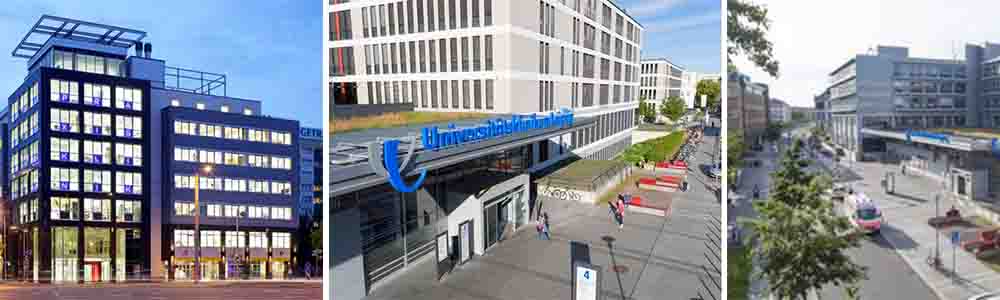
Medical Services & Nearest Hospitals
Nearest hospitals
Universitätsklinikum Leipzig (Leipzig University Hospital) is the city’s largest hospital, with a 24-hour emergency department. It is located at Liebigstraße 20.
Also, Klinikum St. Georg is the city’s second-largest hospital, founded in 1212, with 1,066 beds across 25 clinics. It is located at Delitzscher Straße 141. Moreover, it is one of the oldest continuously operating hospitals in the city, with a genuinely long history of over 800 years.

Study Overseas details for University Articles
Read More:
- Lancaster University England UK (Part 1)
- Lancaster University; Main UK Campus (Part 2)
- Lancaster University Leipzig – Germany (Part 3)
- Lancaster University Ghana (LUG) (Part 4)
- Lancaster University College at Beijing Jiaotong University – China (Part 5)