
The Cranfield University Cranfield Campus is a globally recognised centre for postgraduate education, specialising in engineering, technology, environment, and management. This article explores the key faculties and academic programs offered at the campus, highlighting their strong industry links and practical learning approach. It also provides insight into the university’s historical development, from its origins as the College of Aeronautics to its current status as a leading research institution. In addition, the article covers the surrounding region of Bedfordshire, along with campus facilities, student life, transport, and overall living experience for students.
4.1.1 Faculties and Programs – Cranfield Campus
-
School of Aerospace, Transport and Manufacturing (SATM)
This is one of the strongest aerospace schools in Europe, offering degrees in Aerospace Engineering that cover aircraft design, aerodynamics, and propulsion systems. The faculty holds avionics and flight control systems, which have strong links with industry (Airbus, Rolls-Royce, Boeing collaborations. Automotive Engineering: Advanced vehicle systems, motorsport engineering
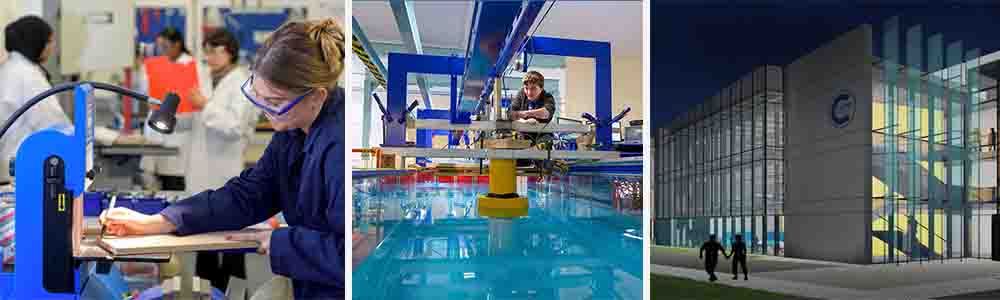
Moreover, the faculty offers Electric and autonomous vehicle technologies, which focus on manufacturing industry 4.0, robotics, additive manufacturing (3D printing) , materials science and advanced production systems. This degree provides students with hands-on learning, the use of real aircraft, wind tunnels, and simulation labs
-
School of Water, Energy and Environment (SWEE)

Faculties and Programs – Cranfield Campus
This faculty mainly focuses on global sustainability challenges through its academic programs. The Water Engineering degree covers Water supply, wastewater treatment, and hydrology. This degree has a strong relevance for developing countries. The degrees in Energy cover Renewable energy systems (solar, wind, bioenergy), Energy policy and sustainability. Moreover, degree programs about the environment address issues such as Climate change, and focus on environmental management and pollution control. In addition, the Agrifood sector teaches students about soil science, crop production, food security, precision agriculture and agri-tech.
-
School of Management
The School of Management at the Cranfield Campus is one of the top-ranked business schools in the UK. It offers MBA degrees that aim to uplift students’ Leadership, strategy, and global business focus. Their MSc Programs include the Logistics and Supply Chain Management degree, which is very well known globally, and degrees in Finance, Business Analytics, and Marketing.
Executive Education can be obtained by following short courses for professionals and corporate leaders. These degrees offer students strong industry exposure, given through guest lectures and real company projects
-
General Academic Structure
Cranfield University only offer students Postgraduate degrees. Their degrees are highly specialised programs which emphasise applied knowledge, industry problem-solving and research commercialisation.
4.1.2 History & Functions of the Cranfield Campus
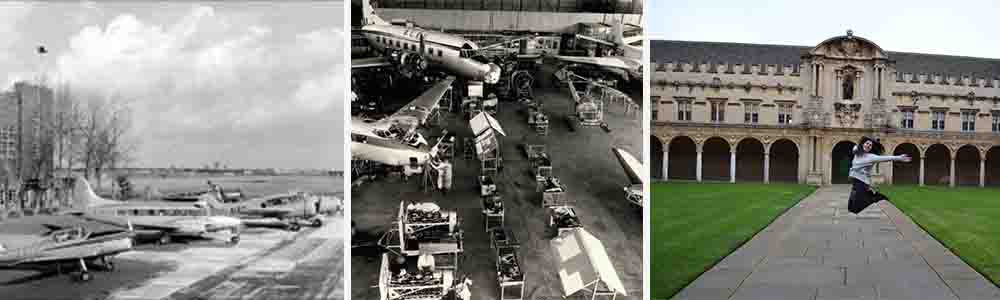
Cranfield University, Cranfield Campus, started in 1946 as the College of Aeronautics. This was just after World War II, when aviation technology had advanced very quickly. The UK needed skilled engineers and scientists to rebuild and improve the aviation industry. Because of this, the college was set up on a former Royal Air Force base at Cranfield, which had been used for military aircraft during the war.
In the beginning, the institution focused only on aeronautical engineering. Students learned about aircraft design, aerodynamics, engines, and how planes work. The teaching was very practical and closely connected to the needs of the government and the aviation industry. Most students at that time were already professionals, such as engineers or people from the military, who wanted to improve their knowledge.
In 1969, the college changed its name to Cranfield Institute of Technology. This was an important turning point. The institute started to expand into new areas like manufacturing, industrial engineering, and management. This change happened because industries in the UK needed more than just aircraft engineers. They needed experts who could improve production systems and manage large organisations.
History & Functions of the Cranfield Campus
establishing the Cranfield School of Management
During the 1970s and 1980s, the campus grew even more. The Cranfield School of Management was established, which later became one of the top business schools in the UK. At the same time, new subjects like environmental engineering and energy management were introduced. This showed that the university was adapting to global issues like environmental protection and resource management. More international students also started coming to Cranfield, which increased its global reputation.
In 1993, the institute officially became a university. This change recognised its strong teaching, research, and close connections with industry. Since then, Cranfield has continued to grow as a postgraduate-only university, focusing on areas like aerospace, energy, environment, agrifood, and business.
Today, the main role of the Cranfield Campus is to provide advanced education for postgraduate students and to carry out research that solves real-world problems. The university works closely with major companies such as Airbus and Rolls-Royce. One of its most unique features is its own airport, which allows students and researchers to work on real aircraft and aviation projects. Overall, the campus acts as a link between education and industry, helping to develop new technologies and skilled professionals.
4.1.3 History of the City – Bedfordshire
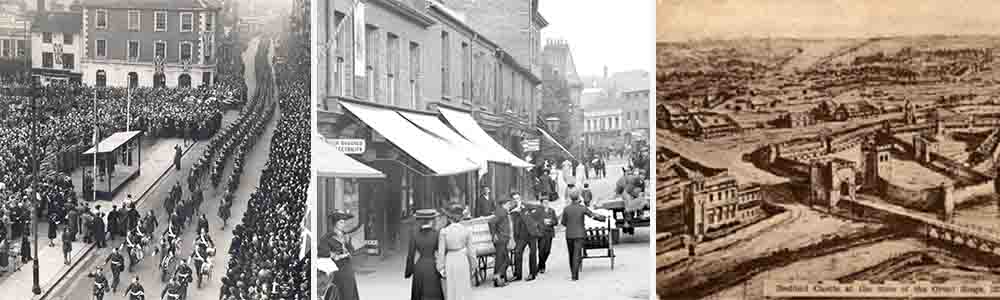
The Cranfield Campus is located in Bedfordshire, a county with a long history that goes back to Anglo-Saxon times. Early settlements in this area were built near rivers and fertile land, especially around the River Great Ouse. The name “Bedford” is believed to come from “Beda’s ford,” which means a crossing point in the river. In the medieval period, the area was mainly rural, and villages like Cranfield depended on farming and small local markets.
From the 16th to the 18th centuries, Bedfordshire remained mostly agricultural. Farming was the main source of income, with people growing crops and raising animals. The area was known for its good-quality soil. Unlike some other parts of England, it did not become heavily industrialised during this time, so it kept its quiet, rural character.
Industrial Revolution
History of the City – Bedfordshire
During the Industrial Revolution, some changes took place. Industries like brickmaking developed because the area had a lot of clay. Transport systems also improved, with better roads and railways connecting towns. This helped nearby places like Bedford grow as trading and business centres. However, Cranfield itself stayed more rural compared to larger towns.
20th Century
A major change happened during the 20th century, especially around the time of World War II. The area became important for military activities when RAF Cranfield was established. After the war, instead of being abandoned, the site was used for education, leading to the creation of the College of Aeronautics in 1946. This marked the beginning of Cranfield’s development as a centre for higher education and research.
Later, nearby cities also developed and influenced the area. Milton Keynes was created in 1967 as a planned city to reduce overcrowding in London. It quickly became a modern city with businesses, industries, and job opportunities. This helped Cranfield students by providing internships and industry connections. Bedford also continued to grow as a town with good schools, cultural diversity, and residential areas.
Today, the Cranfield area is part of the Oxford–Cambridge Arc, which is an important region for innovation and technology in the UK. Even though Cranfield is still a small and quiet village, it is located in a very strategic place, close to major cities and industries. The area has changed a lot over time, from a farming-based region to a centre for education, research, and technological development.
4.1.4 Infrastructure Facilities – Cranfield Campus
General Infrastructure
The Cranfield campus is a fully self-contained campus with functions like a small town. The university has on-campus housing for students, staff, and families. Also, the university offers shuttle services and road connectivity to nearby cities.
The social life of the students of this campus is shaped by the student association (CSA), clubs, and cultural events. In addition, the research environment of Cranfield University is equipped with advanced labs, pilot plants, and testing facilities.
Prominent Buildings & Facilities
Cranfield Airport
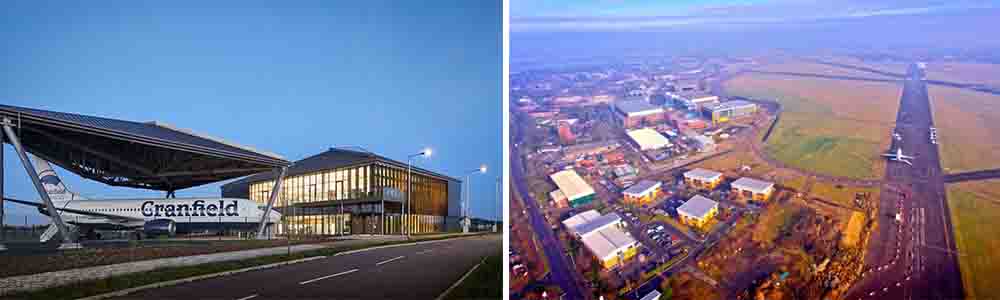
This airport is a former RAF base from World War II, with features including a fully operational runway and an air traffic control tower. It provides facilities such as aircraft hangars and maintenance areas. Now the area is used for flight testing, research, and aerospace student training.
Cranfield School of Management Building
Infrastructure Facilities – Cranfield Campus
This building is a modern, purpose-built business school facility with features such as lecture theatres with advanced technology and case-study rooms for interactive learning. This building is mainly used for MBA and executive education programs.
Vincent Building
The Vincent building is the key academic building for engineering, which houses lecture halls, faculty offices, engineering labs and workshops. This building is mainly used for teaching and research in mechanical and manufacturing engineering
Whittle Building
This building is named after Sir Frank Whittle, who is a pioneer in jet engine technology. The operations in this building focus on aerospace propulsion research. Also, it contains facilities such as engine testing labs and advanced experimental setups.
Kings Norton Library
Infrastructure Facilities – Cranfield Campus
This building houses the main academic library of Cranfield University. So, this facility features quiet study areas and group discussion rooms. Moreover, students can get access to digital journals and databases through this library.
Sports and Recreation Facilities
The university contains an indoor sports hall, gym and fitness centre, and outdoor fields for football, cricket, etc. So, this area is mainly used for student fitness and recreational activities.
Student Accommodation Areas
The university provides accommodation options such as standard rooms, en-suite rooms, and family housing. It has features such as safe and community-based living, and those are close to academic buildings.
4.1.5 Weather – Bedfordshire
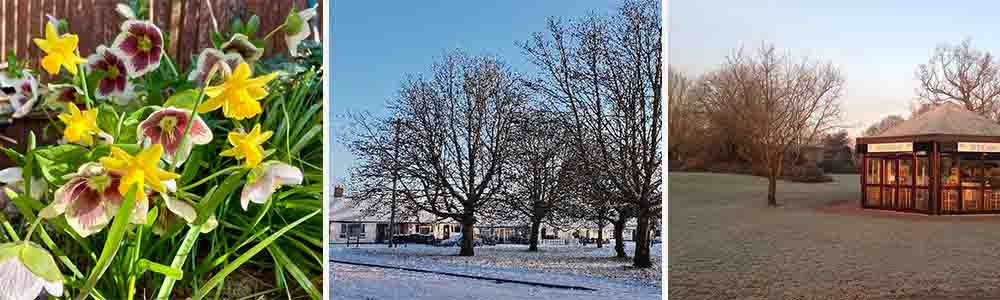
Cranfield Campus has a temperate maritime climate influenced by the Atlantic Ocean, resulting in generally mild weather throughout the year. Summers (June–August) are warm but not extreme, averaging 20–25°C, with occasional heatwaves and long daylight hours. Winters (December–February) are cold but moderate, usually between 0–8°C, with frequent frost and rare snowfall. Rain is spread evenly across the year, often in the form of drizzle, and cloudy conditions are common. Spring and autumn are unpredictable with quick weather changes. Moderate winds are frequent, supporting aviation studies. Students typically need layered clothing and rain protection due to changing conditions.
Weather – Bedfordshire
4.1.6 Transportation & Airports (Cranfield Campus Area)
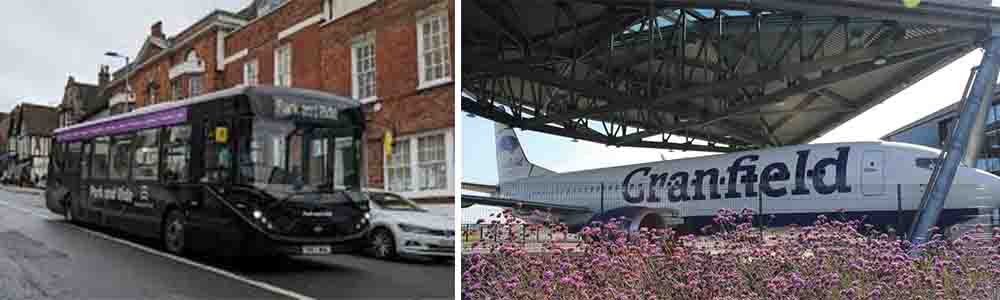
Cranfield Campus is located in a rural area of Bedfordshire, but it is still well-connected to nearby cities. The nearest major towns are Milton Keynes and Bedford, both of which provide strong transport links. Milton Keynes Central Station is the closest major railway hub and offers direct train services to London Euston in about 30–40 minutes. Bedford Station also connects students to London and other UK cities.
In terms of road transport, the campus is easily accessible via the M1 motorway, which connects London to the north of England. Local buses operate between Cranfield, Milton Keynes, and Bedford, but services are limited in frequency. Therefore, most students prefer taxis, cycling, or university shuttle services.
Transportation & Airports
The nearest major airports are London Luton Airport (about 30–40 minutes by car) and London Heathrow Airport (about 1–1.5 hours away). Luton Airport is the most commonly used by international students because of its proximity and low-cost flight options. Additionally, Cranfield is unique because it has its own Cranfield Airport, which is mainly used for aerospace research, pilot training, and experimental aviation activities rather than commercial travel.
4.1.7 Student Life at Cranfield Campus
Student life at Cranfield Campus is very different from traditional undergraduate universities because it is a postgraduate-only institution. As a result, the environment is more professional, focused, and career-oriented.
The Cranfield Students Association (CSA) plays a central role in student life. It organises cultural events, networking sessions, and social gatherings. In addition, there are several student-led clubs and societies, such as sports clubs, international student associations, and academic interest groups.

Student Life at Cranfield Campus
Sports facilities are available on campus, including a gym, football and cricket grounds, tennis courts, and indoor sports halls. However, many students also use facilities in nearby Milton Keynes, which offers large private gyms, swimming pools, and sports centres managed by the local council.
For entertainment, students often travel to Milton Keynes, where cinemas, shopping centres, restaurants, and leisure parks are available. The centre: MK Shopping Mall and Xscape entertainment complex are popular destinations. Bedford also offers cultural venues, parks, and local community activities.
Overall, student life at Cranfield is a mix of academic focus and occasional social activities, with most entertainment options located outside the campus.
4.1.8 Nightlife
Nightlife in Cranfield itself is very limited because it is a quiet rural village. However, students usually travel to Milton Keynes, which has a more active nightlife scene.
In Milton Keynes, one popular nightlife location is The Hub: MK, which is a modern entertainment district filled with restaurants, pubs, and bars. It is lively in the evenings and attracts many students and young professionals. Another popular venue is Revolution Milton Keynes, a well-known bar offering cocktails, music nights, and weekend events. It has a modern atmosphere and is commonly visited by students from Cranfield.

Nightlife
For clubbing, Popworld Milton Keynes is a popular nightclub that plays mainstream music and hosts student nights. It is especially busy on weekends. Additionally, BrewDog Milton Keynes offers a more relaxed nightlife experience with craft beers and social gatherings.
In Bedford, nightlife is smaller but still active. Pubs such as The Rose and The Higgins area bars offer a quieter and more traditional British pub experience.
Overall, Cranfield students rely mainly on nearby cities for nightlife, especially Milton Keynes, since the campus itself does not have clubs or bars.
4.1.9 Accommodation
Cranfield University provides a wide range of accommodation options, mainly designed for postgraduate students.
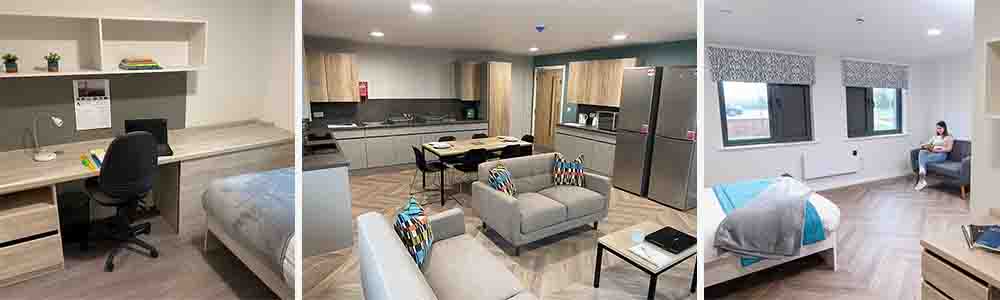
On-campus accommodation includes halls of residence, shared houses, and studio apartments. These are located within walking distance of the lecture buildings. Rooms are usually fully furnished and include basic facilities such as Wi-Fi, heating, and shared kitchen spaces. Some accommodations are designed for families, as many postgraduate students study with spouses or children.
Living on campus is convenient because it reduces travel time and helps students stay connected with university activities. It also creates a close student community, especially for international students.
Accommodation
Off-campus accommodation is available in nearby areas such as Cranfield village, Milton Keynes, and Bedford. Students living off-campus usually rent private apartments or shared houses. Milton Keynes is the most popular choice because it offers modern housing, better transport links, and more lifestyle facilities. However, off-campus living requires commuting to the university.
Overall, students choose between on-campus convenience and off-campus independence depending on their lifestyle and budget.
4.1.10 Medical Services & Nearest Hospitals
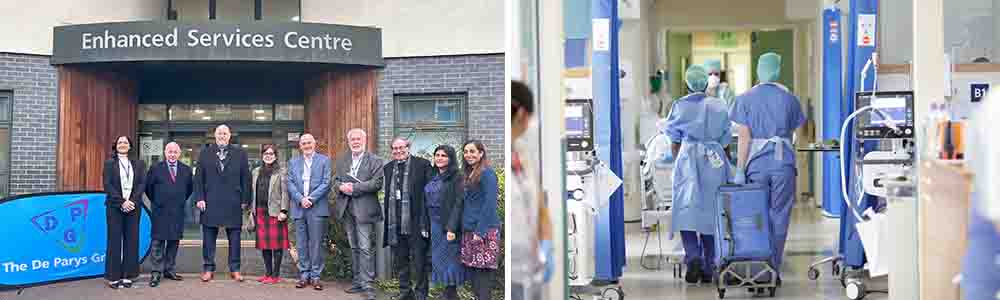
Cranfield Campus has basic medical support available on-site, including a university health centre that provides general healthcare services for students. This includes routine check-ups, minor illness treatment, and referrals when needed.
For more advanced medical care, students mainly rely on hospitals in nearby cities. The closest major hospital is Milton Keynes University Hospital, which is a large NHS hospital offering emergency services, specialist treatments, surgery, and full medical support. It is the primary healthcare facility for Cranfield students in emergencies.
Medical Services & Nearest Hospitals
Another important hospital is Bedford Hospital, which also provides emergency care, outpatient services, and specialist departments. Both hospitals are well-equipped and accessible by car or ambulance within a short travel time from the campus.
Additionally, local GP (general practitioner) clinics are available in Cranfield village and Milton Keynes, where students can register for regular healthcare services.
Overall, medical services around Cranfield are reliable, with strong hospital networks in nearby cities ensuring student safety and healthcare access.
Read More:
Cranfield University, UK (Part 1)
Shrivenham Campus – University of Cranfield (Part 3)

Study Overseas details for University Articles