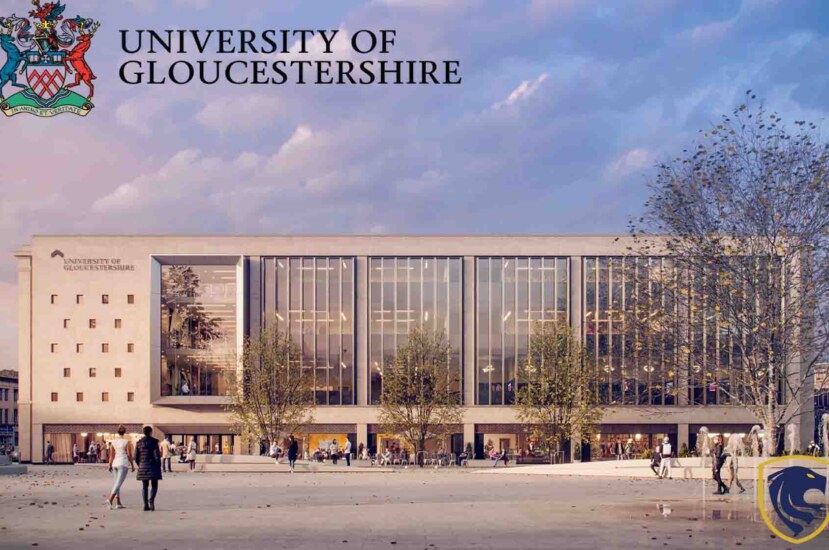
City Campus is the newest sub-campus of the University of Gloucestershire, located in Kings Square, right in the heart of Gloucester city centre. It was officially opened in August 2025. Unlike the other three, FCH, Park, and Oxstalls all trace back to 19th- or 20th-century roots, City Campus is a brand-new addition built inside a converted 1930s department store. The campus occupies the former Debenhams building, which was once a beloved but empty Gloucester landmark. It is now reborn as a £75 million teaching and community hub.
4.4.1 Faculties and Programs Available at City Campus
As the newest of the university’s four campuses, opened in August 2025, the city campus’s core subject focus is Education, Psychological Sciences, and Social Work. Also, the city campus is described as an “Institute for Education,” building on the university’s original teacher-training roots.
They mainly offer QTS (BEd/PGCE routes) with some shared with FCH. Also, there are secondary Education PGCE pathways and other education-related postgraduate degrees such as MA Education, MA Inclusive Education, and Doctorate of Education.
Psychology & psychological sciences
The City campus offers psychology-related degrees such as Psychology BSc (Hons), Psychology, Health and Wellbeing BSc (Hons). Here, the students are taught by academics specialising in clinical and health psychology. Also, psychology conversion programmes are available such as a postgraduate route for non-psychology graduates. In addition, there are routes into clinical, health, forensic, occupational, educational, and sports psychology, which are accredited by the British Psychological Society. Also, they offer degrees such as Forensic Psychology MSc and Health Psychology MSc.
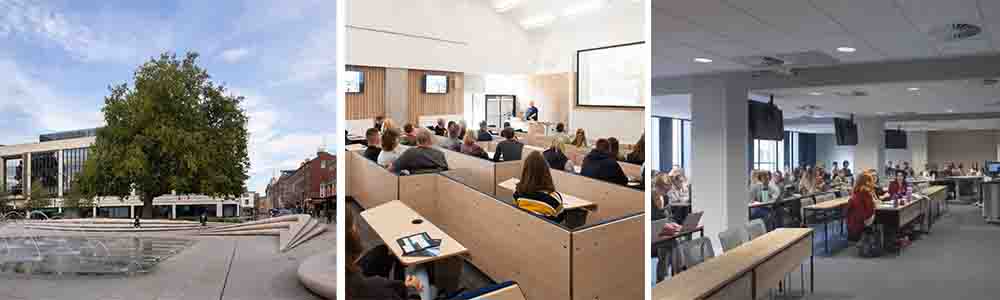
Faculties and Programs Available at City Campus
Social work
Social Work BSc (Hons) is now delivered at City Campus from September 2025. This degree is ranked 1st in the UK for graduate prospects by the Complete University Guide 2024. Moreover, there is a Social Work MA postgraduate route. These courses are recognised by Social Work England (SWE), giving graduates eligibility for professional registration.
Also, there is an Arts, Health and Wellbeing Centre in partnership with the NHS Integrated Care Board on the first floor of the campus. This centre focuses on piloting arts-based therapy, rehabilitation, and social prescribing research.
4.4.2 History & Functions of City Campus
Before it was a campus, this building was originally constructed in the 1930s, in the Art Deco style as a department store. It was used as the Debenhams department store, which closed and left the building vacant for years before redevelopment. The University of Gloucestershire purchased the building in 2021 with plans to expand the scale and range of the university’s higher education programmes.
Redevelopment journey
The construction partner of the City campus was Morgan Sindall Construction, which worked with the university to transform the 20,000 sqm site into a fully equipped university. Initially, the campus accepted nursing and allied health students who were expected in September 2023. However, the actual opening was delayed to August 2025, and construction ran about a year late and £16 million over budget.
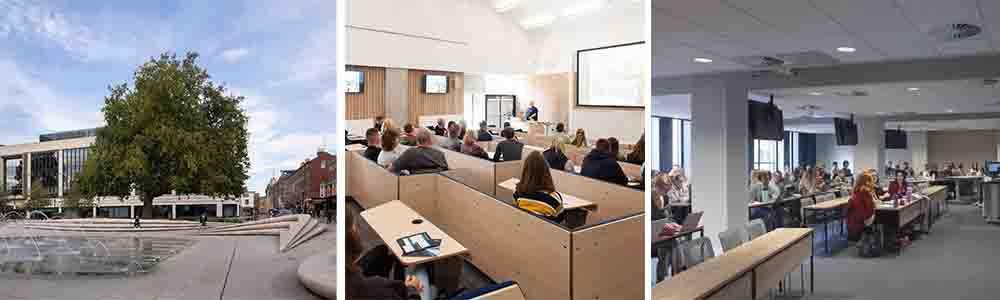
History & Functions of City Campus
The reason for the delay was that archaeologists discovered a Roman burial site beneath the building during construction, along with a Roman road, a Roman wall, and an 18th-century crypt. It was genuinely an unusual finding for a modern city-centre redevelopment. So, the final cost was £75 million.
Today, the City campus of the University of Gloucestershire functions as a hub for Education, Psychology, and Social Work, alongside shared public services. At full capacity, the city campus is expected to house nearly 4,000 students and 350 staff. Furthermore, Vice-Chancellor Dame Clare Marchant described it as “a game-changer for Gloucester and the wider Gloucestershire community”, reflecting its dual role as both a teaching site and civic asset.
4.4.3 History of Gloucester
Roman origins
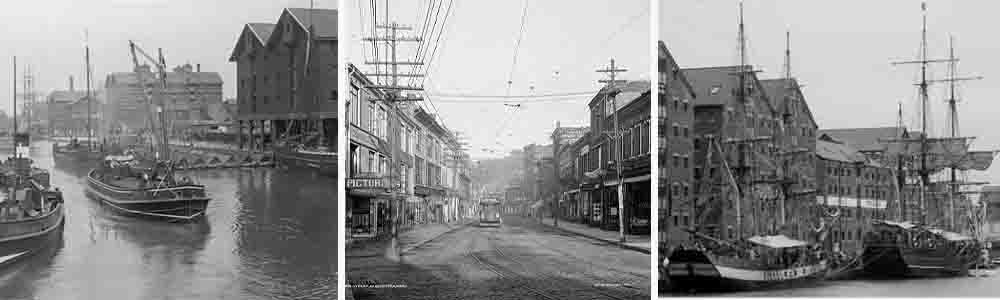
The city of Gloucester was founded by the Romans in AD 48 as a military fort guarding a river crossing. By AD 97, this city became a full Roman colony. The Roman name for the city was Colonia Glevum Nervensis, founded under Emperor Nerva. Also, this is one of the most important Roman settlements in Britain. Roman layout of the city was a grid-pattern city with a forum, temples, and bathhouses. The remains of Roman walls are still visible in parts of the modern city.
Saxon and medieval growth
Saxons captured Gloucester in 577 AD after defeating the native Celts in battle. Then, Monastery founded here in 681 AD by King Osric, dedicated to St Peter. This monastery is the direct ancestor of today’s Gloucester Cathedral. Then it became the capital of the Anglo-Saxon kingdom of Mercia for a time. This reflects the city’s early political importance.
Then the first royal charter for the city was granted by Henry II in 1155, formalising its status and rights as a town. Moreover, Henry III was crowned in Gloucester Cathedral’s Chapter House in 1216, aged just nine.
Becoming a cathedral city
The cathedral’s present building is built on the site of the original 681 monastery. Moreover, Gloucester was made a city by charter in 1541, when it was given its own bishop.
History of Gloucester
Trade and industry history
Then, historic industries started to bloom in this city, such as the iron trade, grain and wine trade, tanning, and bell-founding. Also, the cloth trade that flourished from the 12th–16th centuries shows Gloucester’s long-standing role as a trading and manufacturing hub)
Now, Gloucester Cathedral has been used as a filming location for Hogwarts in the Harry Potter films. Due to that, it remains a popular tourist attraction.
The city Campus sits right in the historic core of Gloucester, on Kings Square, literally built on top of Roman remains, discovered during construction. Kings Square itself is part of a £200 million city-centre regeneration project, alongside the nearby £107 million Forum development.
4.4.4 Infrastructure & Facilities at City Campus
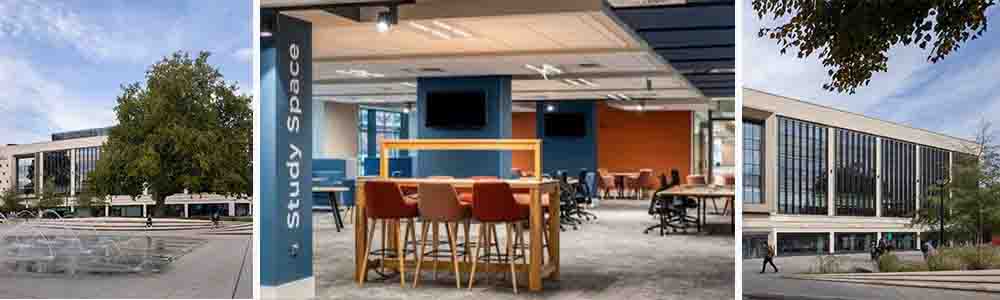
The city campus og the University of Gloucestershire is located at King’s Square, right in the heart of Gloucester city centre, with numerous shops, cafés, and eateries within easy reach. Moreover, there are historic docks 15 minutes’ walk away. The building size is 20,000 square metres across multiple floors. The building has an eye-catching architecture with a restored 1930s Art Deco exterior combined with a fully modernised interior.
Arts, Health and Wellbeing Centre
This centre is located on the first floor of the building as a partnership project with the One Gloucestershire Integrated Care System. The purpose of this building is to pilot new therapies and interventions for community health and wellbeing, including arts-based therapy and rehabilitation informed by research and health-tech innovation.
EEG Lab
Infrastructure & Facilities at City Campus
The function of the EEG lab is to provide EEG equipment, allowing students to study naturally occurring electrical brain activity. It is used to monitor how the brain responds to different tasks, conditions, and stimuli. This facility primarily supports Psychology students’ research and lab-based learning.
Immersive Virtual Reality Room
Equipped with multiple types of VR headsets and a dedicated state-of-the-art immersive VR space (used to support psychology and wellbeing-related teaching and research)
Interview Suites and Meeting Rooms
This is a dedicated space for developing qualitative research skills and conducting interviews (mainly used by Psychology and Social Work students for practical training.
Multi-purpose Education Teaching Space
This is a flexible space designed for group work and general education courses. So, it reflects the campus’s role as the university’s Institute for Education.
Community-shared facilities
There is a new public library, run jointly with Gloucestershire County Council. This is open to the public, not just students, which is a genuine shared civic resource.
4.4.5 Weather in Gloucester
Gloucester has a marine west coast climate, which is the same broad climate type as Cheltenham, since the two cities are only 7 miles apart.
The warmest month is July, with an average temperature of ~22°C (72°F), and the coolest month is January, with an average temperature of ~9°C (48°F). This area experiences annual rainfall of approximately 769–783 mm (30–31 in).

Weather in Gloucester
The wettest month is October, with ~73–81 mm of rainfall, and the driest month is February or March, with average rainfall of ~51–56 m. Furthermore, the sunniest month is July, with ~6.6–8 hours of sunshine per day.
4.4.6 Transportation & Airports Closest to City Campus
The nearest train station is Gloucester station, which is located only a 6-minute walk from campus. This is the closest of any UoG campus to a railway station. Also, the walking directions from the station to City Campus are provided directly by the university. This train connects to Cheltenham, Bristol, Birmingham, and London.
Transportation & Airports Closest to City Campus
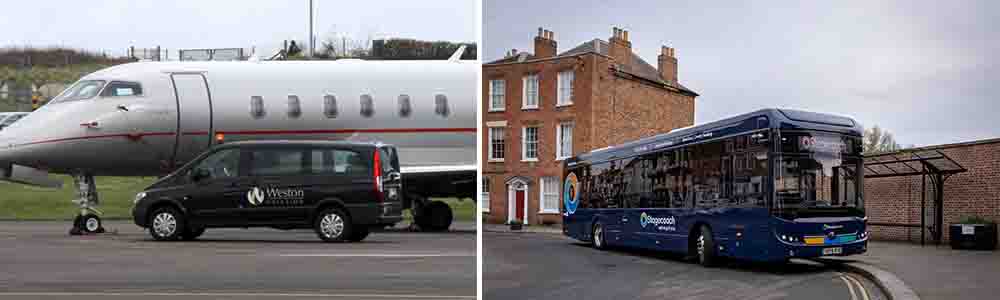
Gloucester Transport Hub (bus station) is located only a 3-minute walk from campus. So, this is the most centrally located transport access of all four UoG campuses. There, Stagecoach services connect Gloucester to Cheltenham by bus. Gloucestershire Airport (Staverton) is the closest airport to the city campus, which only offers small/regional flights. Also, Birmingham Airport (BHX) is the nearest major international airport, which can be accessed in roughly 1 hour by car.
Bristol Airport (BRS) is the second international option with a similar distance from the university. The London airports such as Heathrow and Gatwick, are for long-haul connections, about 2 hours away.
4.4.7 Student Life at City Campus
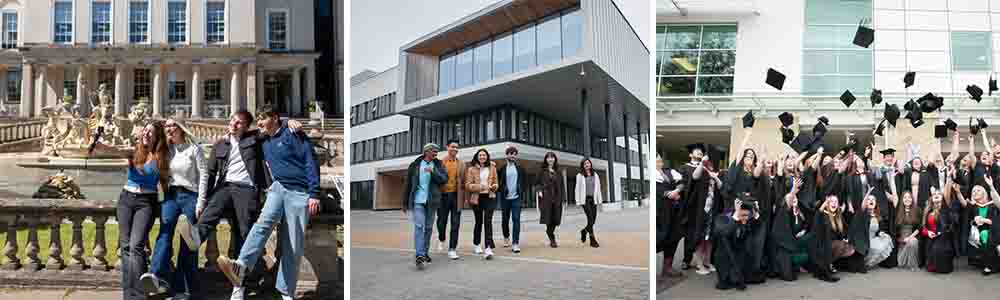
As the City campus of the University of Gloucestershire is located right in the heart of Gloucester city centre, students can easily access the shops, cafés, and restaurants, which are literally a few minutes’ walk in any direction. In addition, Gloucester Quays, which is an outlet for shopping and a cinema, is a short distance away.
The Kings Square regeneration area itself is designed as a new social hub, with cafés and public space around the campus. Moreover, Students’ Union events are open to City Campus students, the same as other campuses. They organize events such as Welcome Fayre, quiz nights, Varsity, and open mic nights.
Sports facilities
There is no dedicated sports arena on City Campus itself. However, City Campus students can access university sports clubs and facilities at Oxstalls instead.
Also, there is a Municipal option nearby, which is the GL1 Leisure Centre. It is a large public leisure centre with four swimming pools, indoor/outdoor tennis courts, and a modern gym.
Student Life at City Campus
Clubs & societies
There are 20+ university-wide sports clubs and 40+ societies open to all students regardless of campus. Given City Campus’s Education/Psychology/Social Work focus, expect a natural concentration of subject-related societies here, such as psychology society, education/teaching society, and social work student groups.
4.4.8 Nightlife Near City Campus
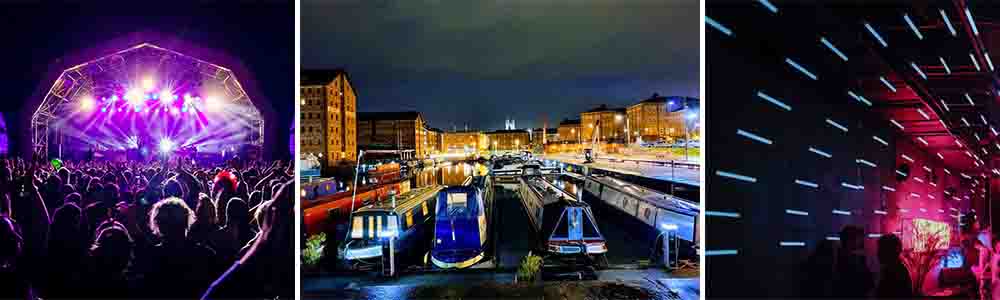
ATIK Nightclub is Gloucester’s main superclub, popular with students. It is located on Eastgate Street, a short walk from City Campus. This venue consists of three rooms, big-name DJ sets, live acts, technicolour interior; known for affordable student drinks and themed nights.
Butlers Venue Bar is a multi-award-winning bar/club (Best Bar None, three years running) in Eastgate Street, close to City Campus. It offers free entry, an LED-lit interior, a light-up dance floor, and VIP booth packages.
Nightlife Near City Campus
Moreover, Café René is a pub by day, a live-music and cellar-bar venue by night, which is located in the Regent Street area, close to City Campus. It has a relaxed pub upstairs, house music and live acts in the underground cellar bar in the evenings, open every day with student-friendly drink prices.
In addition, Blue Bamboo Sports Bar is a sports bar with a gin/craft-drinks focus, located on Gloucester Quays. (combines live sport, good food, and craft gin). It offers waterside views, outdoor seating that’s popular in summer, and a party atmosphere continuing after the sport ends.
4.4.9 Accommodation for City Campus Students
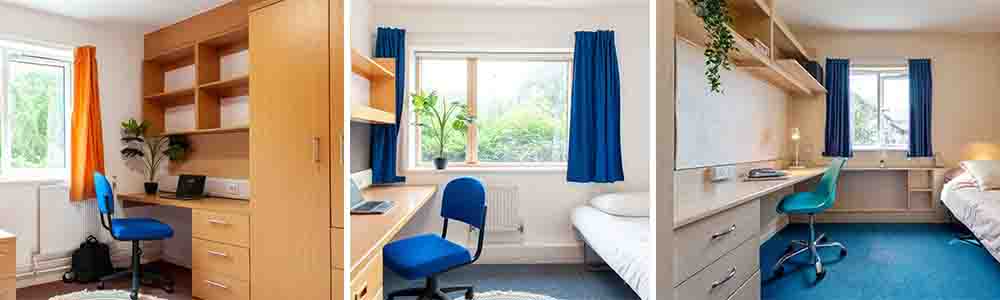
City Campus doesn’t have its own dedicated halls directly on-site. So, students here typically use the same city-centre halls available to Gloucester-based students. Blackfriars is a mix of en-suite rooms, townhouses, and studios in Gloucester city centre, a short walk/drive from City Campus. In addition, Ermin Hall includes en-suite rooms built to a high specification, also close to the city centre.
Accommodation for City Campus Students
Also, there are private/partner student accommodations near City Campus, such as Collegiate Upper Quay House. It includes modern en-suite apartments, roughly a 6-minute drive from City Campus, popular particularly with international students. There are various private providers such as Amber, Casita, Best Student Halls, etc.
The cost of living in Gloucester is generally cited as comparatively affordable. Typically, it’s around £800–£950 per month depending on lifestyle and accommodation type.
4.4.10 Medical Services & Nearest Hospitals
Students of the City campus are advised to register with a local GP within the first few weeks of term, based on university guidance. Gloucestershire Royal Hospital is located on Great Western Road, Gloucester, GL1 3NN, founded in 1912, and run by Gloucestershire Hospitals NHS Foundation Trust. It is located within a short bus ride or taxi journey in the city. The City Campus’s central location makes most parts of Gloucester, including the hospital, easily reachable.

Medical Services & Nearest Hospitals
Furthermore, this hospital offers a full 24-hour Emergency Department (A&E), covering 999 ambulance cases, GP referrals, minor injuries, and maternity care.
For non-emergency or specialist care, students can reach Cheltenham General Hospital, which is a short trip away, and offers daytime emergency care and specialist outpatient services.
Read More:
University of Gloucestershire England UK (Part 1)
Francis Close Hall – University of Gloucestershire (Part 2)
Park Campus University of Gloucestershire (Park 3)