
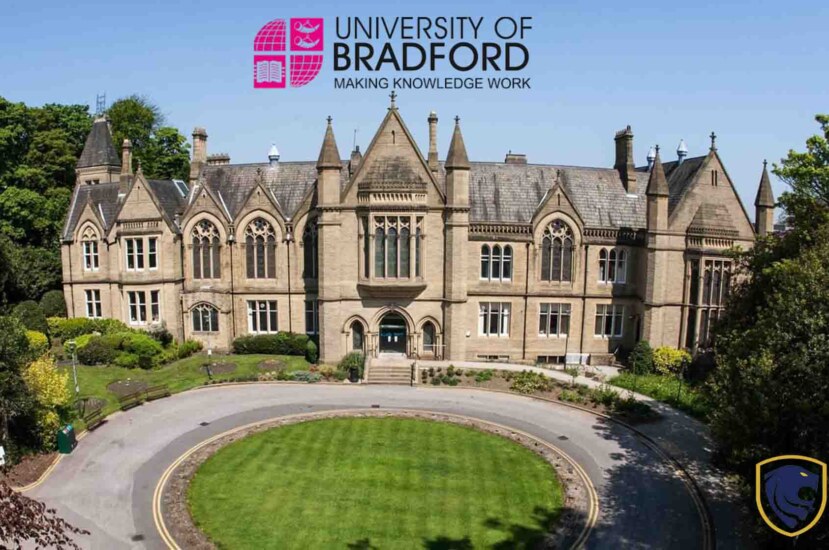
Bradford has always been a well-reputed British University. When looking into the past, it has a historical significance that gives a clear understanding of what it essentially stands for. It is unique because it does not just follow any old pattern like those ancient universities-Distinguished based on overwhelmingly practical needs imposed on the country by the industrial revolution.
1. History of the University.
Among prosperous industries in Bradford in the year 1832 were ones such as wool, textiles, and dyeing. It was then that some of the founding individuals needed a place eventually became the Bradford Mechanics’ Institute. Not within the conventional entity of the higher education institution were the employees taught technical subjects, mathematics and science, and engineering principles, but closely related to what they were practicing every day in the mills and reaches.
For fifty years, that was the purpose of establishing this institute. Then, by the year 1882, as the industries of Bradford began to get more complicated, there developed a place within the city for facilities that would do justice to the city and technically educate its people. It was the reason for the birth of Bradford Technical College, which was to organize and give practical vocational training in such areas as chemistry for dyeing processes, engineering for maintenance of machinery, and business skills applied to the administration of textile operations.
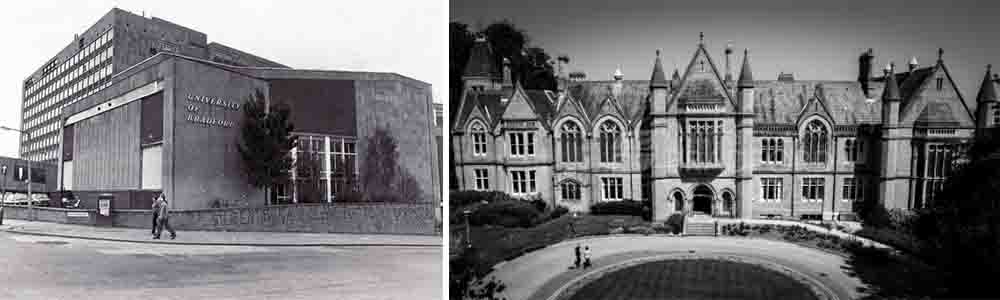
History of the University
Becoming a University
Bradford Technical College has continued to expand its degree programs and facilities throughout the 1900s. In turn, this imposed an ever-pressing argument that the government should focus on establishing more universities if Britain were to compete in the New World. So, they focused on building many more colleges and universities, primarily engaged with sciences, technology, and practical training. This thus engendered the formation of the Bradford Institute of Technology as a higher educational facility of the Technical College in 1957, being given the title of “College of Advanced Technology,” which served to confer degree-awarding status and to carry out genuine research.
About nine years after this, on 18 October 1966, the Royal Charter was given to the Bradford Institute of Technology. So, it became the University of Bradford. The Royal Charter thus made it a fully recognized university with the right to award degrees in any field of knowledge.
Modern Campus in Building
The university received its new buildings, including the Richmond Building, which became the heart of the institution, during the 1960s and 1970s. They were simply the best expression of optimistic modern architecture. Because they are functional but elegant, and turning towards the future.
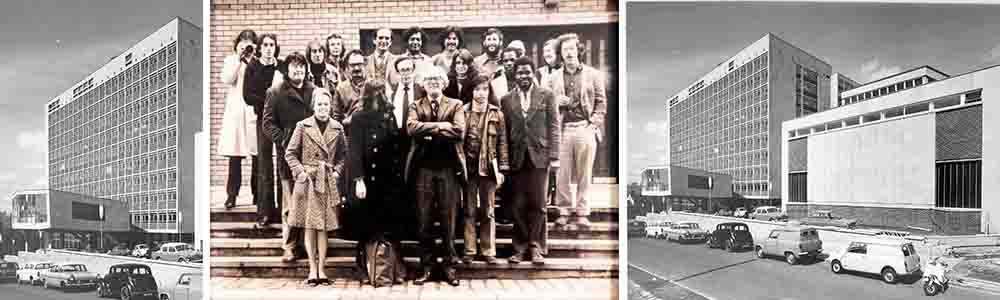
History of the University; University of Bradford
Bradford viewed things differently from the other conventional universities. The university mainly focuses on three important principles. Those are practical (skills required by implementing bodies), vocational (geared for specific careers), and civic (serving local communities and industries in the region). These foundation principles still govern the university’s decisions.
Bradford as a “Plate-Glass University”
Bradford is referred to as a plate-glass university in the opinion of many educational historians. This refers to that type of university put up most recently during the 1960s and then, at that time, commonly called new universities in Britain. Most of its buildings are made of glass and concrete rather than any age-old stone. These universities were set up to widen access to higher education and offer courses in applied areas like engineering, business, and social sciences. Some of the plate-glass universities include giants like York, Lancaster, and Warwick.
The distinguishing feature of Bradford among other plate glass universities is its much older roots. It became a university in 1966. But its roots can actually be traced back to 1832, which equates to very slightly more than 190 years of educational history.
2. Rankings and recognitions of the University.
Global and National Rankings
Several major organizations rank universities globally and within the UK itself. Here’s a general insight about Bradford:
Times Higher Education (THE) publishes global university scores based on research output, teaching quality, and global outlook. Bradford finds itself in between these scores internationally, usually somewhere in the middle range compared to a couple of hundred other universities across the globe. However, THE also publishes subject rankings where Bradford does quite well in some areas, like engineering and computer sciences, as well as some social sciences.
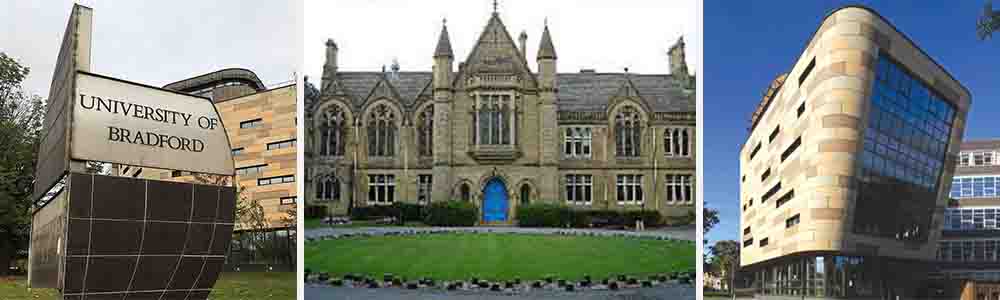
Rankings and recognitions of the University.
The Complete University Guide is mostly UK university-centric. It ranks the universities on student satisfaction, research, employability, and access standards. The position of Bradford varies throughout the subjects, having much stronger rankings than others.
The Guardian University Guide uses entirely different metrics, such as student experience, teaching quality, student satisfaction, and career outcomes. Bradford appears in such tables with better scores in subjects where it aligns well with its vocational strengths.
QS rankings sometimes bring Bradford into special and beneficial categories like sustainability rankings and partner institution metrics.
The Social Mobility Story
That is really where the Bradford shines. The annual ranking always has Bradford right at or just below the leading universities in the uk for social mobility and inclusion. According to social mobility, students from disadvantaged backgrounds have better economic outcomes than their parents.
Bradford’s has been acclaimed as the ‘top ug university for social mobility impact,’ which may indicate how the university succeeded with first-generation students (those whose parents never attended college), students from low-income households, and ethnic minority groups. For hundreds of students, those metrics count far more than whether the university stands in the 50th or 150th position globally.
Subject Strengths
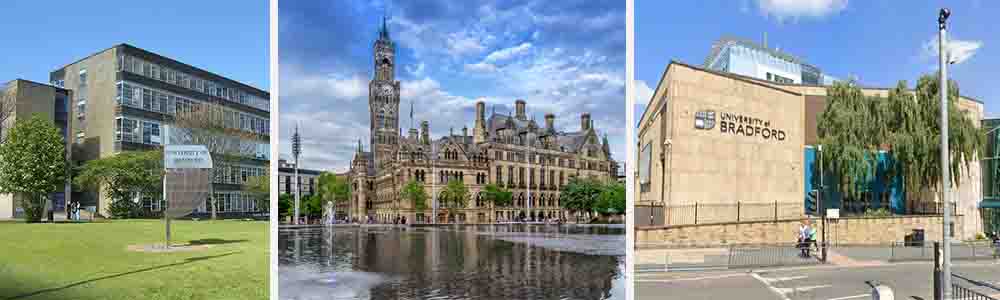
Rankings and recognitions of the University of Bradford.
When looking at Bradford concerning overall scores, it tells one part of the story. Excellent Programs consistently perform in national standards.
Paramedic science courses at Bradford have received very high ratings in subject rankings, recognizing strong links with national health services and practical training placements.
Engineering courses, especially mechanical, electrical, and civil engineering, benefit from Bradford’s business heritage and well-established partnerships with companies.
Management and business programs hold professional accreditations and provide sandwich placements (work experience years), which boost graduate employability.
Peace studies is among the areas in which Bradford has a strong global reputation, having established one of the world’s first university departments dedicated to peace and conflict studies.
| Year | QS World Rank | THE World Rank | CWUR World Rank |
|---|---|---|---|
| 2018 | ~601-650 | ~601 | — |
| 2019 | ~591-600 | ~801 | — |
| 2020 | ~601-650 | ~601 | — |
| 2021 | ~601-650 | ~601 | — |
| 2022 | ~701-750 | 501-600 | 1,294 |
| 2023 | ~701-750 | 501-600 | — |
| 2024 | ~641-650 | ~501 | 1,414 |
| 2025 | =531 | ~501-600 | 1,453 |
3. Alumni Of the University. Famous Alumni.
Bradford has produced graduates who’ve gone on to leadership roles in politics, business, music, and international affairs. Here are ten remarkable alumni whose achievements demonstrate the university’s global impact:
1. Melih Abdulhayoğlu: Cybersecurity Pioneer
Surely, in the very realm of computer security, no other name could shine more brightly than that of Melih Abdulhayoğlu. He is a Bradford alumnus in Electrical and Electronics Engineering. He established one of the largest computer security enterprises in the world: Comodo. Comodo works with SSL certification and digital trust solutions, the very technologies that underpin secure online shopping or banking activities. The next time you see that little padlock on your browser, it is well possible that some Comodo technology is plugged into it. In effect, this had Abdulhayoğlu’s imprint on how Internet security and privacy themselves have been treated.
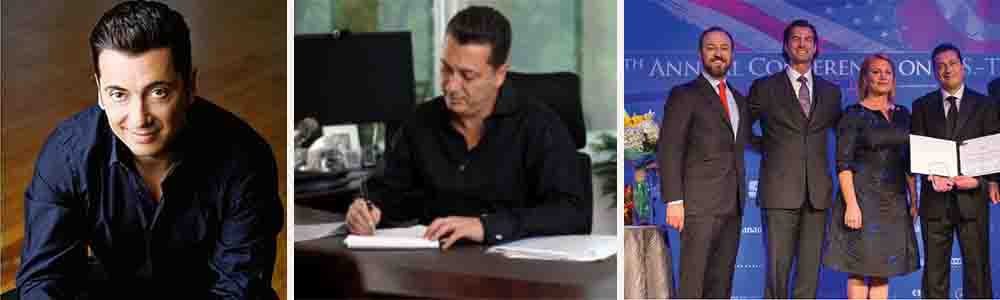
Melih Abdulhayoğlu: Cybersecurity Pioneer
2. Rinchinnyamyn Amarjargal: Mongolia’s Economic Reformer
He obtained a Master’s in Macroeconomic Policy and Planning at Bradford, returned to Mongolia, and got himself into politics. He later served as the Prime Minister of Mongolia during key transitional times between 1999 and 2000. That was a time when Mongolia was transitioning from a Communist economy to a market economy. The policies that were instrumental in reforming Mongolia’s financial system have been a direct outcome of his economic education at Bradford, after which he went on to establish the Amarjargal Foundation for leadership and economic studies in his home country.
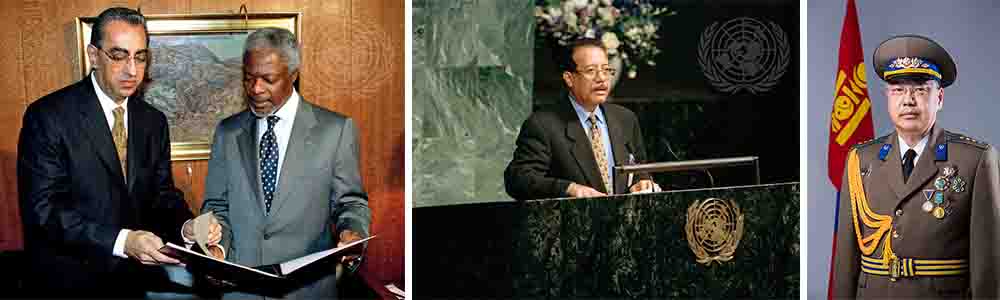
Rinchinnyamyn Amarjargal: Mongolia’s Economic Reformer
3. Crawford W. Beveridge: Technology Executive
Upon being made executive vice president of Sun Microsystems, Crawford Beveridge gained a master’s degree in Management Studies from Bradford. Sun Microsystems was among the largest technology companies in Silicon Valley. Later, he chaired Scottish Enterprise, the Scottish Government’s economic development agency. Notably for the private and public domains, Beveridge incurred the honour of being named CBE. His career represents Bradford’s capability to generate leaders who straddle technology and public policy.

Crawford W. Beveridge: Technology Executive
4. Dr. Saeb Erekat: Palestinian Peace Negotiator
The late Dr. Saeb Erekat earned his PhD in Peace Studies from the distinguished Department of Peace Studies in Bradford. He remains among the most recognizable diplomats of the day, speaking for the Palestinian cause. He served as Chief Negotiator for the Palestinian Authority. Among some of the key issues that Erekat led on were the Oslo Accords and subsequently the Middle East peace processes. Conflict resolution and negotiation, finely honed through education at Bradford, have set up Erekat’s perception of diplomacy, which then stood for peace, not violence. His career stands for just how purely academic training in peace studies can become a transformation into a real peacemaking effort.
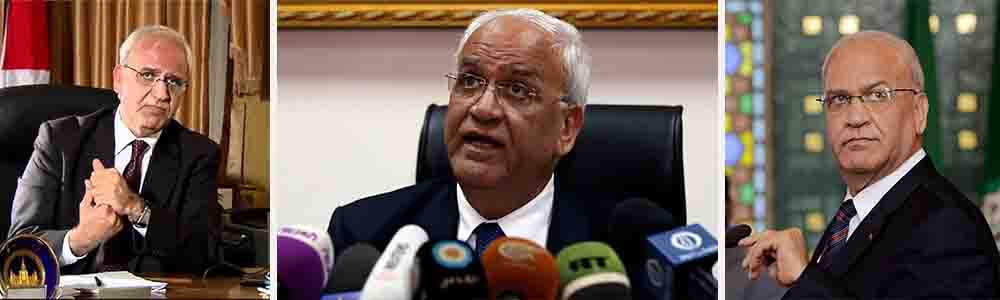
Dr. Saeb Erekat: Palestinian Peace Negotiator
5. Dr. Riek Machar: Political Leader in South Sudan
Riek Machar joined the Mechanical Engineering PhD program at Bradford and graduated in 1984. Immediately after that, he returned to Sudan (before the independence of South Sudan) and plunged into the civil conflict that engulfed the country, eventually serving as Vice President of South Sudan before and after its independence. It has been a rather torturous and controversial political journey, but the fact that he made that progression from an engineering doctorate at Bradford to a national leadership of South Sudan is indicative of the global breadth of that university in the rather quirky routes its graduates sometimes traverse.
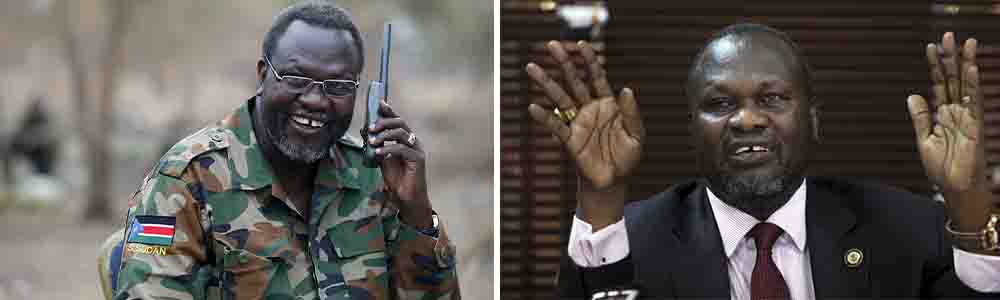
Dr. Riek Machar: Political Leader in South Sudan
6. Jean-Jacques Burnel: Rock Musician
Jean-Jacques Burnel was learned history at Bradford and is now the bass guitarist and vocalist of the Stranglers, one of Britain’s most enduring punk and new wave bands. Among the band’s hits are “Golden Brown” and “Peaches,” which are classics in any era. Burnel’s bass sound and musical sophistication contributed to defining the singular style of the band. In that sense, he reminds us that apart from making engineers and politicians, universities also create artists and modern professionals.
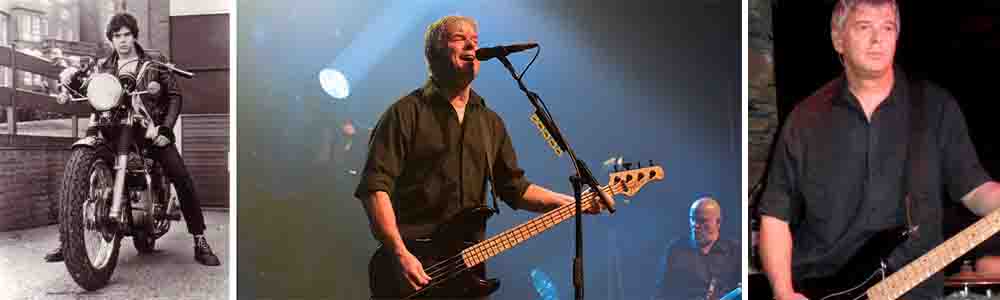
Jean-Jacques Burnel: Rock Musician
7. Mehran Karimi Nasseri: “The Terminal Man”
Mehran Karimi Nasseri graduated in Yugoslav studies from the University of Bradford in the ’70s. His legal wrangle, which eventually led him to live at Paris Charles de Gaulle Airport for nearly 18 years, did not give him a valid citizenship document. This story of perseverance inspired the 2004 film “The Terminal,” starring Tom Hanks. While his life story is unusual, it captured global attention and raised questions about citizenship, refugees, and bureaucracy.
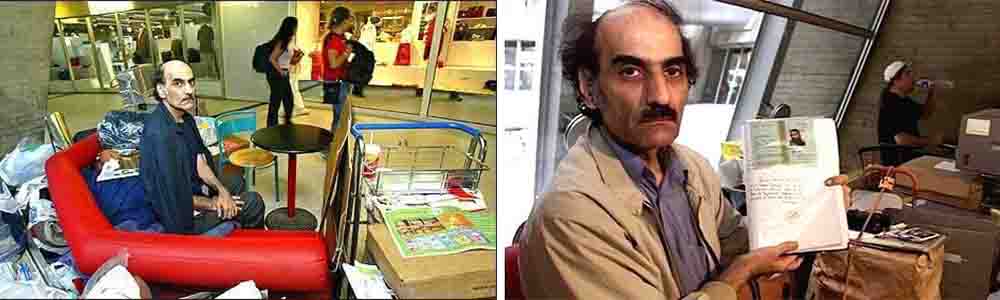
Mehran Karimi Nasseri: “The Terminal Man”
8. Sir Gavin Williamson: British Government Minister
Sir Gavin Williamson has a BSc in Social Sciences from Bradford, from where he entered politics. He has served in several important roles in the UK government, such as Secretary of State for Defence and Secretary of State for Education. National security policy and education reforms were formulated during his terms in office. Whether or not you agree with his policies, his career shows that Bradford graduates attain the highest levels of British government.
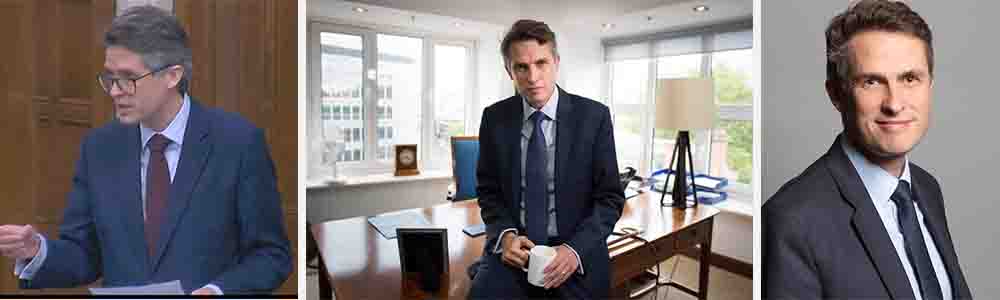
Sir Gavin Williamson: British Government Minister
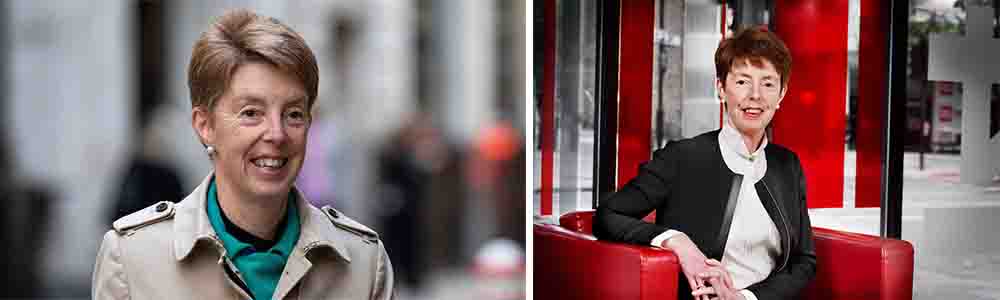
9. Paula Vennells: Corporate Executive
Paula Vennells studied modern languages and philosophy at Bradford before turning to business. She became the chief executive of Post Office Ltd., handling the organization through a major modernization program. Her subsequent term became mired due to controversy surrounding the Horizon IT scandal. Nevertheless, her rise to CEO of one of the UK’s leading institutions proves to show Bradford’s prowess in preparing business leaders.
Paula Vennells: Corporate Executive
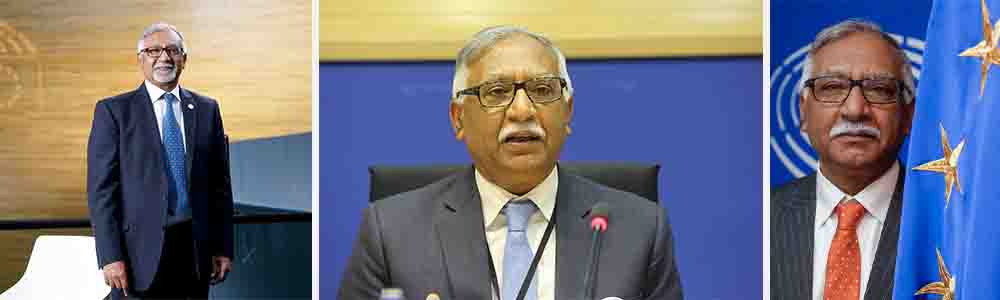
10. Amjad Bashir: Entrepreneur and Politician
Amjad Bashir graduated from Bradford with a degree in Chemical Engineering. Before his stint as a Member of the European Parliament for Yorkshire and the Humber between 2014 and 2019, he had a prolific career in business and restaurant ownership. His work focused on small businesses, entrepreneurship, and trade policy, which, combined with his engineering studies, gave him first-hand practical insight.
Amjad Bashir: Entrepreneur and Politician
Sub Campuses of the University of Bradford
The university faculties are situated in one campus premises. Its multiple academic, administrative, and residential units have been mapped around the city Campus located on Richmond Road in Bradford, West Yorkshire, England. Previously, the university also made use of other locations, such as Emm Lane Campus; currently, the teaching and research activities have been shifted exclusively to the main city-centre site. This was part of a long-term plan to centralize resources, improve access for university students, and modernize academic infrastructure.
1. The Main City Campus
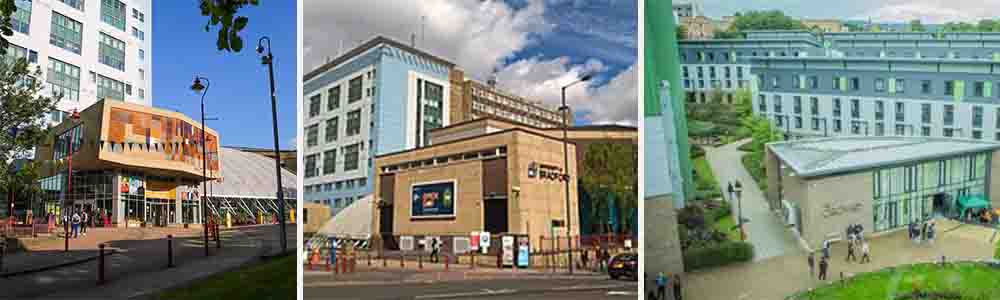
City Campus is the lifeblood of the University of Bradford. It is situated within walking distance of the centre of Bradford and accessible to students through public transport and nearby accommodation. Moreover, it houses all the faculties:
– Faculty of Engineering and Computer Science
– Faculty of Health Studies
– School of Life Sciences
– School of Management, Law, and Social Sciences
The Main City Campus
It is a Self-contained academic hub, purposely built to include teaching halls, laboratories, lecture theatres, libraries, study centres, halls of residence, and social spaces. One of the University of Bradford’s well-known landmarks is the Richmond Building, the university’s central administrative and academic building. Also, the atrium in the Richmond Building serves as a key meeting point for students and staff alike.
Indeed, at the heart of the campus, the JB Priestley Library offers a large range of print and digital resources. They also offer study spaces and IT support. At the same time, well-being and lifestyle corners, the student hub, and assorted coffee shops and shops keep campus life lively and balanced. City Campus is also part of the university’s vision for sustainability, being one of the first eco-universities to win the UK EcoCampus Premier Award for excellence in environmental performance.
The Digital Health Enterprise Zone, located on the campus, is among the important locations. This multi-million-pound project brings innovation, research, and business collaboration in healthcare together. The DHEZ joins important parts such as start-ups, digital health testing labs, and joint projects between the university and industry partners.
2. The Former Emm Lane Campus
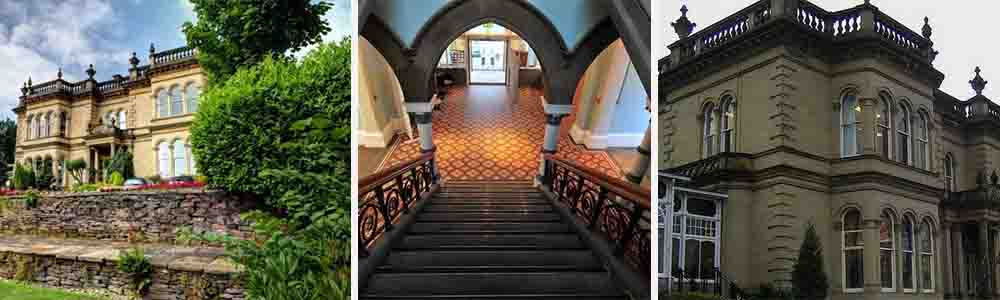
It was best known as the “parkland campus,” because it was located in a very tranquil, leafy suburb about 2 miles from the main city Campus. The Emm Lane Campus was once home to the School of Management of the University of Bradford. It is one of the oldest business schools in Britain.
For decades, this campus was a symbol of the university’s prowess in teaching business and management courses. The campus had separate lecture halls, seminar rooms, and management training centers, and catered to thousands of foreign students for both MBA and executive programs.
The Former Emm Lane Campus
However, in accordance with the university’s modernization and cost efficiency strategy, the campus at Emm Lane was formally shut down and reverted to the city Campus of the management school. The relocation streamlined university operations for cross-school collaboration and gave students better access to shared facilities.
The buildings will no longer be used as teaching spaces. But even so, their site will always be part of the university’s history. And the place will always be remembered by alumni and the closely-knit academic community. Moreover, this place once thrived there for its picturesque setting.
3. The University of Bradford International College (UBIC)
The University of Bradford International College (UBIC) is one of the most important components of the university structure. Unlike any other type of sub-campus, UBIC differs because it operates as a completely integrated university within City Campus itself. This is done in collaboration with Navitas by offering foundation, international year 1, and pre-master’s programs to international students. This has led to undergraduate or postgraduate studies at Bradford.
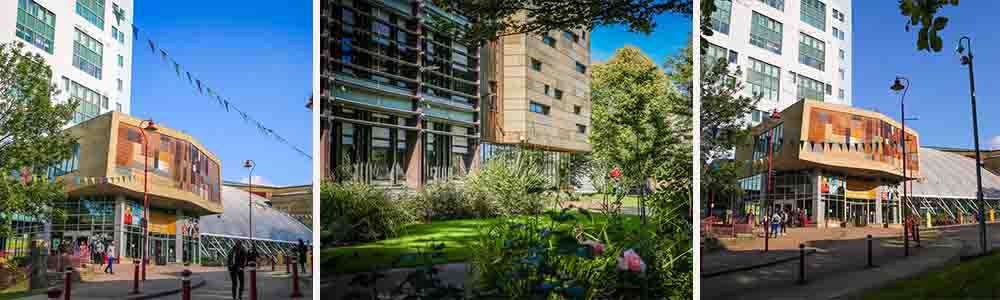
The University of Bradford International College (UBIC)
Supportive learning facilities for learners coming into the United Kingdom higher education system are also provided by UBIC. Smaller classes, individual academic support, and English language assistance are all available. And being on the main campus means that international students studying at UBIC have full access to all university facilities from day one of their studies.
Read More:
Main City Campus University of Bradford, United Kingdom (Part 2)
Study Overseas details for University Articles
Start sharing, start earning—become our affiliate today!
Hello https://is.gd/tvHMGJ