
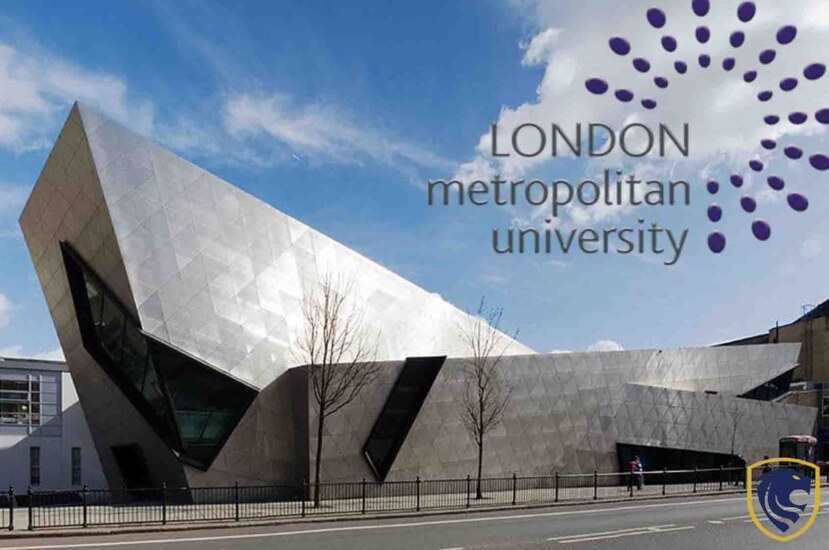
London Metropolitan University (commonly called London Met) in London has an eclectic mix of modern vocational roots laced with a tint of civic duty, and that student body represents a global population. This guide further discusses the history of the institutions, their national and international rankings, a selection of notable alumni, and potential locations to explore within the vast university campus network. An almost applied source-attached guide to fulfil your research needs for any London university-whether for study, work, or partnerships.
1. History of the University: From the 19th Century
London Metropolitan University dates back to the 19th century. Initially, it hosted evening lectures and a polytechnic-style learning program offered to workers. While these strands of technical evening school initially ran parallel, they later merged into a cluster of local institutions for higher education.
Modern London Met-the merging of 2002
In 2002, Modern London Met was created by merging two institutions which are, the London Guildhall University and the University of North London. This merger combined vocational/professional and arts streams, with larger academic departments. It also branded the university properly as London Metropolitan University.
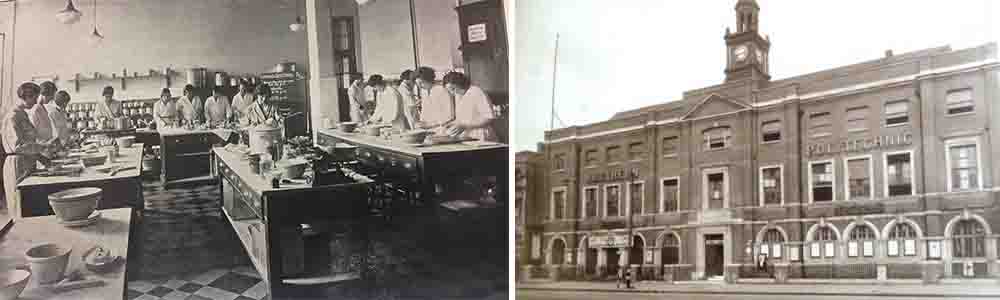
London Metropolitan University’s history
Evolution & investment
Since the renaming in 2002 of London Met, the university has made heavy investments in new buildings (particularly a large science teaching facility in the mid-2000s) and regularly reorganised its faculties to highlight employability and industry-based learning. In addition to widening access, the University seeks to improve the quality of teaching and thus improve student outcomes.
2. Rankings and recognitions of the University
International and global context
London Met is well recognised worldwide. It is in a moderate place in the international rank tables and recognises its strengths in particular fields and student progress. QS has created a good recognition for London Met, such as placing it with bands of broad international ranks, whereas THE presents its profile and average overall performance parameters considered for establishing evaluation.
National performance and value-added

London Metropolitan University ranking
Aside from this approximate global rank band, London Met has very recently found itself as one of the institutions advertised in league tables concerning the UK students’ progress. Also, it is an important criterion through which national schemes measure value-added and improvements in student outcomes. The university has recently emphasised student value added and has purportedly climbed the ranks in national publications as indicative of significant advancement to positive cohorts and programs. Internal publications are quite congruent with this development in league-table performance during the recent cycles compared to other UK publications.
| Year | QS World University Ranking (Global) | THE World University Ranking (Global) |
|---|---|---|
| 2015 | ~701+ band (Top Universities) | – (data not publicly available) |
| 2016 | 651–700 (Top Universities) | 601–800 (UniversityGuru) |
| 2017 | 651–700 (Top Universities) | 601–800 (UniversityGuru) |
| 2018 | 701–750 (Top Universities) | 601–800 (UniversityGuru) |
| 2019 | 751–800 (Top Universities) | 601–800 (UniversityGuru) |
| 2020 | 751–800 (Top Universities) | – (not reliably reported) |
| 2021 | 801–1000 (Top Universities) | – |
| 2022 | 801–1000 (Top Universities) | – |
| 2023 | 801–1000 (UniScholars) | – |
| 2024 | 901–950 (Top Universities) | 601–800 (Times Higher Education (THE)) |
| 2025 | 1001–1200 (Top Universities) | – |
| 2026 | 1001–1200 (Top Universities) | 601–800 (Times Higher Education (THE)) |
3. Alumni of the University — Famous graduates
1. Sadiq Khan
Sadiq Khan is a politician and human rights lawyer of British descent, and became popular as the Mayor of London in 2016. He studied LLB Hons in Law from North London University, one of the predecessors. After his graduation, he worked as a solicitor in human rights, entered politics, and served as a local councillor and then as an MP for Tooting. His policies include the #LondonIsOpen Campaign, championing housing, reform in transportation, and social inclusion. Moreover, he is often described by London Met as a representation of the university in widening participation-the journey from council property to the mayoralty.

Sadiq Khan
2. Noel Clarke
Noel Anthony Clarke is an English actor, writer, director, and producer who studied Media as part of the London Met legacy at North London University. Clarke became a springboard to television roles, such as Mickey Smith in Doctor Who. Also, he received recognition for the writing and directing of the films Kidulthood (2006), Adulthood (2008), and Brotherhood (2016). In addition, he founded his own production company, Unstoppable Film and Television, and continues to advocate for the representation of black British working-class stories in the mainstream. Also, his many accolades include a Laurence Olivier Award (Most Promising Performer) in 2003 and a BAFTA for Best Newcomer in 2009. In 2016, London Met awarded him an Honorary Doctorate of Letters.
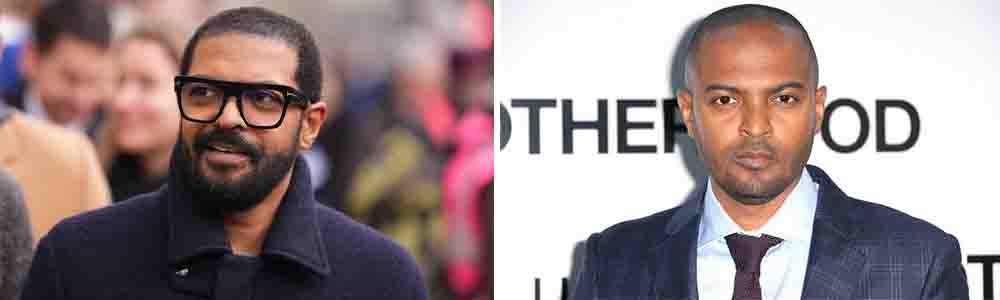
Noel Clarke
3. Daniela Ruah
Daniela Ruah is a Portuguese-American actress who played the role of Special Agent Kensi Blye on the long-running TV show NCIS: Los Angeles. She moved to London at 18 and enrolled in the London Metropolitan University, where she earned a BA in Acting Arts with First-class Honours. After graduation, she returned to Portugal for a short while before heading over to the US to continue her studies at the Lee Strasberg Theatre and Film Institute in New York. Moreover, outside NCIS, she has appeared on stage and co-hosted the Eurovision Song Contest in 2018.

Daniela Ruah
4. Yinka Ilori
Olay Yinka Ilori (1987) is a British-Nigerian interdisciplinary artist and designer whose vivid colours in various art pieces have a deep yearning for telling stories and history. Between 2006 and 2009, he studied Furniture & Product Design at London Metropolitan University. Ilori’s designs typically complement his upbringing in Britain and Nigerian culture while also referencing many traditional Yoruba proverbs and West African textiles. His developments include full-scale public installations such as Happy Street (a colourful underpass), The Colour Palace at Dulwich Picture Gallery, and Get Up Stand Up at Somerset House. Furthermore, the line was made an MBE for services to design, and his work has been exhibited worldwide at the V&A, Guggenheim Bilbao, and more.
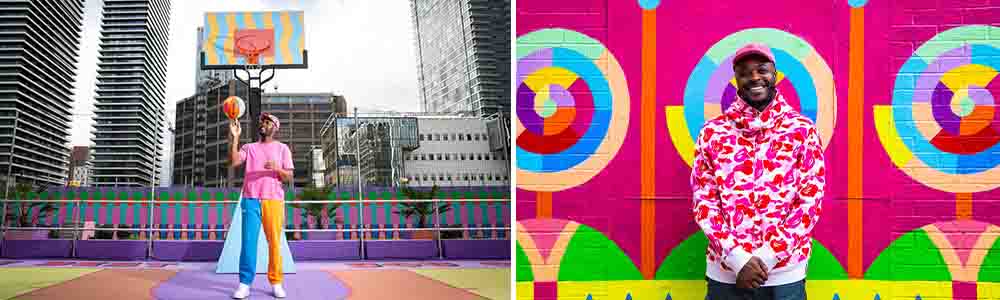
Yinka Ilori
5. Will Kirk
William “Will” Kirk is an antique restorer based in the United Kingdom. He is well known for his work on the BBC’s The Repair Shop. The man studied Antique Furniture Restoration (BA) at the London Metropolitan University. Since graduating from the London Metropolitan University, he has received national acclaim for restoring family heirlooms and historically important pieces of timber. He has worked in the UK and Italy. Also, he was representing his country at the Salon des Arts Décoratifs with the Worshipful Company of Painters and Stainers. Kirk is also a history Crafts Ambassador to inspire people to learn traditional recovery skills. Moreover, his calm demeanour, together with skilful craftsmanship and storytelling, makes him a popular public figure.

Will Kirk
6. Tom McRae
Tom McRae was born in 1969. He became a well-known British singer and songwriter who is highly identifiable by his introspective lyrics and atmospheric delivery. Although publicly available resources do not always specify his degree, he is listed among the notable alumni of London Metropolitan University. McRae has so far been absorbed in producing multiple albums of music that combine the tendencies of old rock and alternative methods, which have amassed a massive wave of glowing reviews and followers to date. His lyrics serve as an illumination on different social matters and thoughts on music, expressing different subjects of vulnerability, empathy, and change.

Tom McRae
7. Alison Moyet.
Linda Moyet is a very famous singer-songwriter in the UK, loved by countless fans for her deep, bluesy voice. She is one of the most outstanding alumni of London Met. Her early career spanned over three decades, starting with the synth-pop duo Yazoo (named Yaz in the US) in the early 1980s, prior to a rewarding solo career with big hits, e.g. “All Cried Out” and “Invisible.” Moyet has won multiple awards and continues to record and tour. While detailed records of her academic enrollment at London Met are not widely documented, her inclusion on their alumni list reflects her cultural significance and the university’s pride in her achievements.

Alison Moyet.
8. Helen Baker.
Helen Baker is an English writer and alumnus of London Metropolitan University. She conveys the spirit of that wonderful university, where her writing represents various advances in literary and editorial teaching and writing. Moreover, her works add to the canon of British literature. Her work contributes to the wider body of British writing, and her listing as a notable alum underscores London Met’s role in nurturing talent across creative disciplines. Whether her contributions are academic, fictional or non-fiction, she stands as a testament to the university’s reach in the arts and letters.

Helen Baker.
9. Michael Petry.
Michael Petry, besides being known as a multimedia artist, curator, and writer, gained fame through founding the Museum of Installation in London. Enrolled at the London Metropolitan University, he has worked ambitiously to alter the contemporary art culture toward installation, electronic, and interdisciplinary approaches. Moreover, his work usually explores identity, memory, and interactivity. As a curator, he has made and handled significant art exhibitions and also shared much knowledge on art principles. Also, his work has been a large part of directing the course of modern London art through experimental and immersive installations. Moreover, Petry’s multidisciplinary creativity is proof of London Met’s tradition of nurturing leading-edge innovators.

Michael Petry.
10. Lord Bilimoria
Cyrus S. M. Bilimoria, Baron Bilimoria, or better known as Lord Bilimoria, is a British Indian entrepreneur and a distinguished parliamentarian and industrialist. He is the co‑founder of Cobra Beer, a successful lager that aptly fuses Indian and British brewing traditions. Also, his studies in Accountancy at the London Metropolitan University set a good foundation for his business and financial expertise. He has always been heard praising the university for its efforts to unite students from various walks of life and ignite success across the world. Furthermore, as the years went by, Bilimoria’s part in public life was growing: Presiding over the Confederation of British Industry (CBI), he was made a life peer (Baron) for services to commerce and charity, for achievements in entrepreneurship, education, and social advancement.

Lord Bilimoria
4. Sub Campuses of the University
Most of London Metropolitan’s counterparts do not operate like a multi-campus establishment within the UK. Instead, it operates two main sites in London, which are:
- Aldgate Campus (city Campus/faculty of art, architecture and design)
- Holloway campus (North Campus/Central University Hub)
With no overseas branch campuses and no open local satellites, these London-based sites complete the entire physical footprint of London Metropolitan University. Moreover, each of the two campuses has its own history, architecture, academic character, and general environment. The following is a description of each campus and its facilities, as well as the general premises of university life on campus.
1. Aldgate Campus (City Campus)
Aldgate Campus is situated in what was once known as the City Campus. It is now an innovation district of London, conveniently located near Aldgate and Whitechapel. It accommodates the College of Arts, Architecture and Design (formerly the Cass). Also, the area has been said to carry an altogether sturdy identity endowed with inventive and cultural layout. In addition, the campus comprises a set of interconnected buildings from the early twentieth century. Those buildings blend refurbished commercial premises with contemporary studio space.
Aldgate Campus provides an extensive range of professional facilities:
large structure studios in an open-plan arrangement;
professional workshops for fine-art metal, wood, textiles, ceramics, and printmaking;
- digital design labs;
- photography studios and darkrooms;
- fabrication workshops for model making;
- exhibition spaces for end-of-year degree shows, public exhibitions, and business networking events.
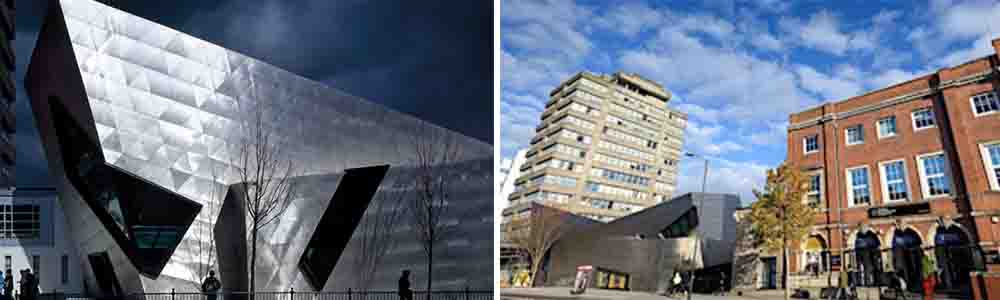
London Metropolitan University Aldgate Campus (City Campus)
The campus is known to maintain an “operating studio culture” in contrast with lecture-based teaching. Students are seen working late into the night, producing work in the studios and workshops. In this manner, the profile of galleries, design studios, and creative workspaces surrounding the campus, all within walking distance, contributes to a very business-connected environment.
The Aldgate campus exhibits an architectural fusion of industrial heritage with modern refurbishment. Towering ceilings, big windows, and open-plan design saturate carefully designed studios with natural light. So much of the landscape mirrors East London’s design identity. Also, raw materials, bricks, and steel frames intermingle with modern inner finishes. These old attributes were preserved through the design with the aim of keeping the campus in sync with the creative context of the city.
This is yet another area ensuring excellent connectivity to the campus. Students can walk to Aldgate, Aldgate East, and Whitechapel stations, allowing for swift access to other areas of London. The campus is also very close to Brick Lane, Spitalfields Market, and Whitechapel Gallery. Thus, the Aldgate Campus continues to attract international students who seek an authentic, urban, and creative environment.
2. Holloway Campus (North Campus / Main University Hub)
Holloway Campus is located on Holloway Road in North London. It is the principal premises of the London Metropolitan College. It houses faculties of education departments, administration offices, student services, and essential amenities. In fact, it is the largest and best-equipped site of the university.
Key buildings in Holloway Campus include:
Tower Building
This is the most recognised building of the university. The Tower comprises a tall modernist structure that can be viewed from Holloway Road. It has classrooms, laboratories, computer suites, and popular lecture theatres. Also, it has undergone an alteration in recent years, resulting in flexible teaching formats alongside collaborative spaces and technology-rich classrooms.
As the premier building of the college, it also accommodates:

London Metropolitan University Holloway Campus (North Campus _ Main University Hub)
- Main reception area
- Student administration
- Visa and international support offices
- Academic offices
- Several large lecture halls
The tower building is immediately connected to other site areas through walkways and internal access corridors, therefore allowing students to access various facilities without the necessity to exit the building.
Another significant facility of the university located on the Holloway site is the science centre. Facilities in the Science Centre include:
- One of the largest university-based superlabs in Europe
- Specialist laboratories in molecular biology, pharmacology, food science, chemistry, and biomedical sciences
- Simulated hospital ward
- Nutrition lab
- Forensic investigation suite
The delivery of high potency in clinical research and training was the intent of this building. The sheer scale is one of the strongest assets of the university, most especially for undergraduates taking health, technology, and science disciplines.
Reading Centre/Library
Holloway Campus has one of the largest library facilities of London Met. The library provides:
- Group study rooms
- Silent study zones
- IT suites
- Access to many books, journals, e-materials, and archival materials
Moreover, the building is geared towards long study hours with opening hours late into the night and at weekends.
Graduate Centre
Designed by renowned architect Daniel Libeskind, the Graduate Centre is an architectural landmark at Holloway. It is infinitely angular, modern, and usually used for lectures, seminars, and events. It also serves as host to frequent public lectures, research symposiums, and community events, thus providing an aura of professionalism and academia to the campus.
Sports facilities

London Metropolitan University sports
The Holloway site also houses a health and sports centre for students and staff. It includes:
- Gym
- Fitness classes
- Sports clubs and societies
- Multi-purpose sports hall
Though it is not really a big draw for the university, it is a boon to student life.
Location and Environment
The Holloway Road area is active and urban. So, the area is full of things such as cafés, shops, restaurants, gyms and very student-friendly service. Moreover, the campus sits directly across the street from Holloway Road Underground Station, making all areas of London easily accessible. It is also a walking distance of Emirates Stadium and several parks.
3. University Structure and Consolidation
Historically, London Metropolitan University used to operate a more spread-out campus system. Earlier predecessor institutions included:
- University of North London
- London Guildhall University
Before consolidation, buildings were scattered across several London locations. So, many of these sites were later sold or closed as part of restructuring, leaving Aldgate and Holloway as the two primary hubs.
Today, all operations are concentrated into these two sites to reduce cost and improve efficiency. Moreover, it gives students more cohesive access to services and facilities.
Read More:
London Metropolitan University – Main Campus & Premises (part 2)
Study Overseas details for University Articles
Boost your income—enroll in our affiliate program today!
Hi https://is.gd/9PLRLO