
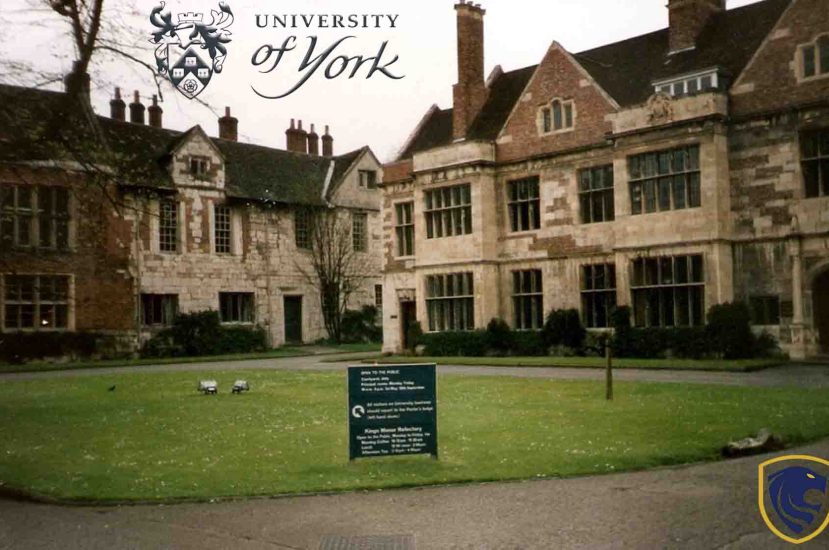
The King’s Manor is a historic academic site connected with the University of York. It is located in the centre of York and has one of the oldest university buildings. The King’s Manor consists of a blend of medieval, Tudor, and modern academic architecture. This facility was originally built for the abbots of St Mary’s Abbey, and later it was used by royal officials of England. Currently, it functions as a specialised academic and research centre. King’s Manor delivers programs that have a strong focus on archaeology, medieval studies, heritage, and conservation. So, the King’s Manor has a historic environment which is different from modern Heslington campuses. Also, it is surrounded by ancient city walls and historic landmarks, and it’s an important centre for humanities and cultural research.
4.1.1 Faculties and Programs Available at King’s Manor
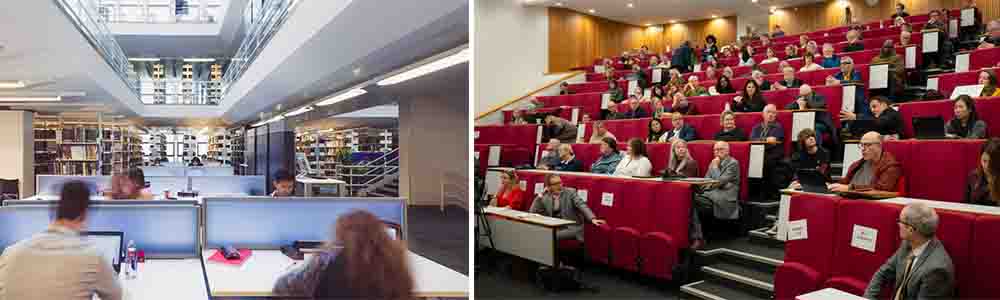
As a whole, the King’s Manor has a Humanities and Heritage-Based Academic Focus. The site mainly focuses on the humanities, heritage, archaeology, and cultural research.
Archaeology is one of the main fields students can pursue at King’s Manor. They offer a BA in Archaeology and an MA in Archaeology, which allows students to learn field archaeology, excavation techniques, bioarchaeology, landscape archaeology, and archaeological conservation. Also, they offer courses in modules on heritage management.
Medieval Studies is another popular field that students would like to follow. This field will allow students to dive deep into medieval history, medieval literature, religious and cultural studies, European medieval civilisation, and manuscript studies.
Faculties and Programs Available at King’s Manor
Students who are interested in the History of Art can follow courses in Renaissance art, medieval art history and architecture, and visual culture at King’s Manor campus.
Moreover, students can follow museum and gallery studies and learn about art conservation studies, Architectural Conservation, historic building conservation, heritage preservation techniques, and restoration methods.
The King’s Manor functions as the centre for Medieval Studies in the University of York, leading the interdisciplinary medieval research activities by collaborating between historians, archaeologists, and linguists.
On this campus, students can pursue postgraduate research programs and attend international medieval conferences to enhance their exposure.
4.1.2 History & Functions of King’s Manor
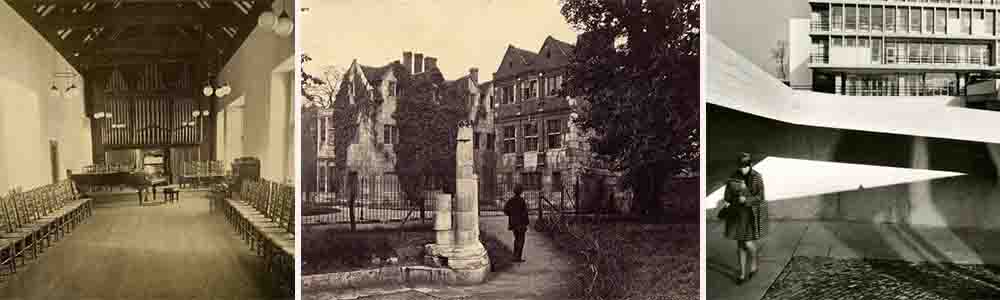
King’s Manor has origins connected with St Mary’s Abbey. It was constructed mainly during the 15th century and used to be the residence of the abbots of St Mary’s Abbey. Later, it was controlled by the English monarchy after the Dissolution of the Monasteries. Then it became the royal administrative centre during the Tudor period, and was used by the Council of the North under King Henry VIII. So, this university site holds a proud history, which is very important in northern England.
Later, this site was acquired and developed by the University of York and transformed into an academic and research centre. But they preserved the historic architecture while adapting it for education. important humanities and heritage campus.
History & Functions of King’s Manor
The main functions of the Site at present are to conduct archaeology teaching and research, and deliver courses in medieval studies, art history, and conservation studies. Moreover, the King’s Manor often organises postgraduate seminars and workshops to enhance students’ knowledge.
Research Functions hold a major significance when it comes to King’s Manor campus’s functions. They research heritage preservation, archaeological documentation, conservation science projects, and interdisciplinary humanities collaborations.
Also, the campus has some assigned cultural functions, such as conducting conferences and public lectures, exhibitions, and heritage events.
4.1.3 History of the City of York
York was founded as a Roman fortress, which was named “Eboracum”, around AD 71. It was the military headquarters in Roman Britain. So, it was a city that Roman emperors used to visit for military purposes. Still, there are Roman walls and archaeological remains preserved in York.
Then the Vikings acquired the city, and that Viking settlement was called “Jorvik”. At that time, York was a major trading centre in Northern Europe. Also, Viking cultural influence is still noticeable on the city’s identity, with archaeological discoveries that are important worldwide.
History of the City of York
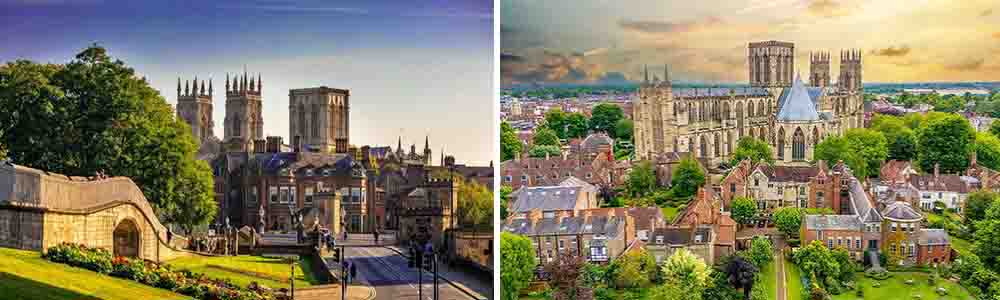
Medieval York was a powerful religious and commercial city, which was popularised with the development of churches, monasteries, and abbeys. York Minster was established in this period as a major Gothic cathedral, and it still plays a major role in the city’s heritage and identity. Even now, there are medieval streets and city walls well-preserved in the city.
The city of York held political importance during the Tudor era. Moreover, with the industrial revolution, the city developed with railway expansion and chocolate manufacturing industries such as Rowntree’s and Terry’s.
Modern York has an economy mainly driven by strong tourism and education. It is famous as a multicultural university city with a blend of historic architecture and modern development. Also, the city possesses a student-friendly and culturally active environment.
4.1.4 Infrastructure Facilities at King’s Manor
King’s Manor Main Building
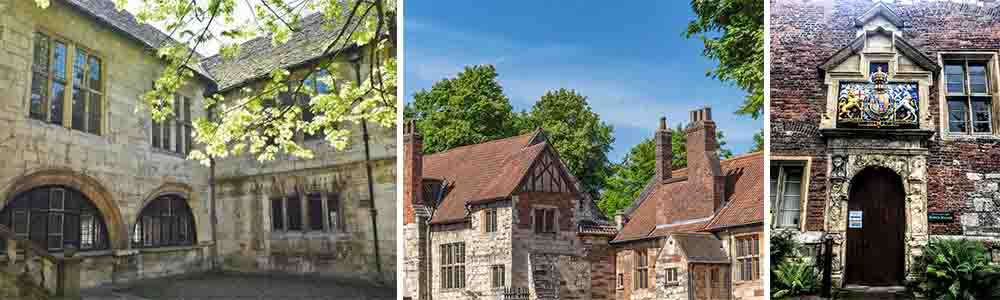
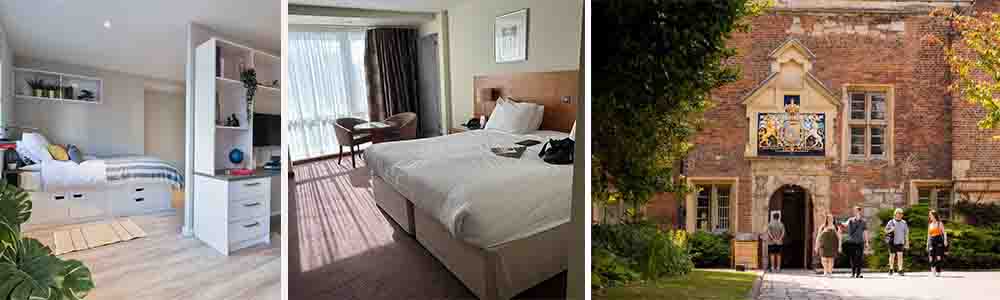
King’s Manor main building holds a significant historical importance due to its medieval and Tudor architectural elements. It has been one of the former residences of abbots and royal officials. So, this building holds centuries of political and religious history, preserved in a historic academic environment.
This building currently has lecture rooms, seminar halls, and archaeology and heritage teaching spaces. Moreover, there are postgraduate research facilities, academic offices, and meeting rooms. In addition, the architectural features are the highlight of this building, such as stone courtyards and historic walls, Tudor-style windows and ceilings, and a traditional English manor appearance and preserved historic interiors.
Courtyard Areas
Courtyard areas feature central open courtyards, historic stone pathways, and a landscaped academic environment. In addition, there are quiet research and relaxation spaces.
These areas are also used for student gatherings, academic events, ceremonies, photography, and heritage tourism interests.
Infrastructure Facilities at King’s Manor
Archaeology Research Facilities
The King’s Manor campus includes artefact analysis rooms, archaeological conservation spaces, and heritage documentation labs. Moreover, there are research archives and collections for practical archaeology training, conservation research projects, and postgraduate fieldwork preparation.
Seminar and Conference Spaces
There are seminar and conference spaces in the King’s Manor campus, such as historic seminar rooms, conference halls for heritage events, interdisciplinary workshops, and lectures.
Library and Archive Resources
The library of the King’s Manor campus includes medieval and heritage-related collections, archaeology research materials, conservation and architectural archives, and specialist humanities resources.
4.1.5 Weather in York
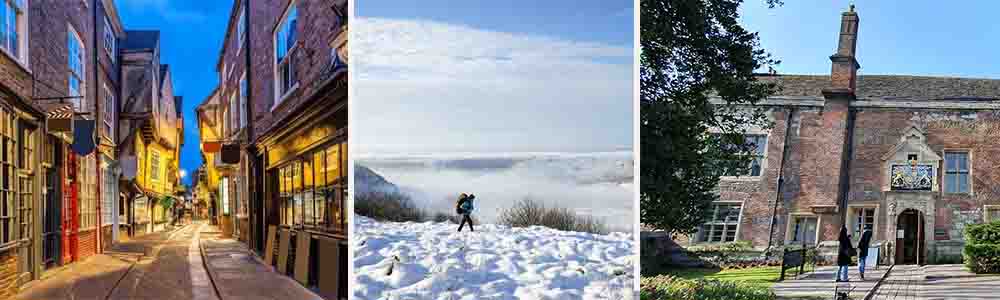
Generally, York has a temperate maritime climate with regular rainfall in all seasons, paired with cool winters and mild summers. Average temperature during the Summer is around 18–22°C with long daylight hours. There are pleasant conditions for tourism and outdoor study during the summer.
Weather in York
The temperatures commonly fall around 1–7°C during the winter with cloudy skies and cold winds. Also, occasional snowfall and frost can be expected. Autumn often creates a colourful scenery around historic buildings. Spring flowers and gardens improve the city’s appearance during the spring, with comfortable weather for walking tours and field studies.



I’ve been exploring for a bit for any high-quality articles or blog posts on this kind of house . Exploring in Yahoo I at last stumbled upon this website. Studying this information So i’m satisfied to convey that I have an incredibly just right uncanny feeling I found out exactly what I needed. I so much undoubtedly will make certain to do not overlook this website and provides it a look regularly.
https://shorturl.fm/dLIsY
https://shorturl.fm/8HJIX
https://shorturl.fm/QgRdq
https://shorturl.fm/1xkyA
https://shorturl.fm/RR5Rg