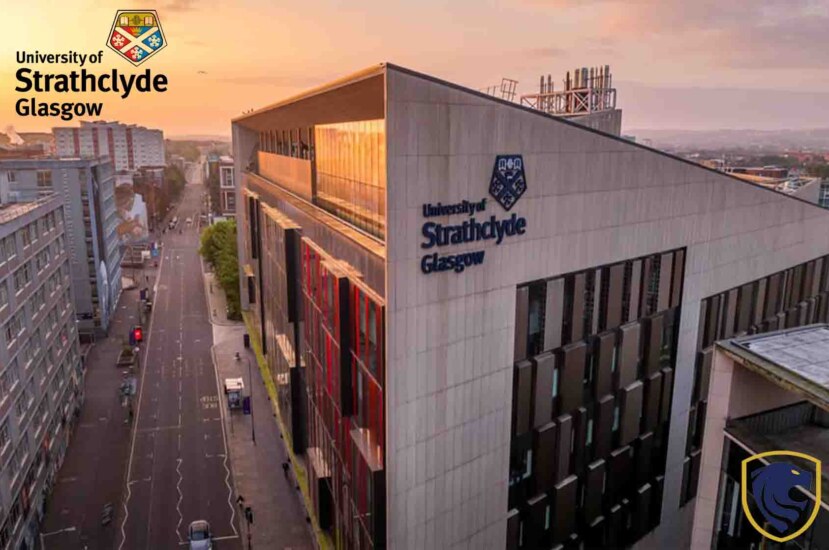
The main campus of the University of Strathclyde is the Anderson Campus, which is located at Townhead. There used to be a Jordanhill site for the Faculty of Education at the university. Then they merged into one city campus in recent years, the John Anderson Campus. So, now it has all the faculties and degree programs under that main campus.
4.1.1 Faculties and programmes available in each Sub Campus
School of Engineering (main campus: James Weir building and associated blocks)
School of Engineering of the University of Strathclyde covers architecture, mechanical & aerospace, civil & environmental, digital & electrical, chemical & process engineering, biomedical engineering, and naval architecture. The faculty offers undergraduate and postgraduate degree programs (BEng, MEng, MSc, PhD), professional accreditations (IET, ICE, etc.). In addition, it allows students to undertake company-affiliated apprenticeships and CPD. Moreover, there are Practical labs, heavy equipment areas, and the James Weir workshops, which are very important to gain hands-on practice in engineering studies on campus.
Faculty of Science (core campus: Thomas Graham building, Curran/Andersonian cluster)

Faculties and programmes available in each Sub Campus
This faculty covers chemistry (pure & applied), physics, mathematical sciences, computer & statistics sciences, pharmacy & biomedical sciences. Delivery of these programs is heavily laboratory-based. Also, there are research opportunities such as biomedical, photonics, materials-and collaborative centers such as the specialized labs in the Andersonian cluster. In addition, the faculty of technology has physically consolidated several modernized facilities on Cathedral Avenue in refurbished ancient houses.
Humanities & Social Sciences (HaSS): (Disparate campus houses)
This faculty focuses on areas such as law, government & public policy, education (now moved into the city campus), psychological sciences, social work, and health. Lectures are conducted in seminar and lecture areas spread throughout the Anderson area. Moreover, the university combines what would have previously been regarded as more traditional lecture-based degrees with community and online learning. Extensive local government ties characterize Strathclyde’s offerings in law and public policy.
Strathclyde Business School (key campus sites and opaque purposes)

Faculties and programs available in each Sub Campus
This faculty offers degrees in areas such as accounting & finance, economics, management, marketing, entrepreneurship, and MBA There are a mixture of classroom, executive learning space, and incubator/entrepreneurial support linking directly to the TIC and industry engagement commitments in this faculty. The whole undergraduate to executive MBA streams are run through the business school, which has established research centers engaged directly with business.
organization-managing studies centres (generation & innovation centre and adjacent industry buildings)
While this is not “a faculty” in the classic sense, the TIC and neighboring Industry Engagement building act as a sub-campus for interdisciplinary focus on real research. Also, they offer clean rooms, open plan R&D suites, Fraunhofer partnerships, and collaboration spaces wherein industry groups co-discover with academic researchers. This is where academic programs meet commercial research.
4.1.2 History & functions of the Campus
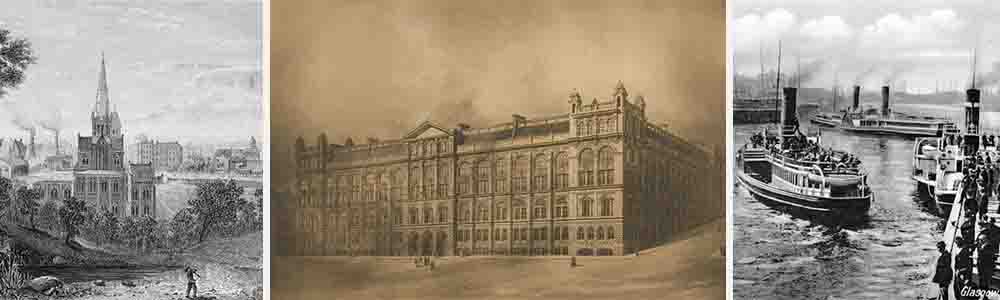
It traces its history back to the Andersonian Institute (1796), which ultimately grew into Anderson’s College, Glasgow & West of Scotland Technical University, and finally into the Royal University of Science and Technology, legally incorporated by the Royal charter in 1964. Today, Strathclyde University’s principal city campus is the Anderson campus, which is the Royal College building, which was built in the early 20th century-as Strathclyde strides into high-tech modern education.
History & functions of the Campus
In the 1900s, Practical technical instruction continued to develop, laying the cornerstone for the Royal University complex to be established in 1903, completed in 1912. It was said to be one of the largest educational buildings outside Europe for technical education.
Post-WWII expansions began in the 1950s through the 1960s, followed by its establishment of buildings for engineering and chemistry (James Weir, Thomas Graham) amidst increasing demand for technical education. Moreover, merged with other colleges, the Royal College became a university in 1964 under its principal, Samuel Curran.
In the late 20th century, the campus was renovated, adding buildings for research, integrating the Jordanhill education campus onto the city campus. Furthermore, the establishment of the Innovation Centre (TIC), completed in 2015, has signalled a pivot towards enterprise-collaborative R&D.
4.1.3 History of Glasgow
How Glasgow made Strathclyde
Glasgow advanced from a medieval market town into one of Britain’s largest commercial powerhouses during the 18th and 19th centuries. Shipping, shipbuilding on the Clyde, heavy engineering, and international trade contributed to the construction of Victorian structures and civic establishments. As the corporation and population boomed, the demand for technical training rose drastically. That’s what caused Anderson’s thoughts to develop a campus for “useful studying”. The campus sits in Towncentral and the merchant city areas that mirror Glasgow’s Victorian expansion and later twentieth-century renovations.
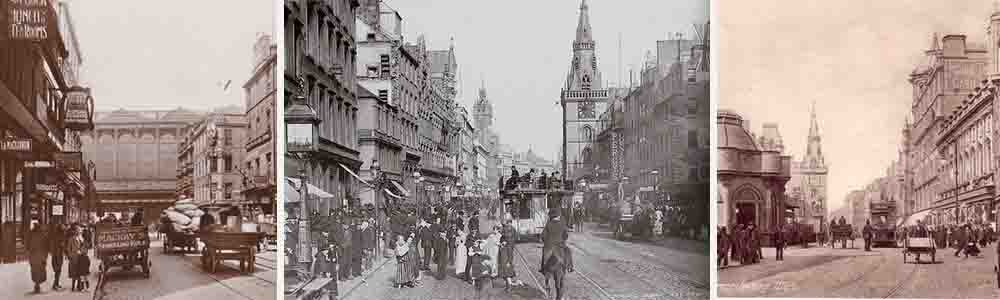
History of Glasgow
Current Glasgow and the campus
The industrialisation hit Glasgow in the twentieth century, and the metropolis has spent many years reinventing itself. It included subculture, better training, and era now energy, an expansion of its economy. However, these days the college is an accomplice in city renewal.
4.1.4 Infrastructure Facilities at each Sub Campus
Royal College building (George Avenue / Montrose Road)
The Royal College building is the symbolic coronary in the heart of the campus. It was built in the early 1900s. (foundation stone laid in 1903) It has been established as a purpose-built complex for the Glasgow & West of Scotland Technical College. It is listed as a heritage building that has undergone master planning and refurbishment to bring laboratories and study spaces to modern standards while retaining the façade. Moreover, there are labs for bioscience, chemistry, digital & electrical engineering, and lecture halls. The historical backdrop has been preserved over the years.
James Weir building (the engineering hub)
This is a post-war construction that came up to form the mechanical and engineering heart of the campus. Throughout its life, the building has endured restoration work and safety upgrades. In addition, very large labs, a department for mechanical engineering, and spaces for teaching engineering are included here. This is where students get their practical experience.

Infrastructure Facilities at each Sub Campus
Thomas Graham building (Chemistry block):
This is a mid-20th-century construction as a chemistry block (named after Thomas Graham). The building encompasses wet laboratories, lecture halls for chemistry and materials science, and research areas in analytical and synthetic chemistry. The building facilitates both undergraduate practicals and high-level research activities.
Andersonian Library / Curran Building Cluster History and Architecture
This building was converted from a former warehouse and printing plant in the 1970s. The Curran building and Andersonian Library are core parts of student services and collections. Moreover, the library offers library collections, learning resources, digital study spaces, archives, and special collections.
Technology & Innovation Centre (TIC)-Cathedral Street
This building was finished in 2015 and opened by the Queen. The TIC is a purpose-built 9-story research facility. It also has lecture theatres, specialist laboratories, industry collaboration suites, and houses the UK’s first Fraunhofer centre.

Infrastructure Facilities at each Sub Campus
Student Union / John Street building ( currently going under renovations)
The former John Street Union building ran for generations, serving students, but is currently under renovation. So, this is an example of the way in which the campus adapts old assets to modern-day priorities.
John Anderson building (physics & history)
The name is after John Anderson, and this connects the identity of the university to its founder. It has modern refurbishments invested in laser and plasma centers with heavy shielding and secure bunkers for high-power systems.
4.1.5 Weather in the city area of each Campus is located
In Glasgow, you can experience a maritime temperate. It is cool, it is moist, and it is never steady. It is quite a simple explanation, but it’s essential to plan day-to-day activities.
The temperature range in Glasgow is rather more or less around 19°C (34-66°F). Here, summers are short and mild. Winters are usually cool but not extremely cold like the inland of Scotland. Moreover, frequent rains and cloudy skies are common in this area.

The weather in the city area of each Campus is located
So, outdoor events need contingency plans and covered spaces. The events that the campus org