
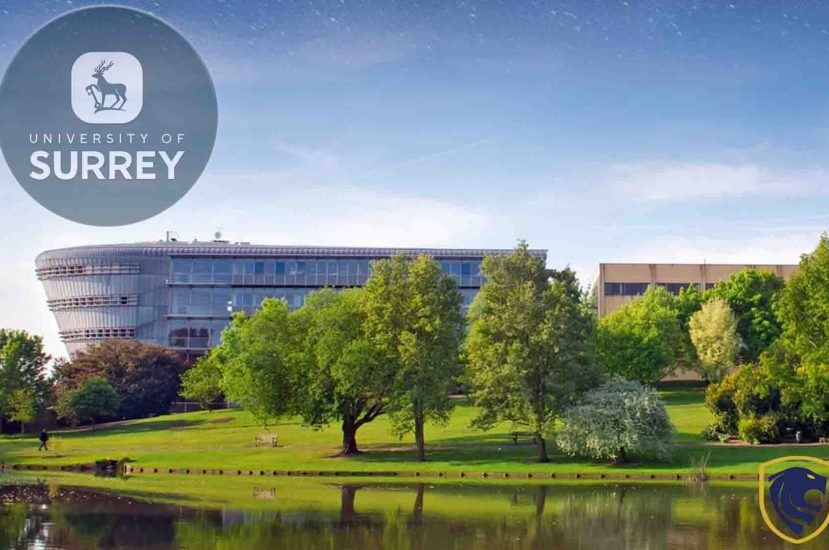
The University of Surrey is one of the best universities in Britain. It ensures quality of education through pioneering research in the heart of England. With the towered Guildford Institute in Surrey, the institution’s academic strength has crafted a reputation built on top-notch teaching practices and close industry ties, producing prominent professionals for the competitive global market.
The History of the University of Surrey
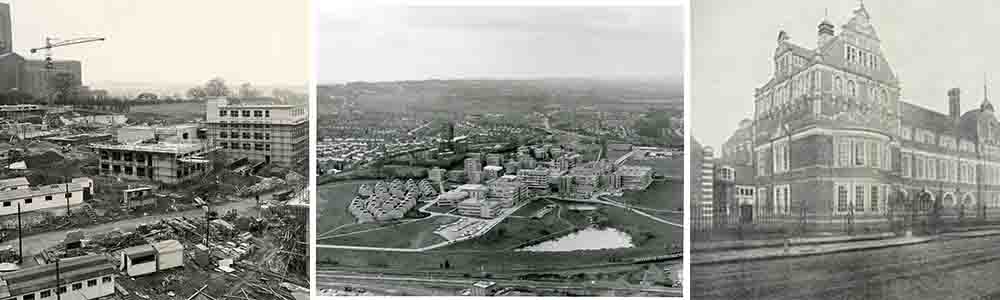
The University of Surrey can look back with pride upon a very interesting history. It began as a small establishment. And eventually, it became one of the leading universities of Britain. Established as early as 1891 as the Battersea Polytechnic Institute in London, the institution was meant to deliver practical education and training in science and technology, and professional skills to the locals.
In the years till the early 1900s, Battersea Polytechnic Institute grew larger and added other subjects to its curriculum. By the 1950s, the Polytechnic Institute had already been developed to a place where students from almost every corner of London came to study engineering and technology.
The History of the University of Surrey
Britain, after the Second World War, became a place where many more wanted to pursue higher education. However, only a few universities were available to accommodate that growing number. This was when the institution was given its Royal Charter and formally called the University of Surrey. That transformation occurred in 1966. That is a prominent milestone that this university has passed. The university authorities decided to move their numerous students from the highly congested city of Battersea to Guildford, in highly developed London.
Transferring to London
This transfer took place in the late 1960s/early 70s. The geographical advantage was that the institution could build an entirely new campus. This enhanced the capability of the university to grow while being in close touch with London and other urban areas. The campus was designed for a typical dynamic university lifestyle with classrooms, scientific laboratories, student residences, and sporting facilities.
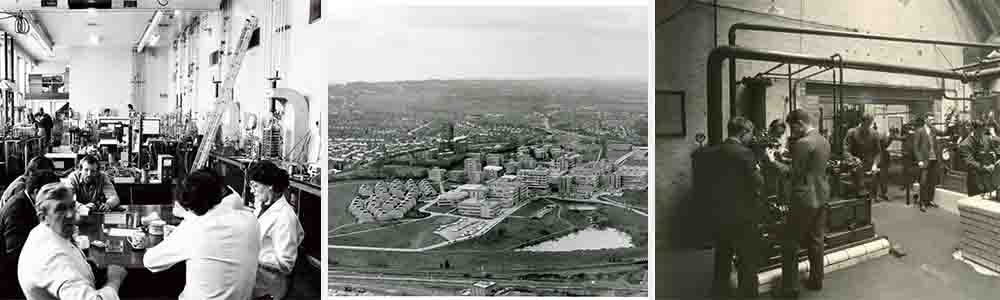
By 1970 and 1980, the University of Surrey became one of the pioneering universities in the UK’s higher education system. It inculcated innovative courses that went beyond classroom study with practical work in the field. It not only assisted students in earning a real livelihood but also provided a good basis for theoretical knowledge. This characteristic in curriculam differentiated Surrey from most traditional-type universities.
The History of the University of Surrey
The University of Surrey has continued to grow from the late 1900s until today. Emphasis has been laid on establishing research facilities, particularly in telecommunications, health sciences, hotel management, and space technologies. New departments have emerged, existing programs have been upgraded, and the university has recruited some of the best researchers and academics around the globe.
Today, the University of Surrey is indeed a very distant from the small polytechnic that it used to be. It now caters to thousands of students from multiple nations and engages in research that seeks to solve international problems of great relevance.
Rankings and Recognition: How Good is Surrey?
Surrey is a university that has received numerous awards and is highly ranked in university rankings. These rankings indicate that Surrey is one of the best universities in the UK and the world.
In QS’s World University Rankings, Surrey has never ranked outside the top 300 universities in the world, meaning the University of Surrey has always been among the world’s top universities. The rankings consider research quality, teaching reputation, and international orientation.
Rankings and Recognition: How Good is Surrey?
In the UK, the University of Surrey has consistently ranked among the top 20 or 30 universities. Major rankings, including the Complete University Guide, The Guardian University Guide, and The Times University Guide, have all placed Surrey among the top universities. These ranking systems consider factors such as student satisfaction, research quality, graduate employment rates, and staff-student ratios.
Graduate employment is one of the University of Surrey’s standout achievements. Also, a high percentage of Surrey graduates secure top-tier jobs, underscoring the university’s emphasis on placements and career support.
The University of Surrey holds the top gold award from the Teaching Excellence Framework (TEF). This is synonymous with the highest quality of teaching and high levels of student satisfaction at Surrey. Moreover, the Gold status signifies that the university offers the best teaching and learning.
Rankings of the University Of Surrey over the past 10 Years.
| Year | QS World University | Times Higher Education (THE) World | Complete University Guide (UK) | Guardian UK |
|---|---|---|---|---|
| 2016 | ~247 globally (Top Universities) | — | — | — |
| 2017 | ~261 globally (Top Universities) | — | — | — |
| 2018 | ~264 globally (Top Universities) | — | — | — |
| 2019 | ~248 globally (Top Universities) | — | — | — |
| 2020 | ~274 globally (Top Universities) | — | 23rd (CUG 2020) (GoUni Search) | 26th (Guardian 2020) (GoUni Search) |
| 2021 | ~267 globally (Top Universities) | — | 19th (CUG 2021) (GoUni Search) | 21st (Guardian 2021) (GoUni Search) |
| 2022 | ~272 globally (Top Universities) | — | 18th (CUG 2022) (GoUni Search) | 24th (Guardian 2022) (UniScholars) |
| 2023 | ~305 globally (Top Universities) | — | 18th (CUG 2023) (UniScholars) | 24th (Guardian 2023) (UniScholars) |
| 2024 | ~244 globally (Top Universities) | Ranked ~251 (THE 2024) (UniScholars) | 13th (CUG 2024) (University of Surrey) | 24th → 21st (Guardian 2024) (UniScholars) |
| 2025 | ~285 globally (Collegedunia) | — | 12th (CUG 2025) (UniScholars) | 19th (Guardian 2025) (GoStudyIn) |
Subject-wise Rankings
The hospitality and tourism management programs in the university usually rank among the best 10 in the world. Programs by Surrey for veterinary sciences, performing arts, engineering, communication and media studies, and nutrition also rank highly worldwide.
At one point, a high reputation for its research under the Research Excellence Framework (REF) due to its research quality. Furthermore, much of Surrey’s research has been assessed as an excellent standard internationally.
Rankings and Recognition
Surrey’s commitment towards sustainability and social responsibility is internationally recognized. It performs well in sustainability ranking lists, winning various awards for protecting the environment and projects geared towards lower carbon emissions.
The university has also gained acknowledgment from many professional bodies. This implies that the programs at Surrey meet stringent rating criteria while producing professionals qualified in their particular field of specialization.
Famous Alumni: Successful Surrey Graduates
Surrey is a university has an impressive alumni base from the entertainment industry, corporations, technology, politics, and the arts. In addition, the top-notch teaching in the University of Surrey has given these professionals a set of cutting-edge skills to win in their fields.
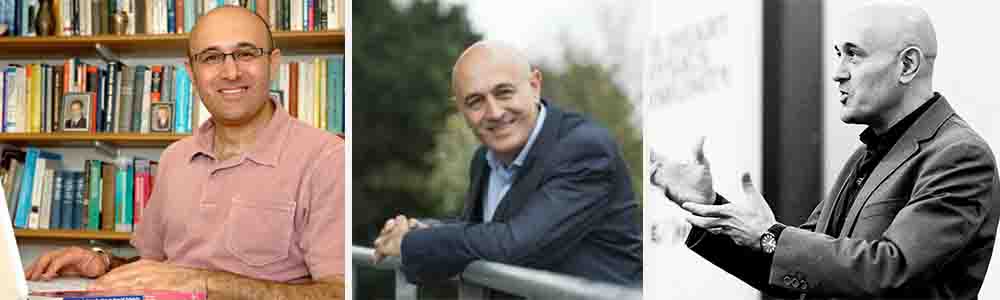
1) Jim Al-Khalili
Jim Al-Khalili is a renowned physicist, author, and broadcaster who is known for his work in the technological industry and for bringing it all the way down to simple phrases. He studied BSc Physics (1986); PhD Physics (1989) at the University of Surrey and have emerge as a member of the university. Later, he became the Chair in Public Engagement in technology and also obtained a Professorship of Physics. Al-Khalili has won numerous awards, such as the Royal Society’s Michael Faraday Prize for era communique. Moreover, he has hosted public BBC radio and TV programs presenting science and its history.
Jim Al-Khalili
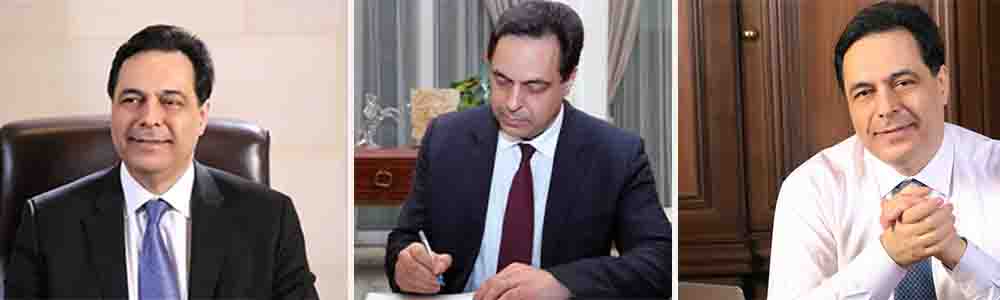
2) Hassan Diab
Hassan Diab is a Lebanese academic and a politician who studied at Surrey and completed an MSc in electrical power engineering in 1983. He occupied major academic positions before entering public service. Diab served as the Prime Minister of Lebanon between 2020 and 2021, which was a chaotic period following the Beirut port explosion. His education at Surrey supplied him with the foundation for fundamental leadership roles in every aspect of education and government.
Hassan Diab
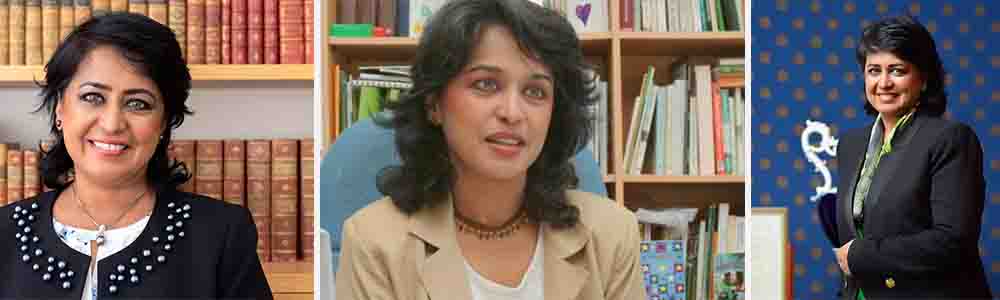
3) Ameenah Gurib-Fakim
Ameenah Gurib-Fakim is a biodiversity scientist and former president of the Republic of Mauritius (2015-2018). After learning the sciences at Surrey, she became one of Africa’s vital pupils in biodiversity and medicinal herbs. From the L’Oréal-UNESCO awards to global acknowledgement, she has obtained several awards for her work fpr biodiversity field before she began her role as a leader. As President, she targeted developing education, science advocacy and sustainable development, consistently highlighting the role of science in national progress.
Ameenah Gurib-Fakim
4) Jim O’Neill-Baron O’Neill of Gatley
Jim O’Neill-Baron O’Neill of Gatley is a prominent British economist who gained a doctorate from Surrey in 1982. He coined the term “BRIC,” which stands for “rapidly emerging economies within the global”. Later, he coined the term “MINT” for another set of growth markers. O’Neill became the Chairman of Goldman Sachs Asset Management. He has further chaired the UK cities growth commission.

Jim O’Neill-Baron O’Neill of Gatley
5) Linda Papadopoulos
She is a chartered psychologist and media personality who holds an MSc degree from Surrey. She is an author of several books on psychology, relationships, and mental health. Moreover, she frequently advocated for the community on television and radio about issues associated with psychology. She did a huge service in making mental insights comprehensible to the general public by writing books and by giving her insights on important social and well-being issues.

Linda Papadopoulos
6) John Pickett
John Pickett is a well-known agricultural scientist who finished his B.Sc in 1967 and Ph.D. in 1971. He is internationally recognized for contributions to chemical ecology and sustainable pest management. His research has made significant breakthroughs in understanding plant-insect interactions. Additionally, he developed practical solutions in crop safety, earning prestigious awards, including the Wolf Prize in Agriculture.
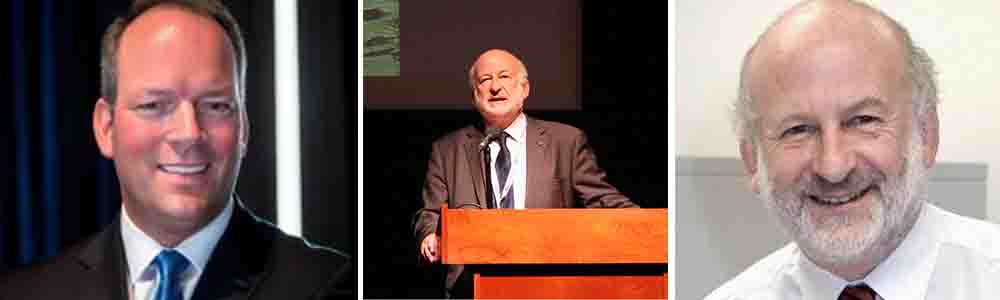
John Pickett
7) Paetongtarn Shinawatra
Paetongtarn Shinawatra is a Thai politician and businesswoman who attained an MSc at Surrey. She is from the Shinawatra family, which is an influential Thai political family. Later, she even served as the Prime Minister. Furthermore, her Surrey postgraduate education in business and management has supported her leadership roles in both corporate and political spheres.

Paetongtarn Shinawatra
8) Kay Swinburne, Baroness Swinburne
Kay Swinburne, Baroness Swinburne, is a British politician and former Member of the European Parliament (MEP) is who pursued her MBA at Surrey. Swinburne has also come to be a Conservative MEP representing Wales, been promoted to the House of Lords, and concentrating her efforts on finance and monetary policy. Moreover, she worked on strengthening business engagement between Europian Union and the UK.

Kay Swinburne, Baroness Swinburne
9) Marion Vernese Williams
She is an Economist and a central banker. She acquired her PhD at Surrey in 1995. Later, she became Governor of the vital financial institution of Barbados, where she was responsible for economic policy and balance within the monetary system of the country. Williams’ career has been variously characterized, blending basic educational expertise and high-level financial governance in the Caribbean, which speaks to Surrey’s international outreach with its economics education.

Marion Vernese Williams
10) George Young, Baron Young of Cookham
George Young of Cookham is a British Conservative politician who completed an MPhil at Surrey. Young served in the top echelon of the presidency in the UK for numerous years in senior posts. He was later promoted to the House of Lords and recognised for decades of public service in legislative and government leadership.
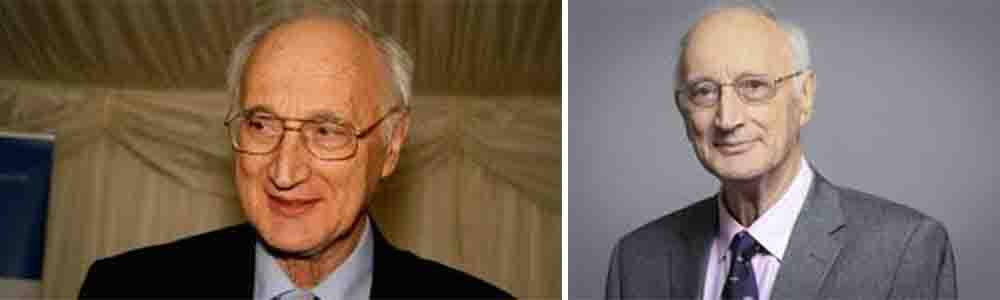
George Young, Baron Young of Cookham
Campus Locations and Facilities
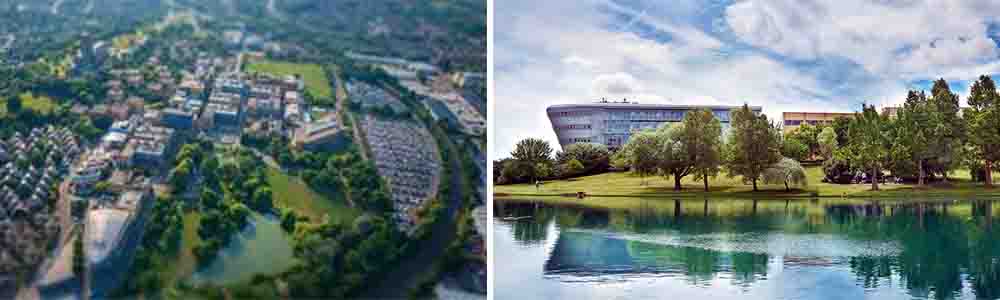
The University of Surrey operates mainly from its main campus in Guildford, though it has other facilities and partnerships that extend its reach.
01) Main Campus – Stag Hill, Guildford
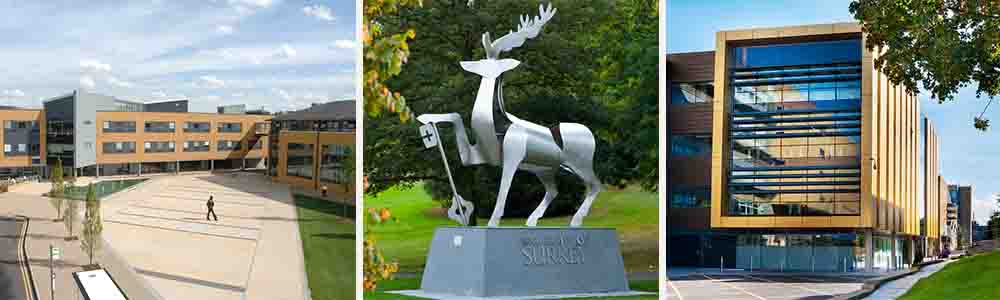
The main campus of the university is located at Stag Hill, in Guildford, Surrey, 30 miles southwest of London. The buildings hold the newest academic and research centers, student accommodation, and sports facilities. The site currently includes the Stag Hill campus, which was constructed specifically when the university moved from Battersea in the late 1960s and early ’70s.
This campus is home to modern teaching buildings, a lecture theater, classrooms, and certain areas to facilitate learning in various courses. Science and engineering laboratories provide university students with access to cutting-edge devices and technology. Much of the university’s research centers reside within this campus, undertaking research in areas such as 5G communications, artificial intelligence, health sciences, sustainability, and Space technology.
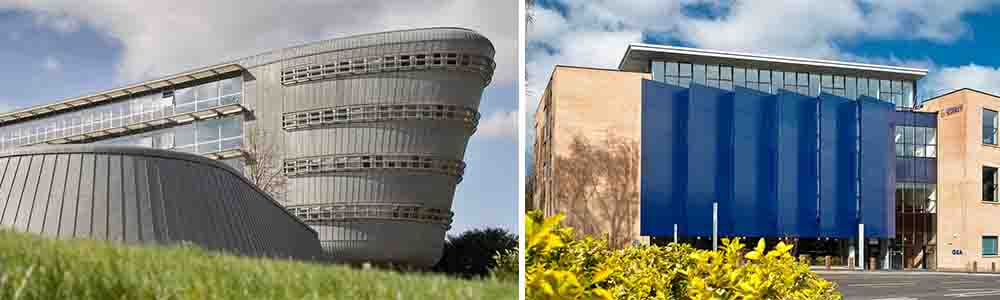
Main Campus – Stag Hill, Guildford
The University Library includes a wide range of books, journals, and online resources that students can use. Group study places, quiet study spaces, and specific research collections are made available to the students. Libraries offer many digital resources so that materials are accessible from anywhere.
The Stag Hill campus houses hundreds of university students, with various living models from the more traditional dormitory-style living to truly modern houses. Students, thus, are within walking distance to their commands and university facilities.
Among the sports activity facilities on the main campus are an activity park with numerous fields, courts, and outdoor facilities. Moreover, the sports activity center features a gymnasium, swimming pool, sports activity halls, and studios for classes.
Besides, it has several cafes and eateries, social spaces, and the students’ Union building. Inaddition, they offer health and welfare facilities. It also has green areas strewn all over its space that offer areas for rest and recreation, promoting students’ well-being as well.
02) Manor Park Campus
Manor Park is an extension of the university’s facilities in Guildford. This area has evolved to offer greater space and consists of lecture halls, student housing, and research labs. It’s very close to the main campus, so university students can travel between the two premises easily.
Manor Park allows the university to accept extra students whilst offering them high satisfaction.
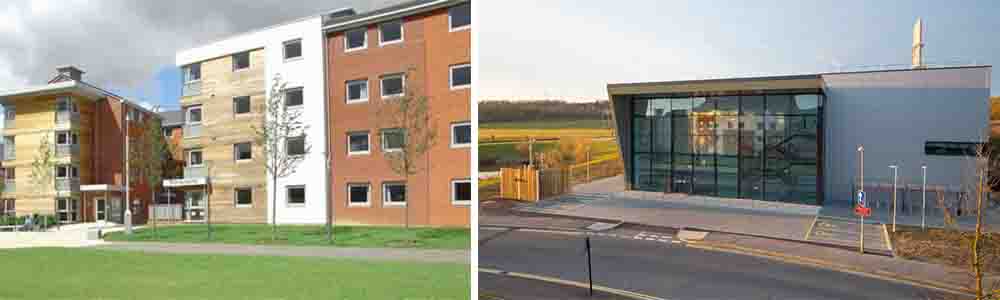
Manor Park Campus
04) Guildford School of Acting
The Guildford School of Acting (GSA) is a performing arts faculty that focuses on musical theater and performing. It’s a part of the College of Surrey. GSA operates from a building in Guildford city center with centers designed for performing arts training. Furthermore, the faculty comprises performance areas, dance studios, practice session rooms, and technical facilities that enable university college students to enhance their skills in professional-level environments.
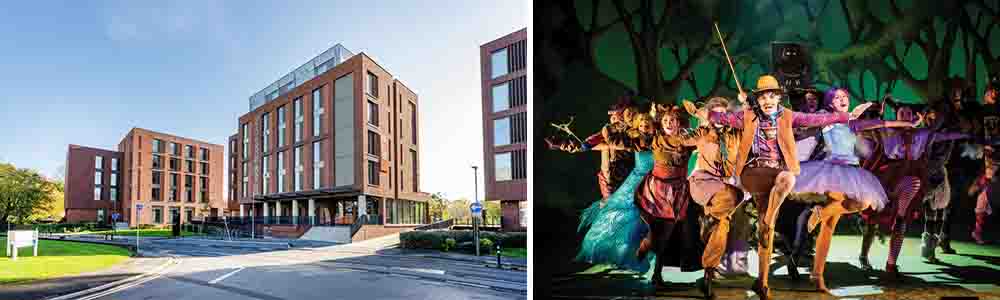
Guildford School of Acting
GSA has an amazing recognition in the acting arts global, with graduates happening to a achievement careers in theater, television, and movies. So, being a part of the University of Surrey allows arts students to use college resources.
05) Surrey Research Park
Next to the main campus, Surrey Research Park is one of the main industry collaborators in the UK. This was established in 1985, the Surrey Research Park has over one hundred businesses employing loads of people in high-technology sectors. Moreover, agencies vary from small startups to major global corporations, and many operates with the university on studies obligations and student placements. The research Park offers university students opportunities to work in industry via internships, placements, projects, and graduate jobs.
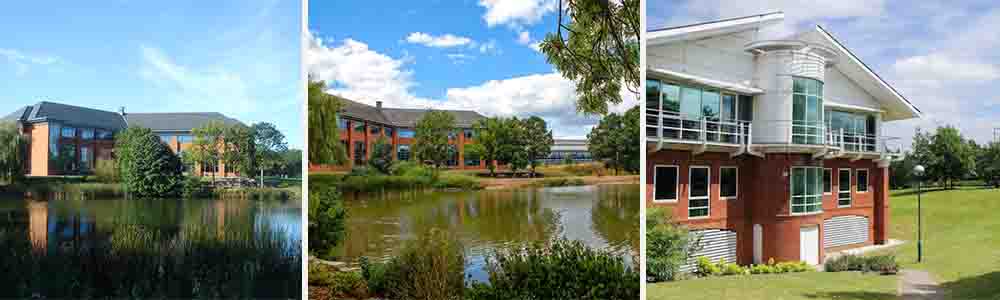
Surrey Research Park
Read More: University of Surrey Main Campus (Stag Hill, Guildford) (Part 2)
University of Surrey – Manor Park Campus (Part 3)
Study Overseas details for University Articles

mvldv2