
The University of Strathclyde is located in the center of Glasgow. This is a unique place where traditional heritage meets modern innovation. Built on a firm vision of the 18th century, Strathclyde has matured into a global technological university. The article accounts for its history, rank, sub-campuses, notable alumni, and its influence.
1. History Of The University
The story of Strathclyde begins with Professor John Anderson of the University of Glasgow, who died in 1796. He bequeathed part of his estate for the building of an institution devoted to “useful learning,” meaning to practically train artisans and tradespeople. Then the institution was first called the Andersonian Institute. The institution evolved, over the 19th and into the 20th century, through several names and forms, at times echoing Glasgow’s booming age of industry, thus becoming first Anderson’s university, then Anderson’s college, and later Glasgow and West of Scotland Technical University.
History Of The University
In 1912, it was given royal accreditation as the Royal Technical College. And then after further expansion, it became the Royal University of Science and Technology. In 1964, the University of Strathclyde was officially established by royal charter. Thus, Strathclyde came to be known as the first technological university in the UK, one that functioned on applied science and for the common good.
From the very beginning, the emphasis of the university curricula was on practical impact. Hence, early courses were centered on engineering, production, and applied sciences. These were the disciplines of utmost requirement from the viewpoint of Glasgow’s industries. In the years to come, the university branched into other areas like business and commerce, law, medicine, and the arts. Nevertheless, even while broadening its scope throughout this period, Strathclyde focused on innovation and public engagement. This long history explains why, even today it still maintains that the university still brands itself as “for the common good.”
Rankings and Recognitions of the University
Strathclyde University has received several awards and is known to continuously rank among the universities categorized as the best in the UK and the world. These rankings give credence to the university’s excellence in teaching and research impact, and graduate employability.
Strathclyde has been consistently scoring in the QS world university ranking’s top 400, plus the departments, which usually excel in specific subject areas and have multiple departments that qualify within the top one hundred globally. Notably, the Strathclyde Business School is internationally recognized, triple-accredited by AMBA, AACSB, and EQUIS, which adds up to earning this status by less than one percent of business schools in the world.
Among the world’s top institutions, Times Higher Education ranks Strathclyde as one of the elite universities in the world. It’s identified as specific and particularly on its business and economics, engineering and technology, and computer science programs.

Rankings and Recognitions of the University
United Kingdom criteria for assessing research quality in higher education institutions assess the quality of research in Strathclyde. In the latest assessment, Strathclyde proved that a large amount of its research is world-leading or internationally academically excellent, specifically in engineering, business and management, education, and pharmacy.
Times Higher Education Ranking
Times Higher Education declared Strathclyde as University of the year for those years where recognition was due to outstanding contributions to education. This is a golden award for Strathclyde by advancing research, education, and knowledge transfer with industry and society.
Strathclyde is traditionally a top-ranked university, with its graduate employability record. The university has built excellent relationships with some industry-placed corporations, offering students practice-based skills and experience for the duration of their courses. Strathclyde is known in numerous graduate employment rating systems as having one of the highest proportions of graduates entering either a professional position or postgraduate study within just months of graduation.
The Strathclyde Business School deserves special mention as it is one of the largest business schools in Europe and has been recognized as one of the best business schools in the UK. Its MBA program and undergraduate courses in business are highly rated, along with research in business and management studies.
True recognition has been accorded to Strathclyde engineering departments, for engineering courses at Strathclyde are among the best in the UK, particularly in mechanical engineering, chemical engineering, and electronic and electrical engineering.
By virtue of the number of organizations that recognize it as an Entrepreneurial University, the institution promotes innovations and generates businesses by providing much-needed Auxiliary services to students and staff to convert research ideas into business ventures. The entrepreneurial culture drew attention through the number of spin-out companies that emerged as successful and the patents that were generated.
10-Year rankings for University of Strathclyde
| Year | QS (global) | THE (global) | ARWU / Shanghai (global) |
|---|---|---|---|
| 2016 | 272 | 401–500 | — / not in top 500* |
| 2017 | 277 | 401–500 | — |
| 2018 | 268 | 401–500 | — |
| 2019 | 296 | 401–500 | 601–700 |
| 2020 | 300 | 401–500 | 401–500 |
| 2021 | 302 | 401–500 | 401–500 |
| 2022 | 325 | 401–500 | 401–500 |
| 2023 | 276 | 301–400 | 501–600 |
| 2024 | 281 | 351–400 | 501–600 |
| 2025 | 281 | 351–400 | 501–600 |
2. Notable alumni — people who shaped industry, politics, and culture
Strathclyde has produced leaders in many sectors such as business, politics, science, and the humanities. Here are 10 of the university’s most prominent graduates with global standing, each one indicating the university’s pragmatic approach and global reach.
1. Sir Tom Hunter – Entrepreneur Philanthropist
Sir Tom Hunter graduated from the University of Strathclyde Business School with a degree in Marketing and Economics before starting, with an investment of just £5,000, a retail empire called Sports Division. This business expanded into one of the largest sportswear retail empires in the UK. Then, it was later sold for almost £290 million. Aside from his business, he is very well respected for the charitable work of the Hunter Foundation. This foundation funds educational and social mobility programs across Scotland, including its support for establishing the Hunter Centre for Entrepreneurship, thus inspiring generations of business students.

Sir Tom Hunter – Entrepreneur Philanthropist
Moreover, knighted in 2005 for services to entrepreneurship and philanthropy, Sir Tom remains a key player in Scottish commerce. From the perspective of Strathclyde, his journey from an aspiring student entrepreneur to being one of the UK’s most powerful business leaders captures the very essence of the Strathclyde ethos – “the place of useful learning.”
2. Sir Brian Souter – Transport Tycoon and Stagecoach Founder
Sir Brian Souter studied Accountancy and Economics at the University of Strathclyde before qualifying as a chartered accountant. In 1980 he and his sister, Dame Ann Gloag, started Stagecoach with nothing but buses, recalibrating British transport. Also, under his regime, Stagecoach turned into a multinational network, running buses, trains, and ferries across Europe and North America. Sir Brian was knighted in 2011 for services to transport and to charity and is also noted for his philanthropy via the Souter Charitable Trust.
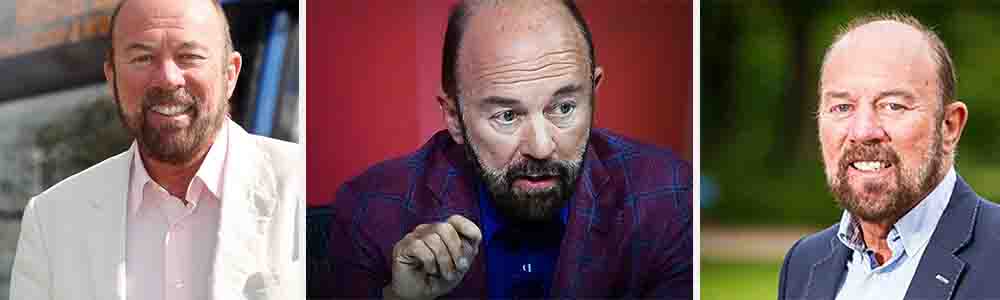
Sir Brian Souter – Transport Tycoon and Stagecoach Founder
His odyssey from the Strathclyde lecture rooms to laying foundations for one of the UK’s largest transport enterprises is an indication of how the institution has nurtured and commercialized its education into a very tangible manifestation. Moreover, much of his story is said to exemplify how Strathclyde fosters ambition, practicality, and contemporary thinking.
3. Sir Jim McDonald – Academic Leader and Engineer
Appointed Principal and Vice-Chancellor of the University of Strathclyde in 2009, Jim McDonald is one of the best-known UK academic figures. He holds a BSc, MSc, and PhD in Electrical Power Engineering from Strathclyde and began his professional career at the university as a researcher. Moreover, his research in power systems and renewable energy won him fame as a member of the Royal Academy of Engineering, subsequently becoming its President from 2019 to 2024.

Sir Jim McDonald – Academic Leader and Engineer
Under his leadership, Strathclyde consolidated and spread globally its image as a research-intensive technological university. He has been a very active figure in the development of industry-academia partnerships concerning sustainable energy solutions and the innovation of engineering education. So, the long-lasting relationship between Sir Jim and Strathclyde provides a perfect illustration that the university nurtures not only graduates but also visionary leaders shaping the future of research and technology.
4. Chris Sawyer – Legendary Game Developer
Chris Sawyer, a Computer and Microprocessor Systems graduate of the University of Strathclyde, has become a legend in the gaming industry. He is best known for the design and programming of two classic simulation games, Transport Tycoon (1994) and RollerCoaster Tycoon (1999). Moreover, his programming, almost entirely in assembly language, proved his amazing technical skills and his unusual attention to detail. Both games became worldwide hits and inspired a generation of game developers and fans of simulation. The link between Sawyer and Strathclyde shows how a sound foundation in programming and systems engineering can lead to truly innovative breakthroughs. The very principles upon which he has founded his ideas are still influencing modern-day gaming mechanics and business simulation concepts. Moreover, his achievements further confirm that the applied learning philosophy of Strathclyde can and does sometimes lead to global success in technology and entertainment.

Chris Sawyer – Legendary Game Developer
5. Alex Kapranos – Musician and Frontman of Franz Ferdinand
This charismatic lead singer and guitarist of the internationally famous rock band Franz Ferdinand graduated from the University of Strathclyde. His educational background helped to form an eclectic career as a musician and writer, along with his creative energy. Formed in 2001 in Glasgow, Franz Ferdinand’s first hit, “Take Me Out,” turned into a global hit that earned them the 2004 Mercury Prize, alongside countless Brit Awards. Moreover, apart from his music career, Kapranos worked as a journalist and wrote a food and travel column for The Guardian. His achievements represent Strathclyde’s ability to nurture graduates with equestrian skills in somewhat offbeat non-traditional domains. It was during his time at university that he refined his analytical thinking and creativity, two skills that continue to drive his career in music and culture.
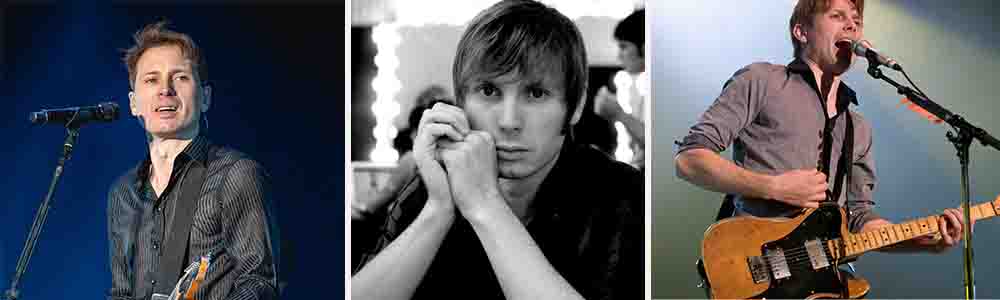
Alex Kapranos – Musician and Frontman of Franz Ferdinand
6. Lauren Mayberry – Musician and Activist
Lauren Mayberry, whose popular music lives on within the congregation of synth-pop CHVRCHES, holds a bachelor’s degree in law and a master’s in Journalism from the University of Strathclyde. Before her advent to worldwide fame, she was working as a freelance journalist and producer, thus sharpening her skills in telling stories and communicating. With CHVRCHES, she has gained worldwide recognition performing at major festivals, Coachella, and Glastonbury. Also, beyond music, it is well-known that Mayberry has continually been advocating for issues of gender equality and online safety, using her platform to stand against women’s rights and digital violence. The combination of art and activism perfectly represents Strathclyde’s values of intelligence, integrity, and social consciousness. Furthermore, it is evident from Lauren’s journey that a college education empowers creation while giving a voice in societal change.

Lauren Mayberry – Musician and Activist
7. John Logie Baird – Inventor of Television
John Logie Baird, commonly referred to as the father of television, studied electrical Engineering at the University of Strathclyde. In 1926, he demonstrated the first public working of a system of television, which, from then onwards, penetrated all modes of communication and enjoyment around the world. Baird’s works have been laid at the foundation of the present broadcasting industry. Working with very limited resources at those times, the innovation and perseverance of Baird truly resembled Strathclyde’s spirit for innovative activity. And with every color and stereoscopic television prototype he developed, Baird proved his vision-based thinking. Today, Baird is synonymous with technological development, while his linkage with Strathclyde remains a source of inspiration to generations of engineers and inventors. This legacy also underscores Strathclyde’s core values that change occurs through courageous experimentation and inquiry.
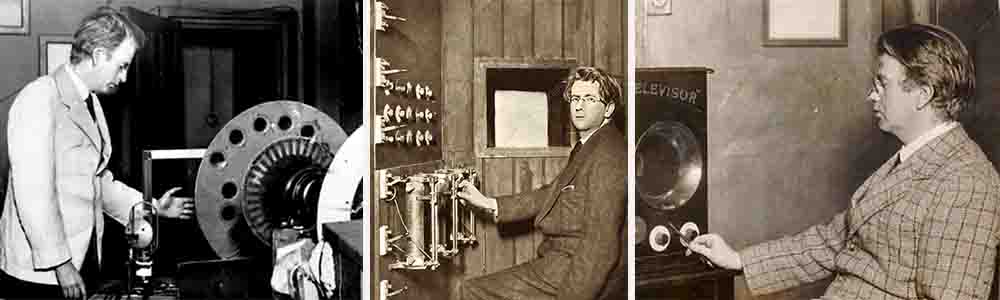
John Logie Baird – Inventor of Television
8. Dame Elish Angiolini – Legal Reformer and Advocate
Dame Elish Angiolini has graduated from Strathclyde Law. Also, she is the first woman to have served as Scotland’s Lord Advocate and also made a Solicitor General at the same time. In her working life, she has been a relentless advocate for justice reform, equality, and victims’ rights. Her reputation for compassion and fairness is complemented by leading numerous inquiries into public safety and policing. The honour of Dame Commander of the Order of the British Empire (DBE) has been conferred upon her for services to law and justice. Angiolini’s achievements shine a light on the legacy of Strathclyde law school in respect to their focus on pragmatism. Furthermore, her path-breaking career has inspired several generations of women to pursue a legal career with dignity and resolve.
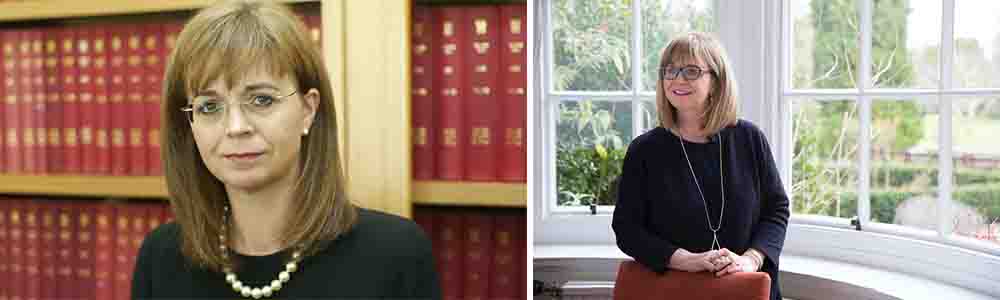
Dame Elish Angiolini – Legal Reformer and Advocate
9. Aileen McGlynn – Paralympic Cyclist and Gold Medalist
Aileen McGlynn is one of the best-known Paralympic athletes in England, who is a graduate of the University of Strathclyde. She was born without sight, which led her to become a world-class tandem cyclist, winning golds at the Paralympic Games in Athens and Beijing and a silver in Tokyo. Besides sports, she works on disability inclusion and equal representation. Furthermore, McGlynn embodies the discipline and resilience that are the hallmark of the strength and determination imparted by the diverse student body of Strathclyde. She has been awarded the OBE for work in cycling and sport. This legacy shows that excellence at Strathclyde goes far beyond the classroom- into any field where ambition meets opportunity.

Aileen McGlynn – Paralympic Cyclist and Gold Medalist
10. James Blyth – Pioneer of Renewable Energy
In the late 19th century, Professor James Blyth, an engineering professor at the University of Strathclyde, invented the first wind turbine in the world that produced electric energy (1887). His innovation, installed in Marykirk, Scotland, powered up his house and marked the beginning of wind energy. Blyth was involved deeply in developing sustainable technology much before it became a global issue. In addition, his early recognition of the wind potential laid the groundwork for today’s renewable energy revolution. As one of Strathclyde’s earliest innovators, Blyth’s work embodies the mission of the university in presenting ideas meant to serve the world. Furthermore, his pioneering spirit continues to inspire college students as well as researchers devoted to solving the energy challenges of the 21st century.
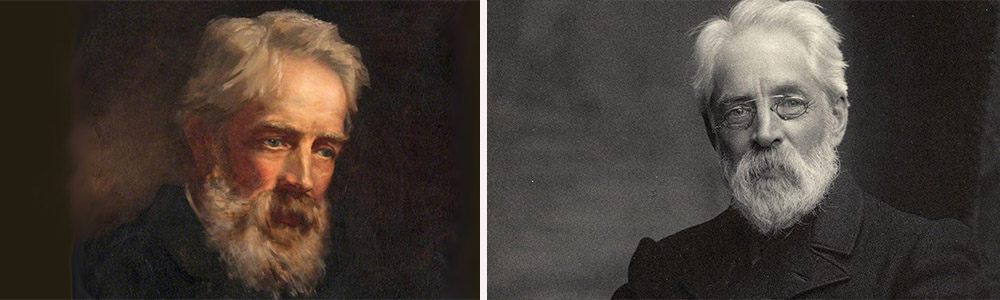
James Blyth – Pioneer of Renewable Energy
3. Sub Campuses of the University
Thus, the recently completed infrastructure of the Strathclyde University campus presents an innovative infrastructure for its teaching. Such modern facilities would allow students and visitors to appreciate the scale and scope of the establishment.
John Anderson Campus, which is the main and state-of-the-art campus, is constructed in the center of the city. Moreover, it is located in the heart of today’s ultra-modern town center of Glasgow. This site is named after the founder of the university. Most of the time, students spend their time here because this campus contains cutting-edge facilities from the university.
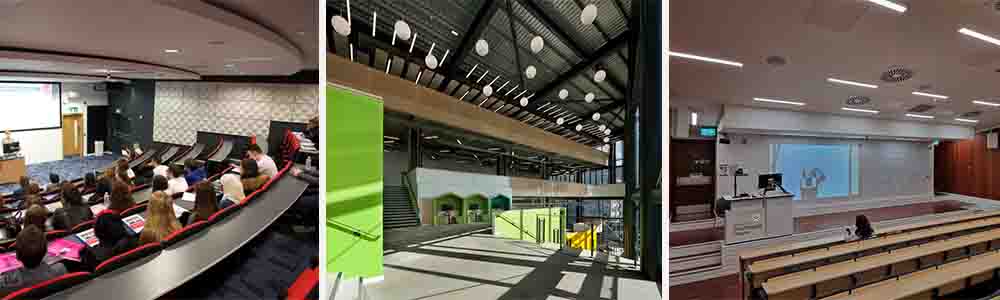
The area of the university is about forty acres within the center of Glasgow and consists of modern teaching centers, research laboratories, students’ lodging, and social areas. Moreover, the campus continues to develop its international nature with new buildings or renovations that ensure the facilities remain world-class. Major improvements include learning areas, research facilities, and student resource facilities.

Sub Campuses of the University
Other key buildings on the John Anderson Campus include the McCance building. This building houses engineering departments and laboratories; the Technology and Innovation Centre, one of the world’s best research facilities; also the Strathclyde Business School building, providing very modern teaching and learning spaces for university students.
Jordan hill Campus
Although the current university sold this campus in 2012, it used to be the Jordanhill campus located in the west of modern-day Glasgow. The faculty of education once resided on this campus but has relocated to Anderson Campus since then. Such consolidation has allowed the university to offer a more compact campus experience where all students and staff benefit from being in one large location.
Read more:
University of Strathclyde John Anderson (main) Campus (part 2)
Study Overseas details for University Articles