University of Gloucestershire (UoG) is a public university in England, based in Gloucestershire. It is located in South West England, at the edge of the Cotswolds. The University of Gloucestershire has 4 campuses in total, which are 2 in Cheltenham (Francis Close Hall and The Park) and 2 in Gloucester (Oxstalls and City Campus).
This article focuses on the Francis Close Hall (FCH) Campus located on Swindon Road, St Paul’s area, Cheltenham. This is one of the oldest and most historic of the university’s campuses, as teaching on this site dates back to 1847. So, this university has nearly 180 years of continuous educational excellence.
4.1.1 Faculties and Programs Available at FCH Campus
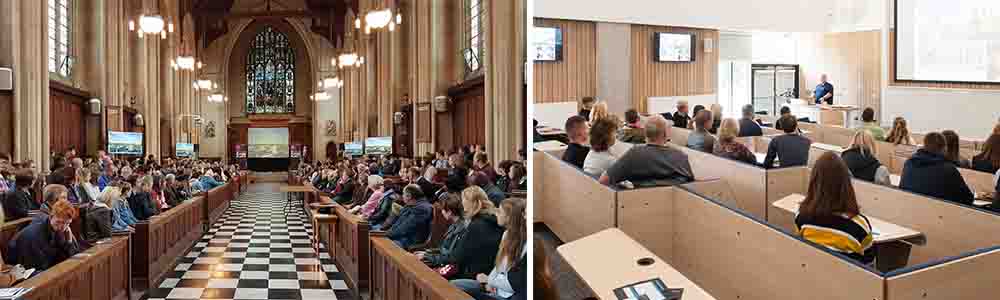
The Francis Close Hall campus mainly focuses on subject areas such as humanities, architecture, illustration, and sciences. So, the campus is described by the university itself as the home to humanities, architecture, illustration, and sciences.
Also, they offer courses in applied/social sciences, arts, and social work. The teaching approach of the university is a mix of theory and practicals, strengthened by placements, real-world projects, and field trips. Moreover, students of this campus can get access to published researchers and get guidance from experts.

Faculties and Programs Available at FCH Campus
Specific course areas taught at FCH
The Francis Close Hall campus primarily offers degree programs in Architecture. They offer professional qualifications such as RIBA-aligned pathways. Also, the Illustration & Visual Arts department is at the nearby Centre for Art and Photography. In addition, they offer Landscape Architecture courses, including conversion routes for non-specialist graduates. Course listings show that the Landscape Architecture Conversion pathway extends over 2 years full-time and 4 years part-time.
Furthermore, Wildlife Conservation Biology is offered as a full-time 4-year degree with a placement year and part-time work experience. Religion, Philosophy and Ethics degree offered by the Francis Close Hall campus spans over 3years if done full-time, but there are part-time options as well.
>>>
Also, the Francis Close Hall campus offers Humanities subjects such as history, English, theology, and religious studies with Social Work experience. There are general and applied Science degrees offered by the Francis Close Hall campus as well.
Undergraduate Degree Programs Offered at FCH Campus (BA/BSc/BEd)
- Architecture BA (Hons)
- Landscape Architecture BA (Hons)
- Illustration BA (Hons)
- Geography BA (Hons) / BSc (Hons) — offered both ways
- Human Geography BA (Hons)
- History BA (Hons)
- English Literature BA (Hons)
- Creative Writing BA (Hons)
- English Literature and Creative Writing BA (Hons)
- Religion, Philosophy and Ethics BA (Hons)
- Biology BSc (Hons)
- Biomedical Science BSc (Hons) (+ IBMS-accredited top-up route)
- Zoology BSc (Hons)
- Wildlife Conservation Biology BSc (Hons)
- Ecology and Environmental Science BSc (Hons)
- Psychology BSc (Hons)
- Psychology, Health and Wellbeing (Level 6) BSc (Hons)
- Criminology BSc (Hons)
- Criminology and Psychology BSc (Hons)
- Crime and Criminal Investigation BSc (Hons)
- Early Childhood Studies BA (Hons)
- Primary Education with QTS BEd (Hons)
- Working with Children, Young People & Families CertHE
- Health and Social Care CertHE
Postgraduate & apprenticeship note
Faculties and Programs Available at FCH Campus
University of Gloucestershire offers university-wide 100+ undergrad courses and nearly 57 postgrad courses.
Postgraduate Taught (MA/MSc/PGDip/PGCert)
- Architecture MArch
- Landscape Architecture MA/PgDip
- Landscape Architecture (Conversion) MA/PgDip (for non-specialist graduates)
- Illustration MA/PgCert/PgDip
- Creative and Critical Writing MA/PgCert/PgDip
- Communications, PR and the Media MA/PgCert/PgDip
- Applied Ecology MSc/PgCert/PgDip
- Construction Project Management MSc
- Psychology MSc
- Health Psychology MSc
- Forensic Psychology MSc
- Criminology MSc/PgCert/PgDip
- Social Work MA
- Education MA
- Inclusive Education MA
- Education, Ethics and Leadership MA
Teacher Training (PGCE)
- Primary Education PGCE
- Secondary Education PGCE — pathways in: Mathematics, English, Biology, History, Geography, Art and Design, Physical Education
Research Degrees (MA/MSc by Research, PhD, Doctorate)
- Education and Learning MA by Research/PhD
- Psychology MSc by Research/PhD
- Architecture, Construction and Environment MSc by Research/PhD
- Design MA by Research/PhD
- Doctorate of Education (EdD)
4.1.2 History & Functions of FCH Campus
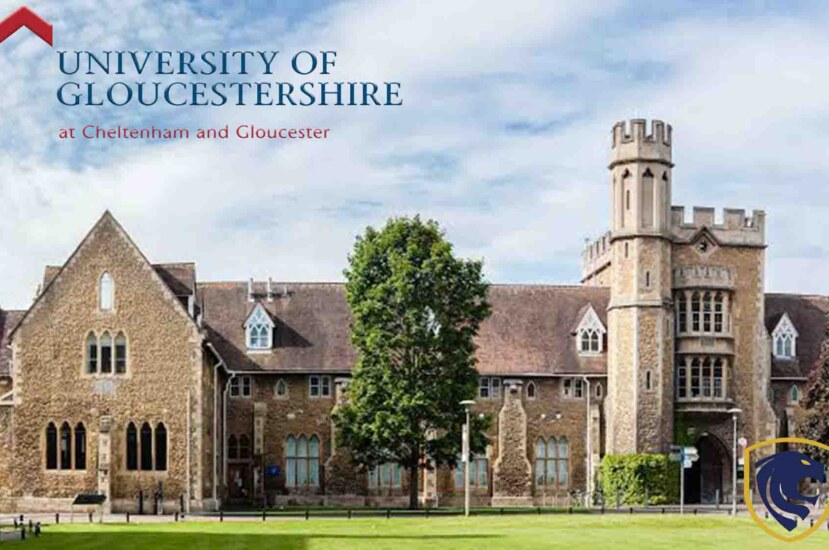
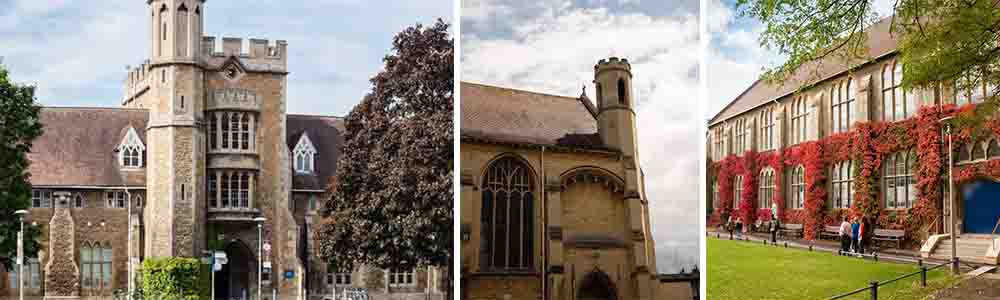
University of Gloucestershire was founded in 1847 for teacher training and has been located at Francis Close Hall. The university’s founder is Reverend Francis Close, and it was later named after him. So, originally, the University of Gloucestershire was an Anglican Church-founded teacher training college. The Francis Close Hall building of the university was constructed in 1849 in Tudor-Gothic style with pointed arches, mullioned windows, and castellated towers. This building has magnificent architecture, as it was designed by Samuel (Whitfield) Daukes, the same architect responsible for several historic Cheltenham/Gloucester buildings of the period. The original name of the Francis Close Hall was St Paul’s Training College and then the Gloucester College of Higher Education.
Institutional evolution
In 1990, Church-founded St Paul’s College and Local Government-founded Mechanics’ Institutes were merged to create Cheltenham and Gloucester College of Higher Education. In 2001, the university if Gloucestershiregained the University status. Today, the University of Gloucestershire stands with nearly 170–180 years of continuous educational history, marked by the university’s proud legacy.
History & Functions of FCH Campus
Current function</h4>
Today, the University of Gloucestershire leads three sub-campuses, including Francis Close Hall campus, The Park Cheltenham, and Oxstalls Glouces
ter. Moreover, this campus proudly holds a significant heritage status shaped by major historical structures. Also, there are modern facilities fitted sympathetically within old fabric to provide this university with updated functions.
4.1.3 History of Cheltenham
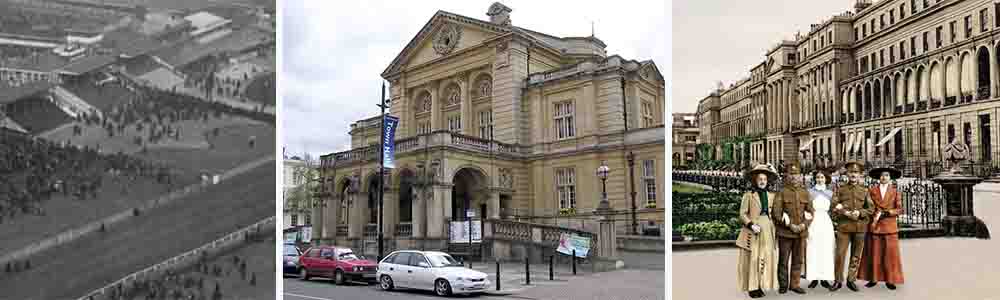
The town first appears in records in 803, as Celtan hom. The name’s meaning is debated but linked to “steep hill” + “settlement/water or meadow. Also, the name appeared in the Domesday Book as “Chintenham” and was recorded as a royal manor in the Gloucestershire section of the Domesday Book. The town was granted the market charter in 1226 and formalised its status as a market town. Cheltenham sits on the River Chelt; the river rises near Dowdeswell and flows through the town to the River Severn. During the pre-spa era, Cheltenham town was a modest single-street market town serving the surrounding countryside.
Rise as a spa town
Mineral springs were discovered in Cheltenham in 1716 by a local farmer named William Mason, noticing pigeons gathering at a spring in his meadow. This land, which was once his farmland, is now where the Cheltenham Ladies’ College is situated. Then, following the discovery of the mineral spring, the development was driven by Captain Henry Skillicorne, who was Mason’s son-in-law, from 1738. He dug out the spring into a proper well, added pumping equipment, landscaped the grounds, and planted Well Walk Avenue.
History of Cheltenham
The turning point of the city was the visit of King George III in 1788 to help cure his illness. This secured Cheltenham’s reputation as a modest spa destination. Then, the well was renamed the “Royal Well” to commemorate the royal visit, which is still in use today.
Regency-era boom</h4>
During the Regency era, the development of promenades, parks, and bandstands for the genteel took place, with a social culture of balls, concerts, card games, and billiards flourish
ing. This town is known as the most complete Regency town in Britain.
</p>
Moreover, educational institutions for the wealthy grew alongside spas during the Regency period as a part of the “Health and Education” civic ident
ity. This same civic tradition later produced Cheltenham Training College in 1847.
4.1.4 Infrastructure & Facilities at FCH Campus
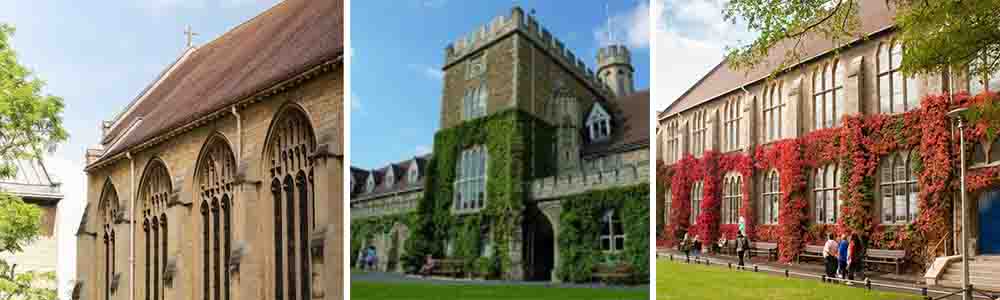
Buildings of the Francis Close Hall are built using Cotswold stone, which gives the campus a distinctive warm, bright appearance year-round. These are located close to Cheltenham town centre and parks, which offer a combination of “country and city” living/study environment to students. Also, these structures are set within the Central Cheltenham Conservation Area, so any new building work must be sympathetic to surrounding listed structures.
Main Hall (the original Francis Close Hall building)
This building was built in 1849 by architect Samuel Whitfield Daukes for St Paul’s Training College in Tudor-Gothic style; quadrangular plan with projecting rear blocks. Notable features of this building are an octagonal central tower porch, mullioned/transom windows with cusped heads, buttressed bays, and castellated oriel windows to the rear porch, and decorative Gothic detailing typical of mid-19th-century collegiate architecture. Today, this building is used foradministrative/teaching core of the campus.
Infrastructure & Facilities at FCH Campus
The Chapel
Originally, the building was built in the early 1900s for St Paul’s College. This was constructed decades after the main hall, as the college expanded. This building is also Grade II listed and has protected heritage status
It is currently used for music performances, art exhibitions/practice, prayer & worship space, weekly “World Café” event, and weddings. So, this chapel is a multipurpose community and cultural venue, not a solely religious one.
Library
The library of the Francis Close campus consists of books, journals, computer access, and study space, which is open 24/7 during term time. This building holds significance as the central academic support hub for FCH students.
Architecture Centre
Recently redeveloped from the existing Teaching Centre building. It is not a listed building, but is located within the conservation area next to the listed Chapel. The Design approach retained original building features, and the alterations were kept minimal. So, they reused door openings and limited new ventilation louvres. Today, this building is used as a dedicated space for architecture students. So, the building consists of studios and crit spaces.
Other named facilities
Francis Close Hall campus also consists of a Studio, laboratory, and ICT suites to support science, art, and technology-based courses. In addition, the campus has a”Gloucester Suite,” which is a training restaurant for practicals in hospitality and catering courses.
4.1.5 Weather in Cheltenham
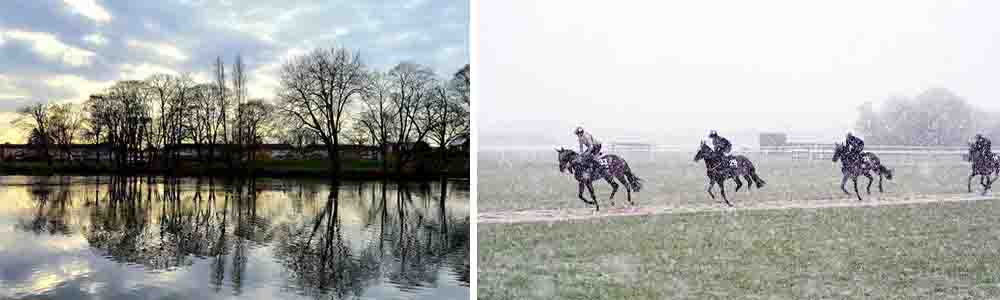 Weather in Cheltenham[/caption]The Cheltenham area usually has a Marine West Coast climate with general characteristics such as mild, temperate, fairly wet year-round r
ain. The warmest month is July, with an average high temperature of ~22°C (72°F). Also, the coolest months are January and February, with an average temperature of ~9°C (48°F). Also, the annual rainfall is approx. 763–795 mm (30–31 in).
4.1.6 Transportation & Airports Closest to FCH Campus
Getting to/around FCH
The location of the Francis Close Hall campus is Swindon Road, St Paul’s area, Cheltenham, postcode GL50 4AZ. So, it is within walking distance, 15–20 minutes from Cheltenham town centre. Due to the very central location, there is no need for a long commute.
The Nearest train station to the Francis Close Hall campus is Cheltenham Spa, which is located about 25 minutes’ walk away from the campus. This station runs trains connecting major cities such as London, Birmingham, Bristol, and Bath via National Rail.</p>
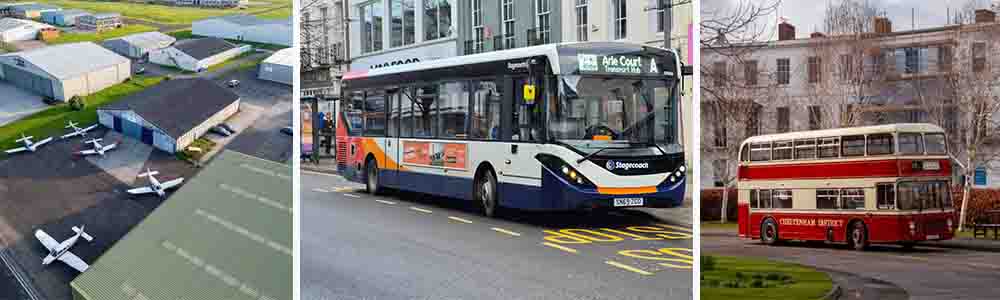
Moreover, there are public bus services operated mainly by Stageco
ach. They run services around Cheltenham and Gloucester. So, students and staff can travel between the two cities using these buses. Also, they offer StudentRider tickets, which charge reduced fares to students.
 Transportation & Airports Closest to FCH Campus
Nearest airports
Gloucestershire Airport is the closest airport to the Francis Close Hall campus, located about 10 minutes from central Cheltenham. Mainly, it flies small/private and regional flights (not major international routes). Also, it offers daily scheduled flights to the Isle of Man and welcomes private/commercial aircraft.
Birmingham Airport (BHX) is the nearest major international airport to the Francis Close Hall campus, located roughly 40 miles away. In addition, Bristol Airport (BRS) can be mentioned as the second option for international flights, as it’s located roughly around 45 miles away.
4.1.7 Student Life at FCH Campus
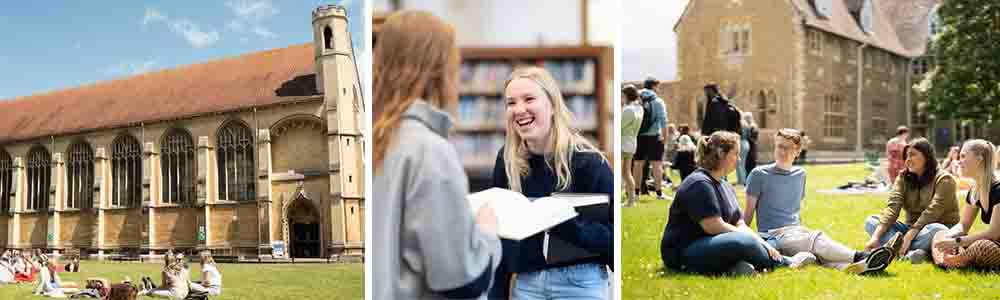
The campus location is an advantage to students as it’s located right next to Cheltenham town centre. So, students have quick access to shops, cafés, cinemas, and restaurants without needing transport</p>
Students’ Union (SU) organizes events in the university such as Welcome Fayre at the start of the year, quiz nights, drag nights, open mic nights, and Varsity (sports competition against rival universiti
es). So, the SU hosts a mix of large annual events and smaller weekly social nights at the university.</p>
In addition, the Brewery Quarter can be mentioned as a good Local entertainment complex, as it has tenpin bowling, indoor golf, a cinema, and a microbrew
ery.
Sports facilities</h4>
Francis Close Hall campus itself is mainly an academic campus, but students can access all university sports clubs regardless of which campus they study
at. Moreover, there are municipal/private options near FCH, such as Sandford Parks Lido. It has a Grade II listed 50m outdoor heated pool, opened in 1935, and offers student discounts on entry.
 Student Life at FCH Campus[/caption]In addition, there is Leisure at Cheltenham, which is a larger indoor sports centre with a gym, swimming pools, racquet sports, and the Prince of Wales Stad
ium.
Clubs & societies (university-wide, open to FCH students)</h4>
There are 20+ sports clubs such as football, rugby, cricket, hockey, lacrosse, jiu-jitsu, rock climbing, swimming, tennis, equestrian, trampolining, volleyball, and American football, which is a broad mix of traditional and more niche spo
rts.</p>
Moreover, there are 40+ societies such as DJ society, gaming and e-sports, LGBTQIA+ society, refugee support society, and many subject-related societies, including Music Society and Geography Soci
ety. So, these cover hobbies, identity groups, and academic interests.
4.1.8 Nightlife Near FCH Campus
Furthermore, the Gloucestershire Royal Hospital, located in Gloucester, provides 24-hour A&E, including ambulance and GP-referred emergenc
ies.
 Study Overseas details for University Articles